


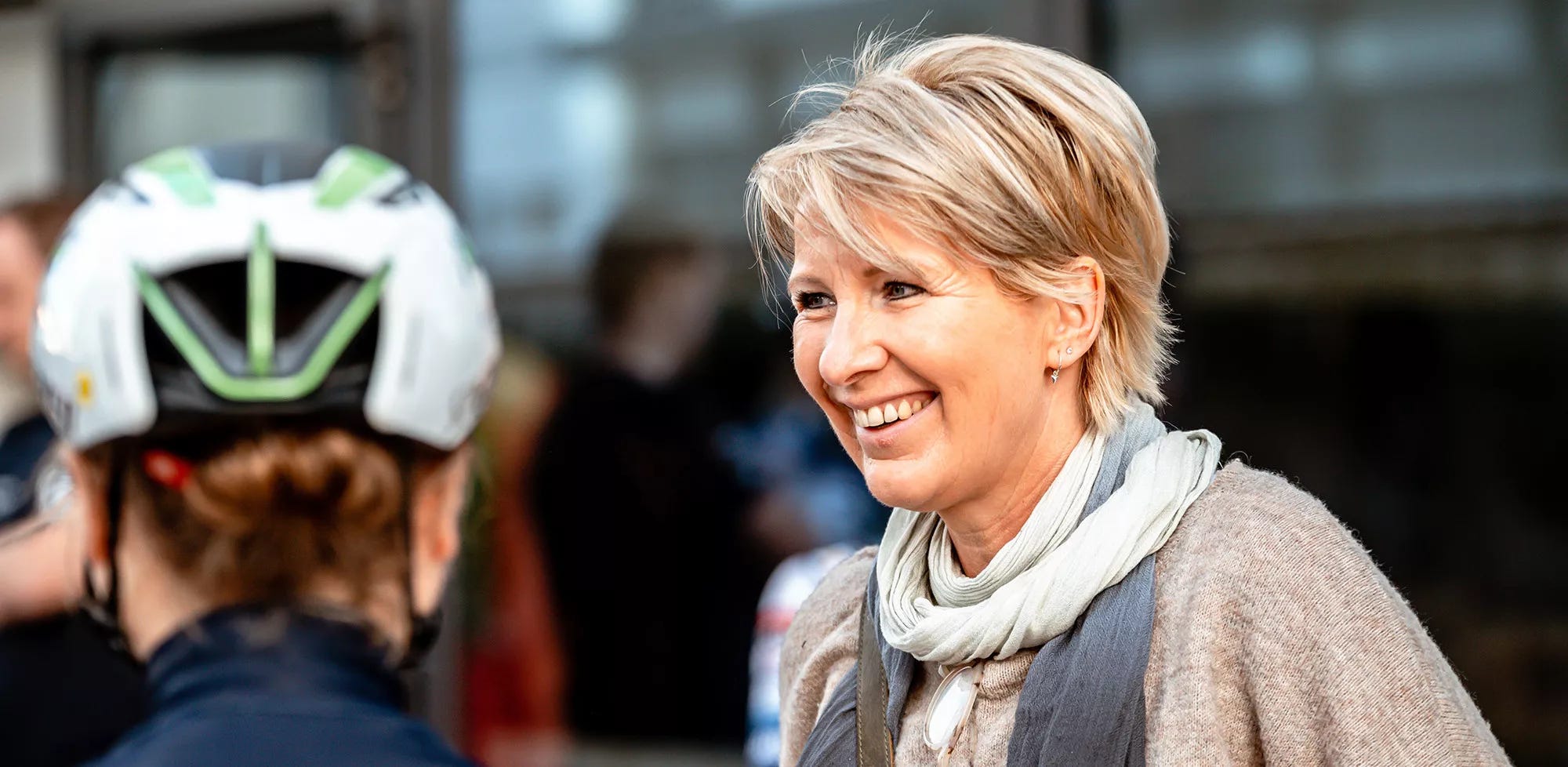
Two weeks ago, I was tuned into the Tour de France Femmes avec Zwift, watching the non-stop action and standout performances from riders like Kim Le Court and Sarah Gigante. The resurrection of the Tour de France Femmes and the rise of women's cycling has been incredible to witness, but none of it happens without thoughtful investment in young talent. No matter how much money reaches the top echelons of the sport, every rider had to start somewhere and learn the ropes.
In this deep dive we are going to look at the current landscape of women's cycling, how the sport is being driven forward, developmental pipelines, and how to sustain competition at the highest level. Each of these areas look dramatically different between Europe’s dominant cycling culture and America’s burgeoning scene. To help untangle the differences and highlight potential learning opportunities I was lucky enough to speak with Natascha den Ouden.
From U23 to AG Insurance-Soudal
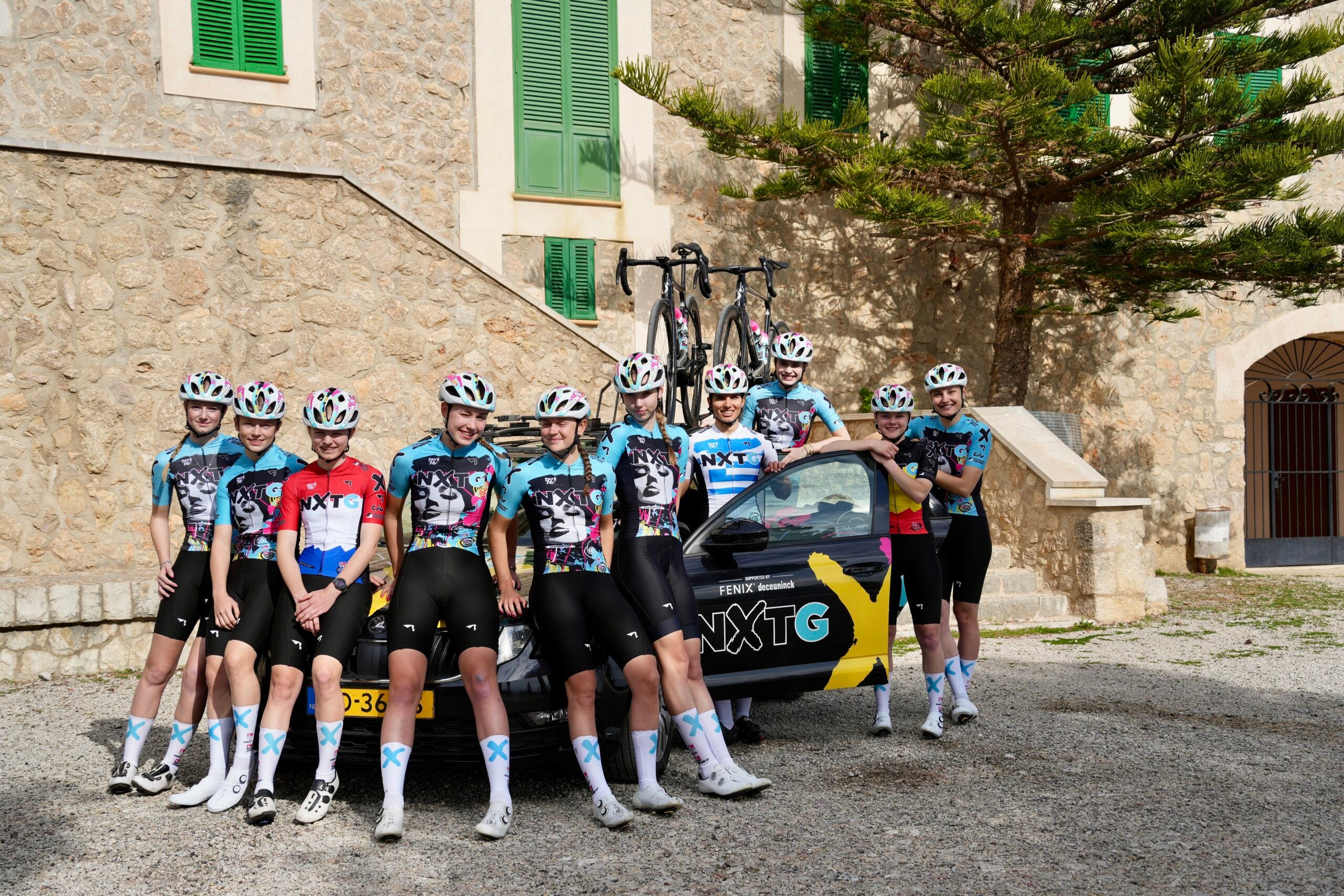
Natascha has a legendary background in modern women’s cycling. She launched a women’s development team in 2019, which she grew into the WorldTour team AG Insurance–Soudal. Her track record in athlete development is remarkable. Since 2019, she has helped more than 20 riders reach the WorldTour, including Mischa Bredewold, Charlotte Kool, and Ally Wollaston. At this year’s Tour de France Femmes, two riders she signed, Kim Le Court and Sarah Gigante, delivered standout performances. Le Court won a stage and wore the yellow jersey for multiple days, while Gigante finished sixth overall. Natascha now continues her work with the next generation through her U23 team, NXTG Racing.
Natascha understands the importance of building strong foundations in women’s cycling. A trailblazer in cyclocross, she won four Dutch national titles and played a key role in creating a dedicated women’s calendar, including the push for a UCI-sanctioned world championship. From that experience, she knows that securing marquee events like the Tour de France Femmes is only one step in the journey to achieve true equity in the sport.
Two speeds
During our conversation, Natascha made a striking point: “How can we have equality with men’s racing when there isn’t even equality in the women’s peloton?” She was highlighting the lack of sustainable development and depth of talent which is creating two speeds at the WorldTour. As an example, she pointed to the Tour de France. In the men’s race, riders typically finish well within the time cut on flat sprint stages. But in this year’s women’s race, multiple riders missed the time cut on similar stages, underscoring the developmental gaps that still exist within the women’s field.
Natascha ties this lack of depth to the underlying financial and structural challenges in professional women’s cycling. In her view, the Women’s WorldTour is pushing too quickly toward the marketability of the men’s side, without first building a sustainable business model to support long-term growth. So, how do we make this a sustainable business and sport?
The current model
For clarity, professional cycling has a tiered system similar to baseball’s farm system or soccer’s league divisions. Here’s how the talent levels break down:
UCI WorldTour teams – The highest tier in the sport, home to the best riders.
UCI ProTeams – One level below the WorldTour, but eligible for select WorldTour races.
UCI Continental teams – A step above club squads, can compete in some Pro-level races but not WorldTour events.
Club / U23 / U19 teams – Grassroots and development programs, sometimes overlapping with Continental-level competition.
Knowing this structure will be important as we discuss how money is currently flowing through the sport.
Cash now, development later…
Not to get too political, but the way Natascha described the current state of women’s cycling feels a lot like trickle-down economics. Sponsors want immediate returns and visibility on the biggest stage, but that doesn’t necessarily grow the sport as much as you’d think. When most of the money goes to the top tier, little is left to invest in UCI Pro and Continental teams or their races.
Critics might argue that the model works for the men, so with enough time it will work for the women. Natascha reinforced my view that this isn’t the case. Historic inequality means men’s and women’s cycling have grown on completely different timelines. Men’s WorldTour cycling has had decades to develop and build a strong foundation, while the UCI and sponsors are pushing women’s cycling to reach that level of maturity in less than a decade.
Natascha shared that the UCI’s approach to the women’s pro peloton feels too “old-school” and “restrictive.” In her view, there are fifteen WorldTour teams but not enough top-tier riders to fill them. This lack of depth means some WorldTour riders have the same ability as certain Continental riders, which she said is “really weird to see.” At its core, we are trying to apply the same business model to what are essentially two different sports: men’s and women’s cycling.
It feels unrealistic to expect major sponsors to split their budgets between the WorldTour and the lower tiers of the sport. At the end of the day, most don’t live and die by cycling, they care about the return. It’s a short-sighted view, but the bottom line rarely prioritizes sustainability. If the sport folds, they’ll simply move their money elsewhere. So the real question is: how do we bring more attention, funding, and opportunity to the other levels of women’s cycling?
Well first, it starts with opportunities for young riders in the first place, maintaining events where they can prove themselves and exploring talent pathways outside European road racing.
Developmental roadblocks
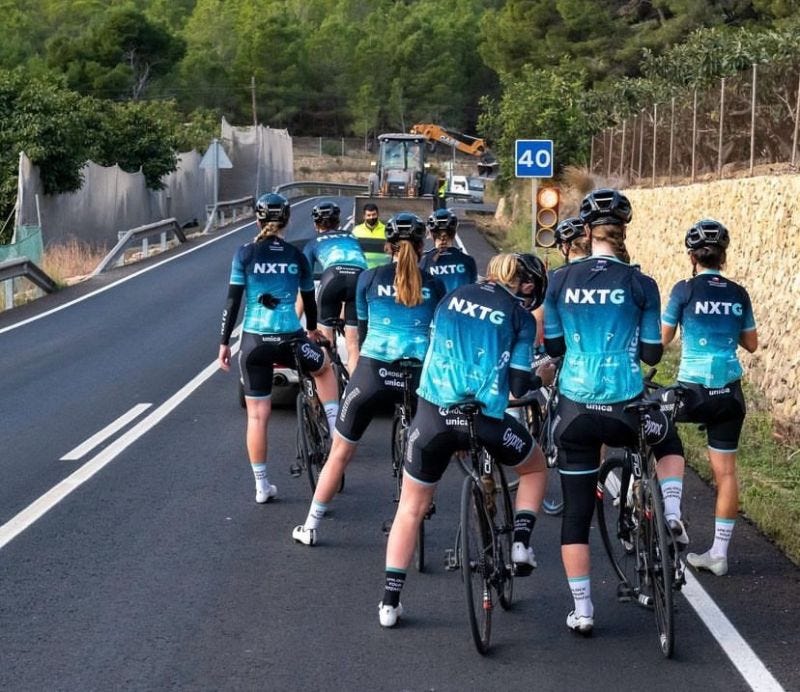
The chances for Continental teams to showcase their riders are dwindling, and with them, the pathways for talent to break through. As Natascha put it, “The calendar is shrinking. We lost 14 0.1 and 0.2 races this year. The WorldTour calendar is growing, so we build the top and break the foundation.”
This downsizing isn’t just hitting stand-alone Continental teams, it’s also forcing WorldTour-owned development squads to scale back. Natascha has advocated for more of these teams, but with a shrinking calendar, their riders are now racing too often in the deep end against seasoned WorldTour pros instead of developing alongside other emerging talent.
In the end, it comes down to finances. “Those smaller races can’t keep up with the costs, so they fold. Or they try to move up from 0.2 to 0.1 or Pro, but that brings even more expenses, and then they fold. Instead, they should be proud of being 0.2 and of the riders they bring through.”
It’s a tough position for teams, race organizers, and sponsors alike. Without a solution, women’s cycling will struggle to build a deep peloton with surplus talent ready to step up. Solving it will require change across multiple levels of the sport. Most importantly, it will take real creativity in how we generate revenue at the lower tiers.
Talent is everywhere
At the beginning of this story I mentioned how Kim Le Court made a statement at this year’s Tour de France, winning a stage and wearing the yellow jersey for two days. Where did she come from?
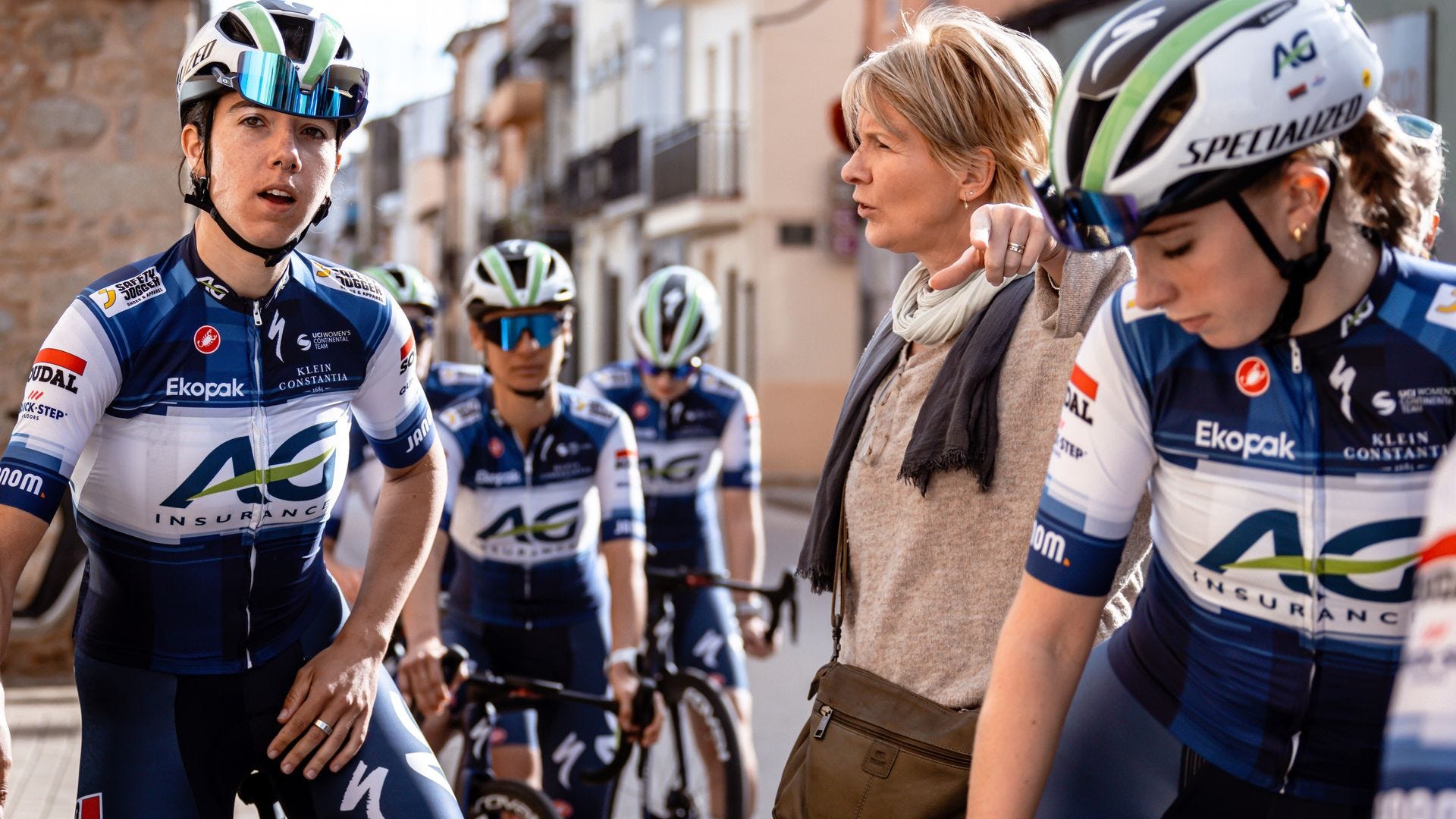
If it was left to traditional talent scouting, Kim would have never made it to the WorldTour. Kim comes from a successful mountain biking background, but never achieved enough success on the road to be noticed by WorldTour teams. As she attempted to get a spot on a team, she famously reached out to every team trying to get a contract. She was down to her last call before giving up, but then Natascha answered. Natascha saw the potential, understood challenges facing the peloton, and ended up giving a Mauritian mountain biker a chance.
Natascha boiled it down to this:
"The peloton needs different kinds of riders, not everyone has to be the same type. You need the sprinters, the classics riders, the climbers, the workers — some of those you can’t predict at age 16. If we only look at the traditional development path, we will miss out on a lot of potential."
Where to find and identify this talent is relatively two-dimensional:
Look at non-traditional cycling cultures and grassroots races
Recruit outside of cycling
"I like to talk to athletes from other sports because they often have the discipline already: the 20-hour training weeks, the nutrition, the mindset. If you put them on a bike, you can see very quickly if they have the talent."
Bringing it all together
It might sound like I’ve forgotten this newsletter is about growing U.S. cycling, but hear me out. Europe remains the center of the cycling universe, that’s hard to dispute. And while there’s no shortage of great events and talent here at home, it would be naive to think we can make the sport mainstream in isolation. I believe women’s cycling will be the biggest catalyst for growth in the U.S., and it will take a blend of domestic and European racing to make it happen — including the return of WorldTour races to American roads.
I went into my interview with Natascha with a clear goal. I wanted to hear her thoughts on whether American cycling could partner in growing the Women’s WorldTour and, in turn, help expand the sport domestically. This all came into play when we started to discuss alternative solutions to the current model in women’s road racing.
When looking at the business challenges facing women’s cycling, we saw three areas with potential for viable alternatives, each requiring creativity and grit:
Investing in talent from non-traditional cycling backgrounds and cultures
Reworking how money flows through Continental races
Embracing stories, even if it means stepping outside of UCI norms
The U.S. is providing a proof of concept for all of these alternatives.
The land of opportunity
You’ve been patient and listened to me talk about European road racing, so let’s bring things back to the U.S. America is no stranger to developing elite racers, and we currently have a handful performing at the highest level: Matteo Jorgenson, Kristen Faulkner, Sepp Kuss, and Chloé Dygert are a few that come to mind. Still, this is a minority in a sea of European talent.
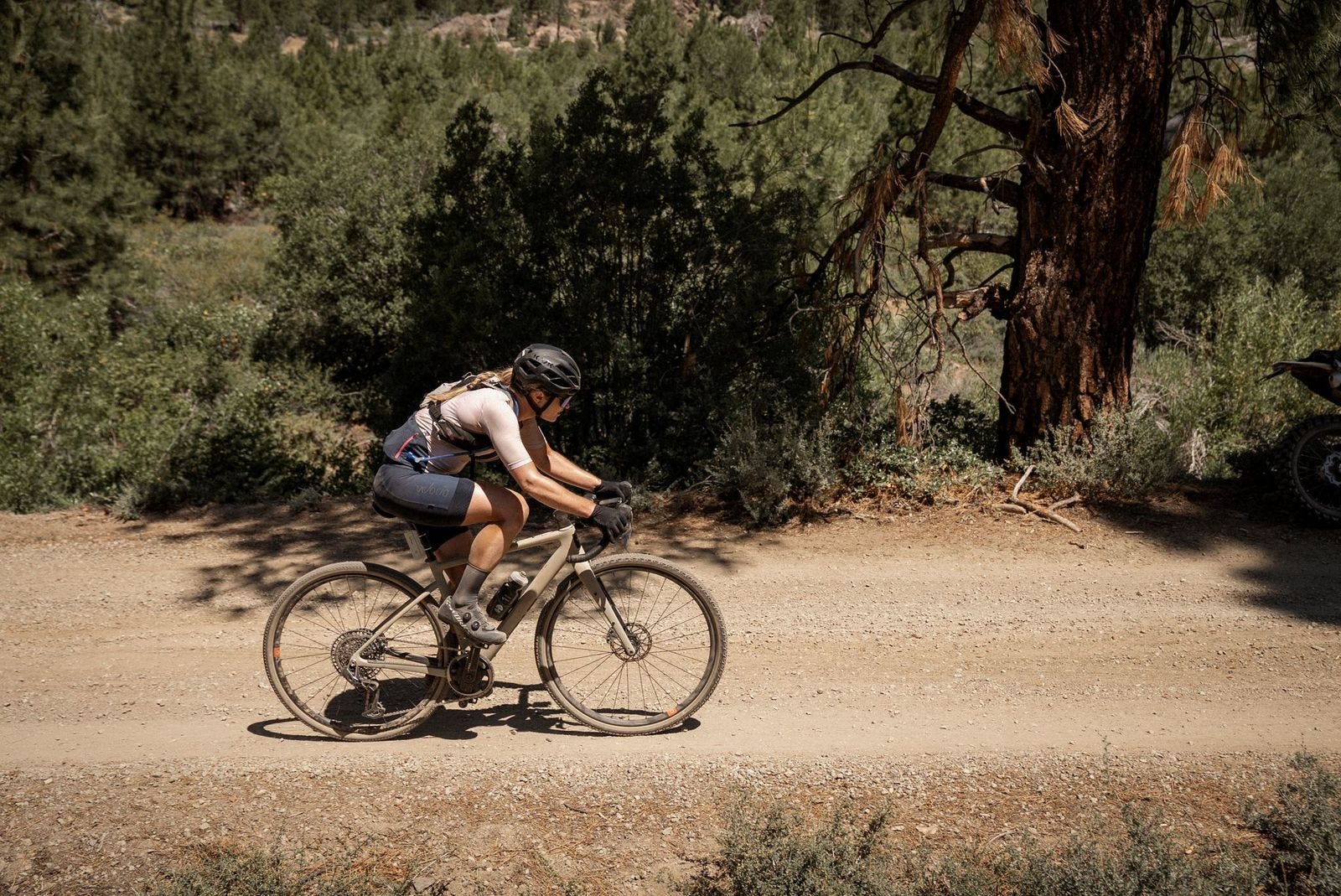
The current number of U23 and Continental road teams in the U.S. is small, and without increased sponsorship and more team development, the system will continue to produce limited results. Fear not, a growing race culture in the U.S. is attracting significant sponsor interest, driven by the rise of off-road racing. The biggest X-factor in domestic cycling is the rise of off-road racing, led by the Life Time Grand Prix.
The series features 25 men and 25 women competing in six races from April to October for a $380,000 prize purse. Now in its fourth year, it is drawing more domestic and international talent than ever, with a new U23 category added in 2025. Where Continental road racing struggles for funding and developmental support, Life Time may be proving there’s a stronger business model to run with. What makes it so attractive to brands and riders is the unrestricted story telling potential.
The U.S. business model
The Life Time Grand Prix is built for storytelling because it celebrates rider individuality. Unlike European road racing, where teams are locked into rigid sponsorship deals and operate as a single branded unit, the U.S. scene is wide open. Many riders compete as privateers, securing their own sponsors for everything from the bikes they ride to the nutrition they eat. Every setup tells a different story, and every rider can offer a window into their personal journey.
Since the UCI is unlikely to overhaul the current model, we’re seeing hybrid approaches emerge in the U.S. and abroad. Gravel racing and the Life Time Grand Prix have pushed teams toward more European-style tactics without sacrificing individuality. PAS Racing, Trek Driftless, and Santa Cruz HTSQD all add structure while keeping flexibility. Trek and Santa Cruz require riders to use the team’s bike brand and kit manufacturer, but allow freedom in other sponsorships like Neversecond, RoadID, etc. PAS Racing takes it further, with riders sharing nearly all sponsors except their bike choice.
If the European circuit could find some middle ground, an open sponsorship model could ease financial pressure on teams and event organizers. Instead of relying on a single backer to cover nearly all costs, multiple sponsors could share the load. As Natascha put it, “For a company, €5,000 is nothing, but for a club team, it’s huge. If they can get exposure and tell their story, they’ll be proud to help that girl make the next step.”
For athletes, this approach means more opportunities to share their personal stories with sponsors who are invested in telling them. That exposure brings more eyes to both the riders and developmental cycling as a whole. Instead of audiences watching races filled with unfamiliar names, they could follow riders they already know—and care about—creating deeper passion for the sport.
The flexible business model isn’t just for riders and teams, it can work for events too. With Continental races disappearing, Natascha says it’s crucial to “create more grassroots races where you don’t need a huge budget or perfect equipment to start.” For organizers, she proposes a shift: “What if we skip prize money and give every team a starting fee? €500 covers fuel and travel. You get racing, exposure, and some broadcasting.”
Her reasoning is solid, if organizers can avoid the burden of a large prize purse and keep entry fees modest, their finances become far more flexible. A more dynamic sponsorship environment could also bring in additional brands willing to fund race coverage. Like the Life Time Grand Prix, a single presenting sponsor could even step up to back multiple races, creating stronger incentives for teams to participate.
This is all hypothetical and coming from an American just spitballing ideas, but my chat with Natascha made one thing clear, something has to change. Given my professional experience and entrepreneurial background, a more open-ended approach feels natural. Women’s developmental cycling has little to lose and everything to gain by exploring alternative financing models.
Last but not least, the athletes
I’ve already shared how talent can be found anywhere, from non-traditional cycling markets to athletes crossing over from other sports. The real challenge in filling team rosters is lowering the barrier to entry. While Natascha expressed some doubts about the depth of domestic talent in the U.S., she was clear on one thing: “If the only way to get into cycling is through expensive junior programs or moving to Belgium, then we lose too many potential riders.”
Beyond lowering barriers in Europe, it’s going to come down to teams being willing to take more chances on the riders they sign. Natascha has proven how successful this approach can be with riders like Kim le Court, yet a stigma still lingers for Americans and riders from nations with smaller cycling scenes. It’s not about strength, mindset, or cultural assimilation; it’s about skills that can only be learned in the European peloton.
While it’s a valid point, I think potential rewards outweigh the risks, especially considering Natascha’s vision for women’s cycling. When I asked what she wants to see in terms of talent, she emphasized the need for more diversity and specialization. “The peloton needs different kinds of riders: sprinters, classics riders, climbers, workers, but some of those you can’t predict at age 16.” The U.S. and other nations appear well positioned to fill these gaps with riders tailored for specific races and the ability to spot late bloomers.
There isn’t enough time to discuss all the skills that can translate from gravel racers, mountain bikers, and the full spectrum of cycling disciplines in the U.S., but I can give one example I’m bullish on: I think the U.S. could produce some great classics riders if opportunities are given and skillsets align with European race tactics.
In gravel, almost every race is as physically taxing as a one-day classic: long, brutal, and requiring a rider that excels at sustained efforts. The biggest gravel race in the world is Unbound Gravel in Kansas. The 200-mile course is starting to feature more breakaway tactics, and lasts a few hours longer than most classics. The rough terrain makes the pack riding more dangerous than a paved road race, and breeds fearlessness. Still, it’s not an apples to apples comparison to European racing.
As Natascha explained, “The big challenge with many American riders is they don’t grow up racing in the same big pelotons we have here in Europe. They can be incredibly strong physically, but they don’t always have that instinct for positioning, reading the race, and moving safely in the bunch.” That skill gap is real and often requires a long learning curve, though some riders show natural peloton instincts from the start.
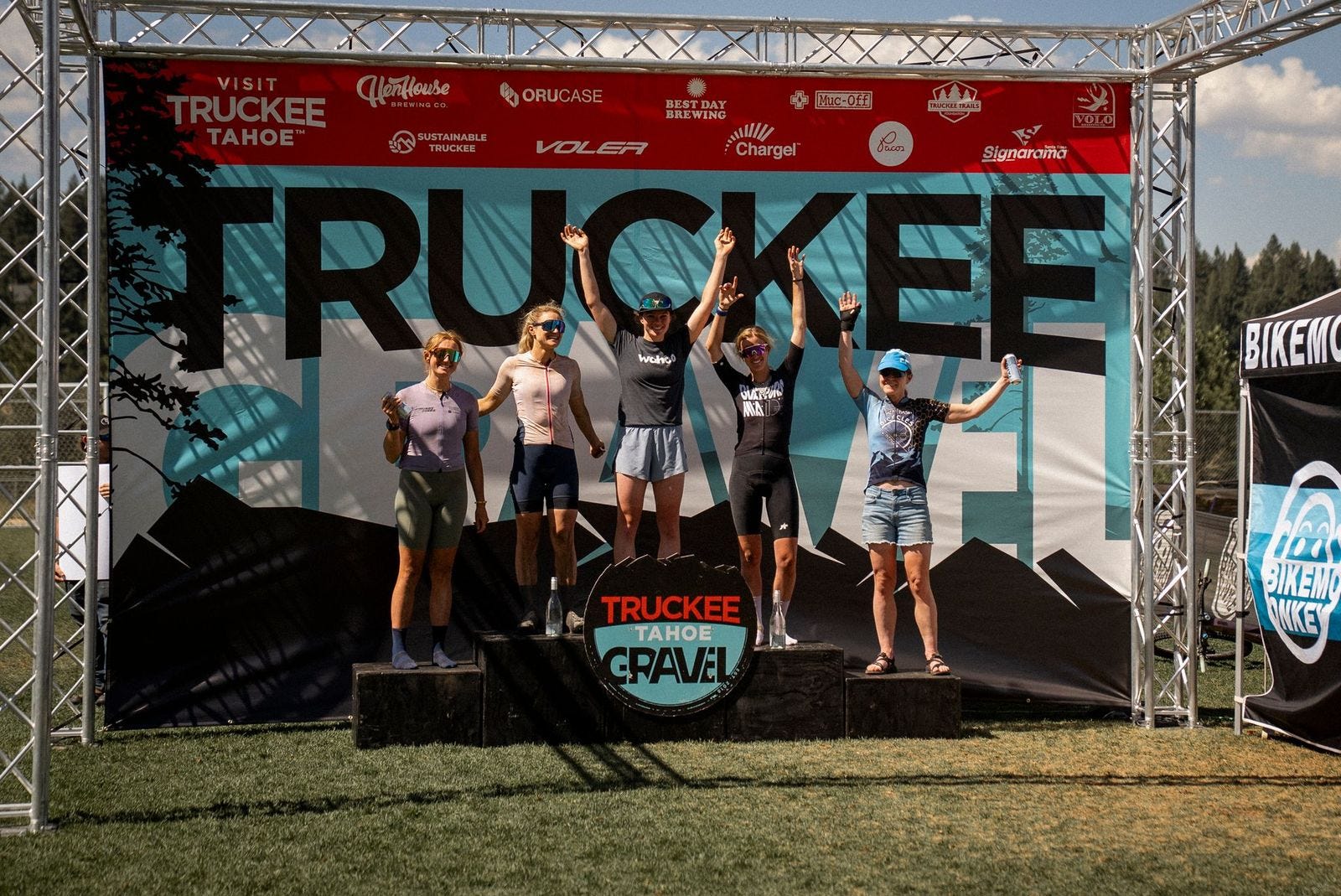
Last year, Rosa Klöser won the women’s edition of Unbound, which directly led to her signing with Canyon-SRAM. This year, Cecily Decker and Karolina Migoń took first and second, delivering a masterclass race execution and managing sustained efforts. I’d love to see what those two could do in classics style racing. My intuition could be completely wrong, but it feels like a gamble worth taking for the sake of growing women’s cycling and the development of non-traditional talent.
Final thoughts
Growing cycling is a long game that depends on sustainable sources of talent, capital, and race opportunities. Whether it’s expanding women’s cycling in the U.S. through a privateer business model or deepening the talent pool in European road racing, everything starts with the ability to spot and develop riders. Without that foundation, the top levels of the sport will see diminishing returns. And with current European development pipelines struggling to attract sponsor attention, the UCI will need to take more chances if it wants women’s cycling to keep growing.
The rise of off-road racing in the U.S. has shown what a non-traditional, lightly restricted business model can produce. By lowering barriers to entry for both talent and sponsors, organizations like Life Time have driven impressive year-over-year growth in women’s racing, created lasting careers for athletes starting from scratch, and given equal attention to men’s and women’s events. There have been hiccups and inconsistencies along the way, but the results speak for themselves.
Continental, Pro, and WorldTour races are by no means perfect: inconsistent rule enforcement, wide gaps in skill levels, and a shrinking calendar all clash with the buttoned-up image the UCI promotes for women’s cycling. When seasoned team managers like Natascha say the system is broken, why are governing bodies content with the status quo of inequality? Taking risks and adopting a different business model offer a clear alternative. Traditionalists may see this approach as undermining the legitimacy of women’s cycling, but if they consulted teams, athletes, organizers, and experts like Natascha, they might reach a very different conclusion.
Women’s cycling is the sport’s biggest growth opportunity over the next decade. To seize it, we need global collaboration, shared learning, and a commitment to building the next generations of racers in a sustainable way.
A note from me
Writing this first feature for Built on Bikes has been surreal. Interviewing someone as accomplished as Natascha was an opportunity I never expected. This is an important topic, and I know I barely scratched the surface. At the end of the day, I’m a man with no professional cycling background writing about challenges facing the growth of women’s cycling. Please don’t take my words as fact—go hear directly from female athletes, team managers, and organizers, and listen closely, even if their views completely contradict mine. This part of the sport deserves more dialogue, education, and attention.
I’ll be back next week with a conversation about pro opportunities in the U.S. with Life Time Grand Prix athlete Alexey Vermeulen. Subscribe so you don’t miss it!
Ride and rip,
Kyle Dawes