


No, I haven’t lost it
I’ll be honest, I wasn’t sure if this was the right story to tackle for my third feature. But then I remembered: this is my newsletter, and I get to dive into anything I find relevant in the wonderfully weird world of U.S. cycling.
For this piece, I’m exploring how the creator of a cheeky meme account has managed to weave together gravel’s chaotic, disjointed stories in a way that helps casual fans connect with the sport on a deeper level. In return, the creator is becoming a legitimate voice among fans, professional athletes, and industry insiders. It’s an interesting case of a cultural influencer having a real impact on the growth of cycling in the U.S.
This piece will be different from most posts on Built on Bikes, but I hope readers enjoy its blend of insightful discussion punctuated with some funny moments.
First, what makes gravel so engaging?
Gravel racing has exploded in popularity over the past five years, fueled in large part by storytelling. Pros like Alexey Vermeulen are taking control of their own media and building audiences through compelling content. Bolstering these stories are brands like Life Time, who have built content series and media around their flagship off-road series, the Life Time Grand Prix.
Story telling helps fans connect with riders and events, but gravel takes engagement a step further by letting fans participate in the action. Unlike most disciplines, gravel races let amateurs line up on the same course, on the same day as the pros. Being two-dimensional, media plus participation, has helped gravel thrive as a community-driven sport.
With that said, casual participation and media consumption don’t automatically make someone a close follower of the sport. Even if a rider keeps up with some online media, knows a few pros, and races themselves, pro gravel can still be tough to follow because of:
Countless races and competing series
A constantly shifting rider pool
Different rules and formats from one event to the next
A culture and set of storylines that evolve rapidly
Overlap with both mountain biking and road racing
Each of these points could be an essay in itself. Taken together, they show just how much effort it takes for a casual fan to follow pro gravel compared to mainstream sports like tennis or golf. With gravel so deeply rooted in social media, traditional coverage often feels scattered and dry. It’s a mismatch for a sport built on energy, personality, and community vibes.
Enter: The Holy Spirit of Gravel
You might be wondering, what the hell does the Holy Spirit of Gravel even mean? For this story, it’s both the name of a gravel focused meme account on Instagram, its associated podcast, and the chosen alias of its creator. The name plays off one of the earliest cultural debates in the sport: the so-called “spirit of gravel.”
That debate centered on whether professional racing was taking over and killing the laid-back, fun-first, and grassroots ethos that gravel was built on. Some races, like Stetina’s PayDirt, still lean into the party vibe. Nowadays, most agree gravel has now cemented itself as a serious discipline, and that the spirit is, for the most part, dead.
I first discovered the Holy Spirit of Gravel through Maude Farrell, a pro I follow, when she shared one of Holy Spirit’s memes on Instagram. When I started looking at her (Holy Spirit’s) content, I saw jokes I understood right away, some that actually taught me about gravel happenings I was unaware of, and hilarious lingo that just made sense in the context of professional gravel racing.
Striking a chord
A few months ago, the Holy Spirit of Gravel had around 5k followers and just a handful of podcast episodes. Today, she has over 7k followers, posts weekly podcasts, and has become a well-recognized voice in the gravel community. With a rapidly growing and international audience, it’s clear she has struck a chord with gravel fans, athletes, and industry insiders alike; a notable achievement given how scattered gravel can be as a sport.
By staying attuned to the intersection of pro racing and the everyday rider, she has shown an ability to drive deeper engagement and growth in the sport, which are crucial for establishing gravel’s relevance as a cycling discipline. Eager to hear her story and opinions, I reached out and was able to have a chat with her.
Gravel lives on social media
As much as I talk about it, gravel cycling is still a pretty niche cycling discipline and hobby, so I was curious how Holy Spirit found the sport. Just like me, she found her way in through gravel’s massive social media presence.
“I got into gravel as a sport the way most people do. I started following local races and consuming social media content from athletes. I thought it was cool seeing athletes build a career around their persona as an influencer—I hadn’t seen that in any sport before.”
After becoming a fan, she came across all sorts of gravel related media, including some meme accounts. As it tries to scale into something larger, a lot of funny and absurd things tend to happen in gravel . Noticing this, Holy Spirit appreciated how memes captured and communicated that chaos with humor.
Eventually she saw some of the meme accounts becoming “overtly negative and mean.” Turned off by the negativity, she decided to start her own account, and blessed us with the Holy Spirit of Gravel.

From meme account to gravel commentator
Memeing
Her account quickly found a voice and audience by bridging the gap between what she calls “normie and hitter culture.” Normies being casual gravel riders and fans, and hitters the elite-level pros. Both groups were drawn in by her ability to poke fun at the drama and image obsessed scene of pro gravel.
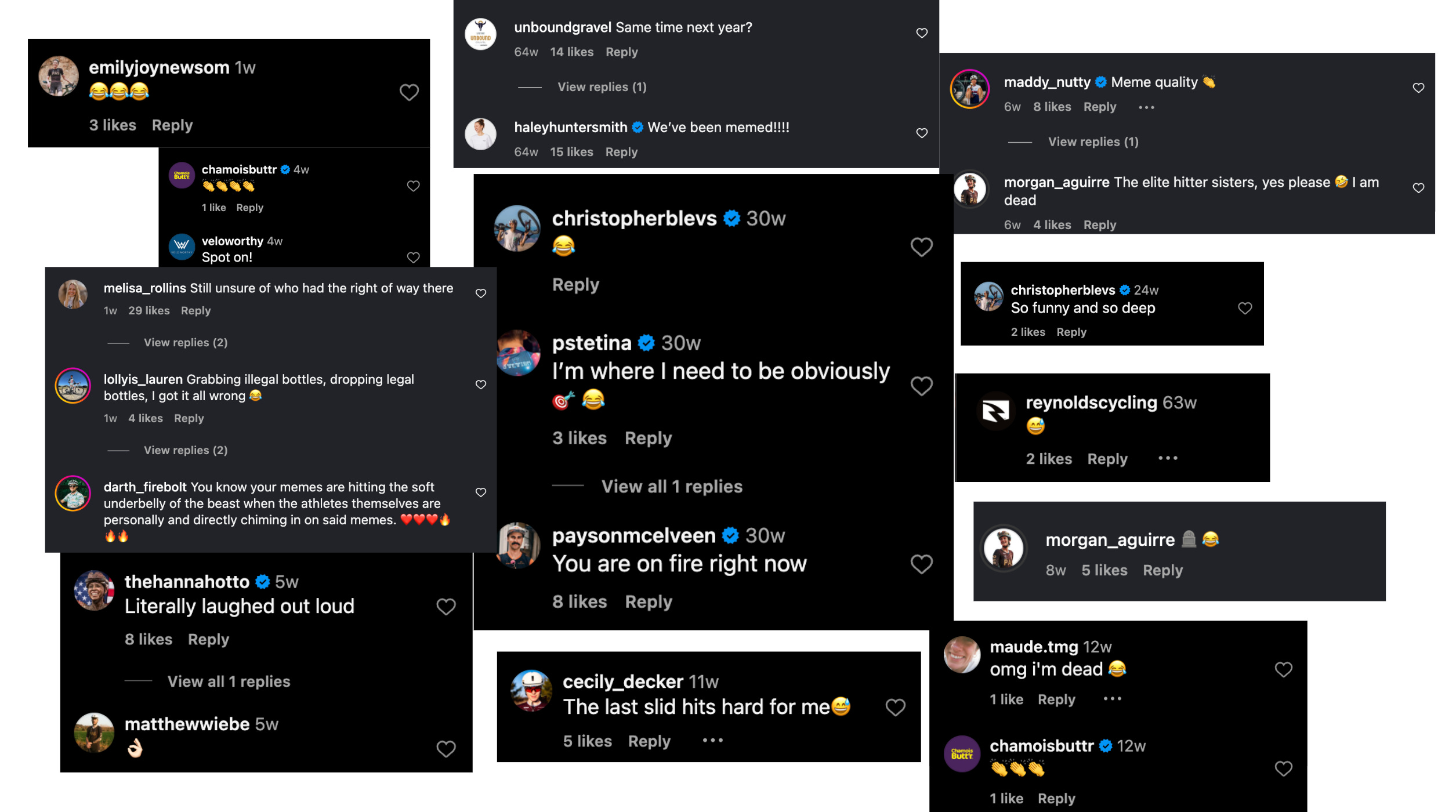
As her memes gained traction, Holy Spirit drew the attention of both domestic and international pros, which in turn gave her greater credibility among fans and industry insiders alike. With her account growing more popular by the day, new opportunities started to present themselves.
Podcasting
In early 2025, one of her close friends convinced her to start a podcast covering the latest news, drama, and absurdities in gravel. Sharing the same name as her page, the show features casual, free-form conversations with her co-host. The tone is lighthearted and layered with inside jokes that get funnier the more they resurface. Her slow-burn style of comedy and growing vocabulary of “gravel-coded” terms make listeners feel increasingly connected the longer they tune in.
In addition to being funny, her podcast is equally informative, covering race results and real issues that face the sport. Now, pros and fans alike tune into the podcast, along with industry insiders and major brands.
Influencing
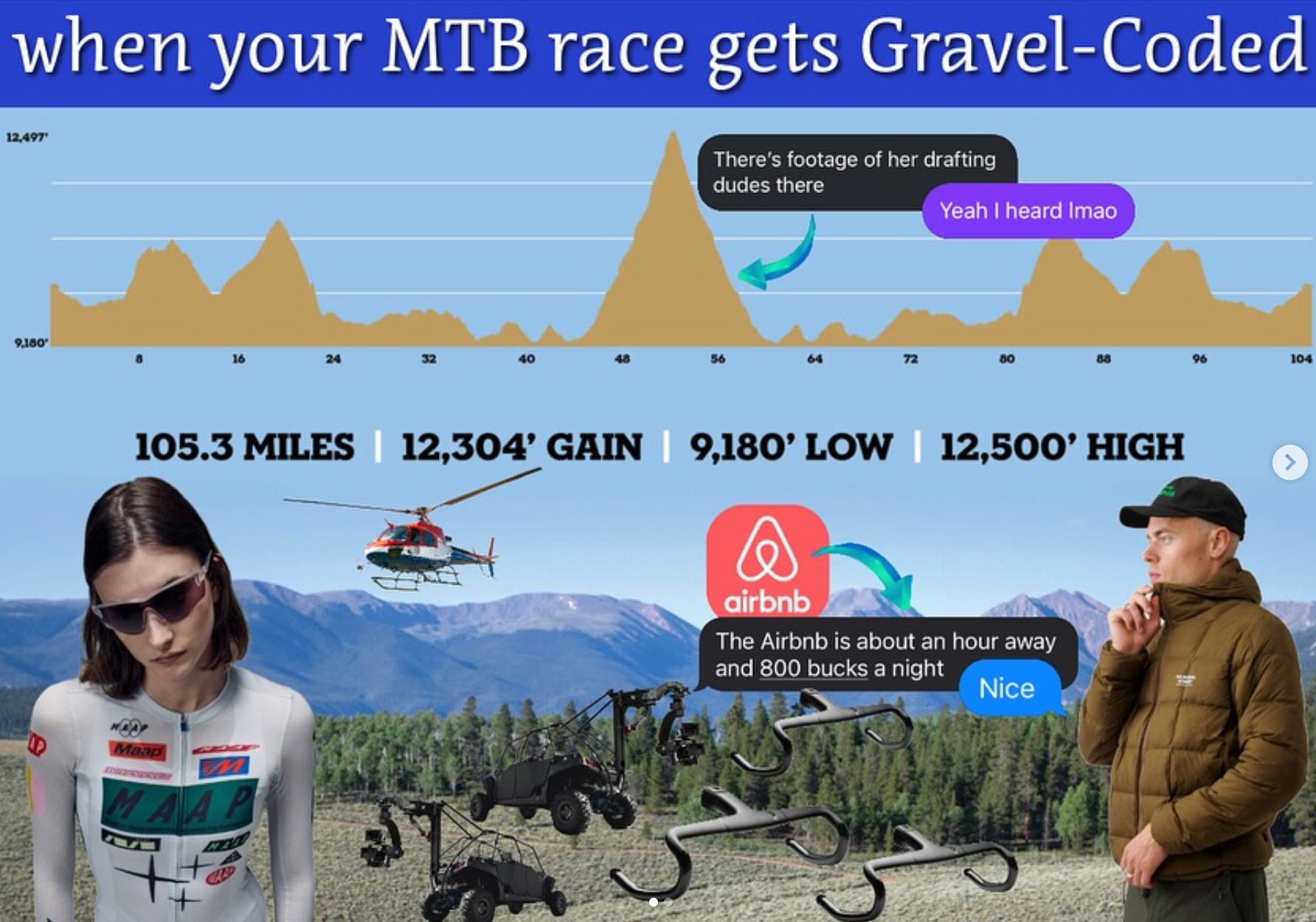
When I asked about her influence, she explained, “I haven’t personally seen my content create new fans of gravel, but I think casual fans and fanatics are able to dive deeper into the sport through my content. I am seeing it reach parts of the sport I didn’t expect. I regularly get messages from pros sharing gossip, brands inquiring about sponsorship opportunities, and I even saw Trek using my goofy language, calling the Leadville mountain bike race, gravel-coded.”
With the success of her account and podcast, Holy Spirit is taking her presence offline and into the heart of the sport. This year she’s shown up at major gravel races like Unbound, Core4, and Gravel Mexico. From networking with industry professionals at expos, racing, and interviewing pros, she’s evolving from an online persona into a recognized part of gravel media. Most recently, she was invited to cover the women’s race at Core4, where her live posts drew a large audience as she reported from the course. It’s been a remarkable rise for someone who started with a meme account, and there are no signs she’s slowing down.
Using humor to discuss real issues
As I mentioned earlier, it’s clear that Holy Spirit has her finger on the pulse of gravel. Beyond the humor, her memes serve as valid commentary and highlight real issues facing the sport. Gravel is experiencing its share of growing pains, but one issue Holy Spirit consistently highlights with humor is the problematic interactions that occasionally happen between pros and amateurs during races.
The balance is delicate: gravel racing relies on amateurs to fill start lists and on pros to bring legitimacy to events. However, once the race begins, the mix can turn dicey. Too often, especially in the women’s field, amateurs disrupt the dynamics—less experienced riders create dangerous situations, and others push beyond their limits to hang on to the pros, altering tactics and race flow. It’s a frustrating problem for pros to face, and Holy Spirit captures it perfectly with her recurring character, “the gravel dad.”
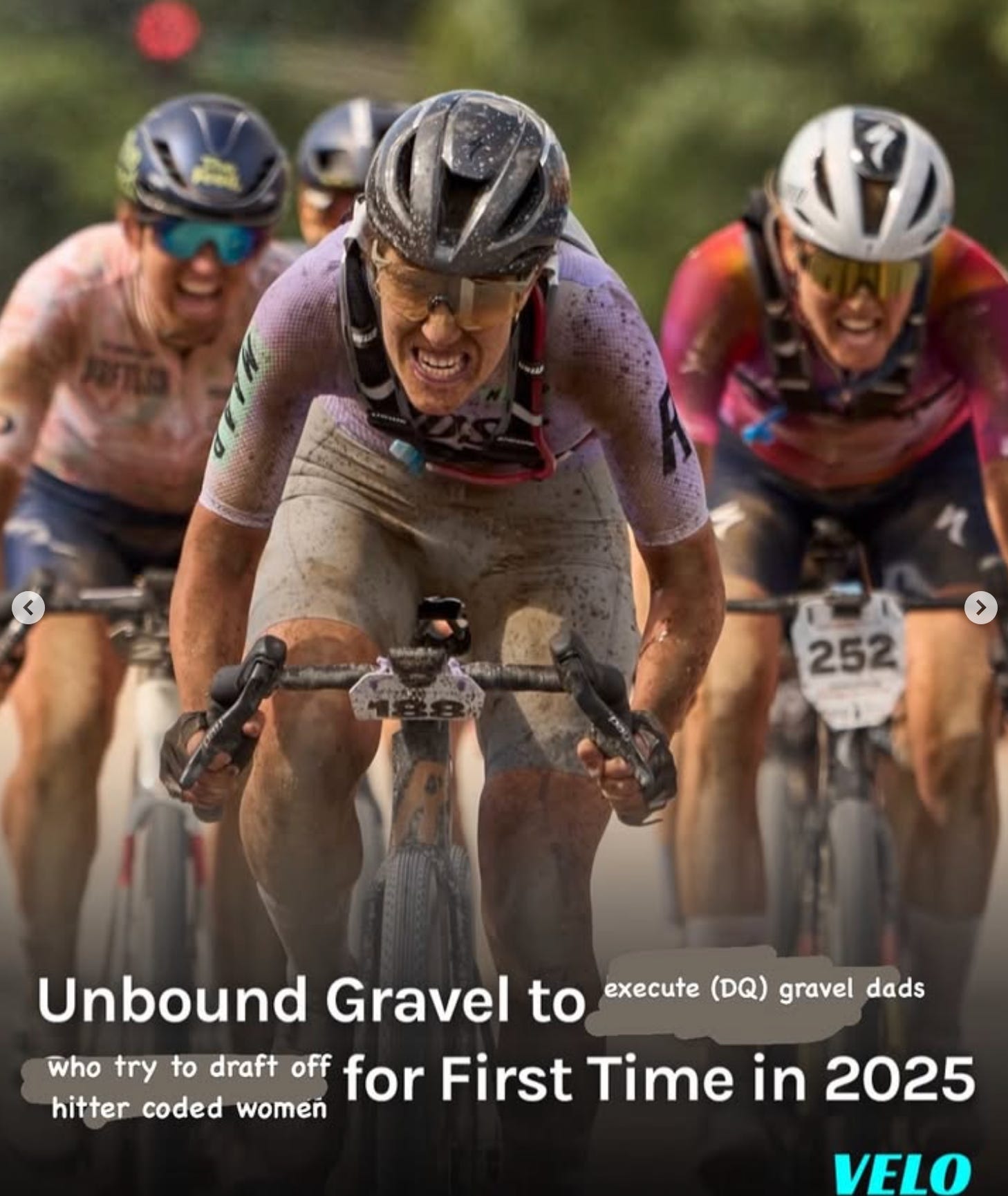
On her podcast, she makes it clear the blame doesn’t fall on amateur riders. That said, she certainly doesn’t envy the position of the race organizer, saying “it’s hard to organize a race. We all recognize that amateurs make up the bulk of signups and most interactions on the race course are perfectly fine. For the record: I do really appreciate the mass start philosophy.”
It’s true that most on-course interactions are harmless, and amateurs should absolutely have their own unique race experience, but that small percentage of negative encounters can have outsized consequences for pros whose livelihoods depend on results.
The “gravel dad” is as a hyperbolic stand-in for the issue at its worst, when a handful of amateur men latch on to the women’s field and try to race them. Pro women have been vocal about the need for change in their races, but as professionals, they might feel pressure to soften their words to protect sponsor relationships. Holy Spirit doesn’t face that constraint, which gives her the freedom to call out situations of inequality and amplify the concerns of the pros who make the sport great.
This is just one way Holy Spirit uses humor to push for positive change, and it’s a reminder of how vital diverse voices are for the growth of emerging sports.
Growing gravel
We’ve covered a lot, and by now it should be clear that Holy Spirit knows what she is talking about. Toward the end of our conversation, I got her perspective on what’s needed to bring gravel into the U.S. mainstream.
Media
Without hesitation, her top priority was visibility. She said, “Broadcasting is a necessity and should be the bare minimum moving forward.” She added, “Life Time is doing a great job this year with full livestreams of Unbound and The Leadville 100, but we should be pushing to have it streamed on other platforms as well.” It’s true, the more media coverage gravel gets, the better. The challenge will be making these long races engaging for viewers, but that’s a topic for another discussion.
Gravel also has a huge opportunity to lean into storytelling. Some of the sport’s most engaging content comes from documentary-style films on YouTube, like Call of a Lifetime. That project resonates because it highlights both the competitiveness of the sport and the human stories behind it.
Holy Spirit put it simply: “We need more aesthetically pleasing content. The more legit gravel looks, the more people will take it seriously.” Gravel’s growth depends not only on racing but also on how the culture and personalities are presented to the world. While mainstream attempts like Netflix’s Tour de France: Unchained show that not every project has staying power, gravel’s mix of lifestyle, inclusivity, and unique characters feels like the perfect recipe for a breakout film or series that could spark the next wave of participation.
Continuity
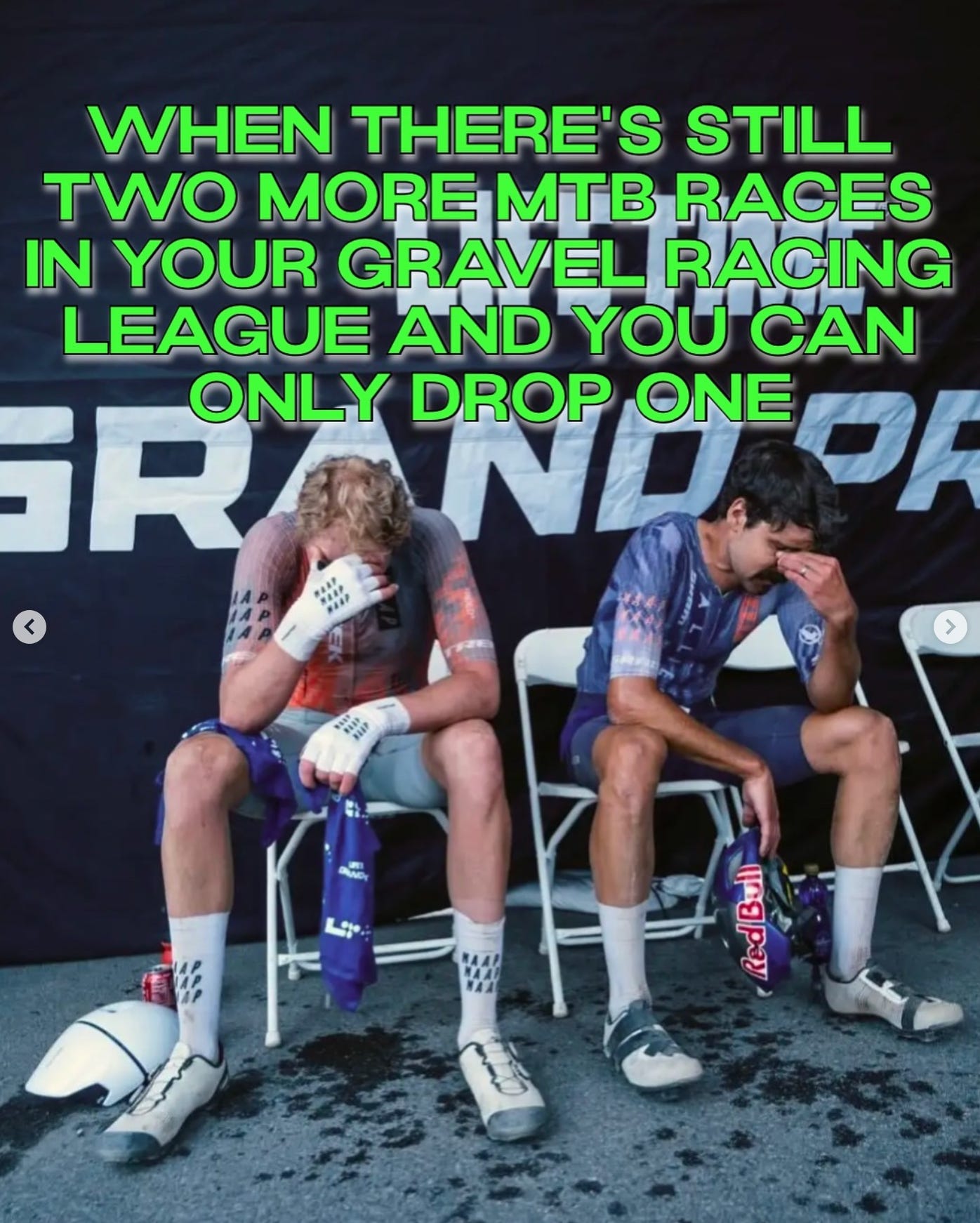
Finally, she argued that race series need to move away from the broader “off-road” format and establish calendars dedicated solely to gravel. Pointing to the Life Time Grand Prix (consisting of 3 gravel races and 3 mountain bike races), she said, “I think they need to get rid of the mountain bike races in the series. I get that a lot of the riders come from a mountain biking background, but if we’re trying to make gravel a real discipline, it should at least have its own series.”
Gravel is already complicated enough for fans to follow, and mixing disciplines only adds to the confusion. While Life Time brands the series as off-road, the reality is that its foundation rests on the biggest gravel race in the world, Unbound. With the UCI and Gravel Earth already running gravel-specific series in Europe, Life Time has the opportunity to play that role in the U.S.
Looking ahead
At the end of our conversation, I asked what’s next for the Holy Spirit of Gravel and whether she sees herself becoming one of the sport’s official voices. Her response was exciting: “After going to Iowa to cover Core4, I decided I definitely want to be more involved in the coverage of the pro field. I think my knowledge and appreciation of what these privateers/pros do from a normie perspective is an asset to race organizers and really bridges that normie-pro gap, especially for younger people who want to get more involved.”
I’m excited to see her chase this goal, and I hope she’s invited to more big races. Not just because I’m a fan of her and the sport, but because she’s proven to be both an inspiration and a blueprint for how someone like me can start something from scratch in cycling and make an impact. Talking with Holy Spirit was fun, but hearing her insights and goals was the highlight of our conversation. I’ll leave you with this: her humor may get the laughs, but her impact is no joke.
If you want to become gravel-pilled, be sure to follow the Holy Spirit of Gravel on Instagram and Spotify!
Ride and rip,
Kyle Dawes
In a sport that evolved organically in the digital age and is fully adapted to what that requires in terms of storytelling, community, and creating an engaging experience, Holy has found a great, authentic way to cover the sport.
When I was young, we had fanzines in niche sports and music. Today, we have HSOG meme accounts. I'd argue, they are vital for the community.
So, great you feature her here 😊
I've noticed this in trail running as well. There is a meme account called YaBoyScottJurek that was recently used to help roll out norda's new trail shoe.
These accounts have an intimate understanding of the culture of their respective sports, so it's cool to see the different ways they're leveraged and how they add value to the broader ecosystem.