


I absolutely hate missing a weekly post, and last Friday was no exception. With that said, I hope this piece makes up for it, because this is my longest and most in-depth analysis of a single company to date. Since early March I have been having conversations with the executives of two truly unique companies. While the piece is focused on the product, philosophy, and potential impact of these companies, the story extends far beyond that into what could become a meaningful framework for talent identification and development in American cycling.
This feature actually started with a story I released a while back about the perfect AI training solution. Specifically, how the ideal platform that would combine training, nutrition, health tracking, and coaching does not yet exist. Athletes who seek digital solutions for different aspects of their training are forced to purchase and use a variety of applications and devices without a centralized platform that brings all of that data together and turns it into actionable guidance.
Taking it further, to be truly reliable for athletes, the ideal AI solution would also need access to a large dataset of performance data from a large population of athletes to perform meaningful trend analysis. Beyond the data, it would need to operate ethically, bridge the gap between the physical and digital worlds, and create equal impact for the everyday person and high-level athletes.
I covered a lot of brands in that original article, but I had apparently overlooked one that I really should have considered. I will always be the first to admit I don’t always have the full picture, and this is a case where I am happy to fill in a knowledge gap from a previous story. What started as an opportunity to correct an oversight, however, quickly turned into a full deep dive on a company and product that I could not stop thinking about.
Not because the people I was talking to sold me on anything, but because I left every conversation with more questions than I came in with. I was not confused or misled. I was genuinely stimulated by the possibilities, specifically around how effective this company could be at scale for identifying and developing cycling talent in the United States. With that context in mind, let’s take a look at Human Powered Health and the HumanGo platform, and why they believe they can fundamentally change how people approach fitness and health.
My article was making the rounds
As I mentioned, this story came to be because of my previous article on AI training solutions. Shortly after I released that piece, I received a message from Franko Vatterott, Chief Growth Officer at Human Powered Health. My article had apparently made its way to multiple Human Powered Health employees who began sharing it internally. To my relief the feedback was positive. Franko did believe I had missed something though, specifically my thesis that a full context training solution did not yet exist.
Franko suggested I take a closer look at what Human Powered Health is doing with HumanGo, because he believed they were the closest thing to an all-in-one solution currently on the market. What was supposed to be a 30 minute introductory call turned into a 45 minute conversation covering HumanGo, Human Powered Health’s AI-powered platform for improving and metabolic health.
That conversation went well enough that Franko arranged a follow-up call between me, Dan Cohen, Co-Founder of Human Powered Health, and Eric Abecassis, CEO of HumanGo. That discussion went deeper into the inner workings of the product and the Human Powered Health ecosystem as a whole. From there I had a final one-on-one call with Dan to discuss the long-term vision and mission of the companies.
All together it was a month-long process that gave me a comprehensive picture of what this team is trying to accomplish. The rest of this article will break down Human Powered Health and HumanGo piece by piece before zooming out to explore whether their products and services truly have the capability to shape the future of health and endurance sport performance. Before getting into that, I want to properly introduce Dan, Franko, and Eric, because their backgrounds bring significant credibility to everything the company is pursuing.
The architects
Franko Vatterott, Chief Growth Officer — Human Powered Health
Franko brings 25 years of experience in the endurance sports industry. He co-founded Retül, a bike fitting product that delivers highly precise fits. In 2015 he successfully sold the company to Specialized Bicycle Components. From there he grew Human Interest Group into one of the leading sports marketing agencies in the United States, representing top endurance athletes across multiple disciplines. He eventually made the move to Human Powered Health to continue building his impact on the sport.
Eric Abecassis, CEO — HumanGo
Eric holds a PhD in computer science and has spent his career working with AI and machine learning across multiple industries. Before HumanGo, he served as CIO for an oil field engineering company where he applied machine learning and optimization to subsurface reservoir modeling. Eric eventually got into endurance sports and qualified for the Ironman World Championships in Kona. After discovering that his coach was applying essentially identical training plans to all of his athletes, he decided to build something better.
Dan Cohen, Co-Founder and Chief Performance Officer — Human Powered Health
Dan brings 20 years of experience in the healthcare industry, including roles like VP of Solution Consulting at Optum Health, Director of UHG Ventures, and Founder of Optum Health Performance. Years of working inside healthcare systems led him to pursue a more proactive solution to the metabolic health challenges facing the country. As he puts it:
“We understand the health system, not just in the United States, but across the globe, and the reality is it’s broken. It’s reactive, it’s not impactful. It’s not set up for long-term longitudinal health.”
These are not the only people building Human Powered Health and HumanGo, but they certainly know the product and mission better than just about anybody.
Human Powered Health’s origins
Fitting to this publication, Human Powered Health was actually a cycling team before it was a company. Much like Project Echelon functioning as both a cycling team and a broader organization, Human Powered Health was born from the peloton. Originally operating under other team names like Kelly Benefits Strategies and Rally Cycling, the name Human Powered Health was eventually adopted as a team identity to express what cycling represents physically. When it came time to build a company, Dan and his colleagues identified with that representation and embraced it.
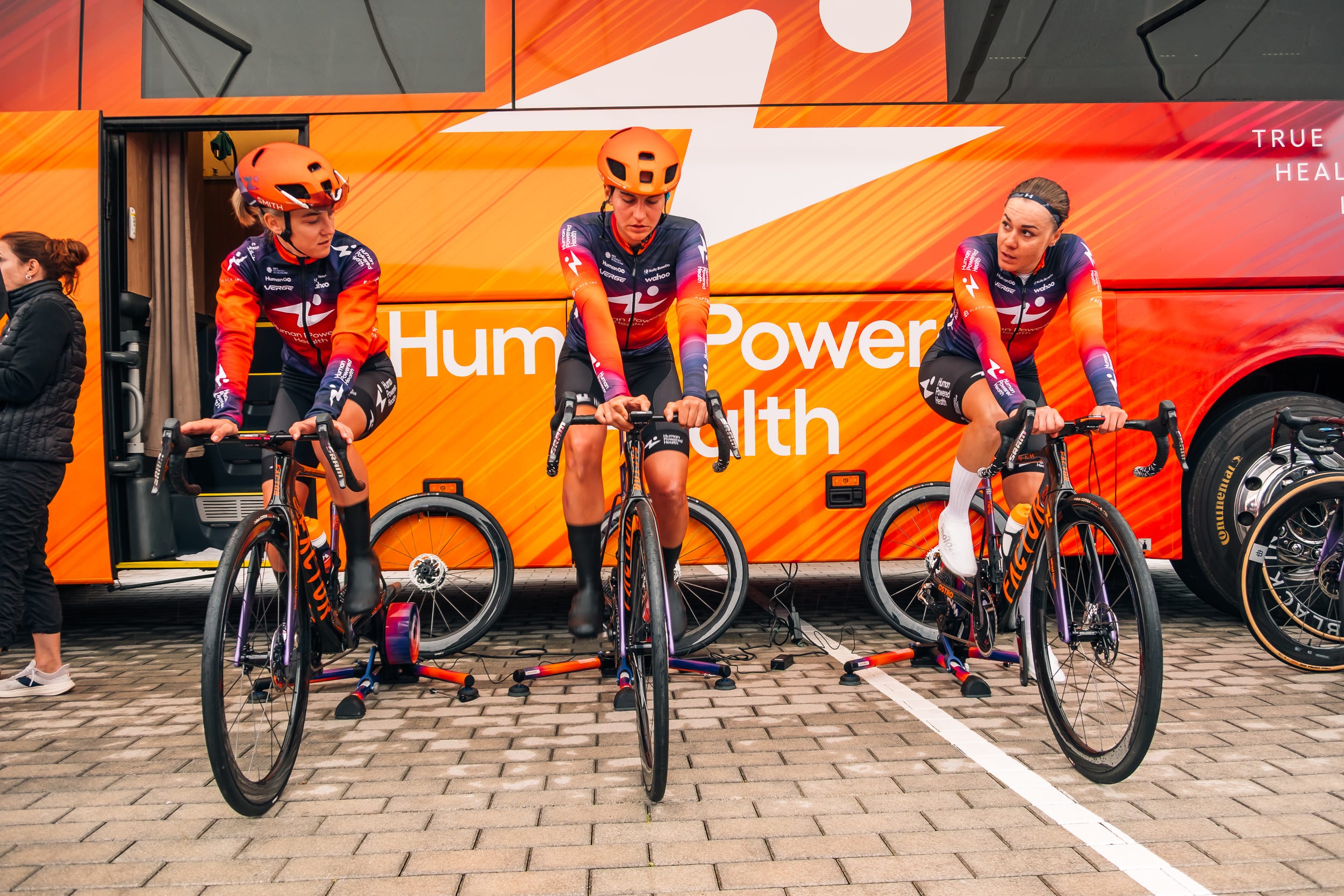
As discussed, the founding team at Human Powered Health consists of several healthcare veterans including former United Health Group leadership. With Rally Health having previously served as the team’s title sponsor, there was already a strong professional connection to the cycling program. When Dan and his colleagues decided to build a platform focused on metabolic health, aligning it with a professional sports team was a logical first step. In 2022 Human Powered Health was officially founded with a mission of powering health and athletic potential for motivated people.
Three years before Human Powered Health was founded, in 2019, Eric launched HumanGo with the mission of creating better coaching options for endurance athletes. It was not until later that Human Powered Health acquired HumanGo and brought it into the broader ecosystem.
Now that we have a firm understanding of where these companies came from, the more important question becomes: what problems are they actually solving? Once we know that we can truly begin to dissect their operations, goals, and effects.
Getting from Healthcare 2.0 to Healthcare 3.0
In my one-on-one conversation with Dan, we dove deep into the motivations behind Human Powered Health and the specific problems they are trying to solve. The central idea is that the United States is stuck in Healthcare 2.0, a reactive system where people wait until something goes wrong before seeking help. The goal is to shift toward Healthcare 3.0, where proactivity is the default. Rather than waiting to get sick and then going to the doctor, Healthcare 3.0 makes use of available technology to identify and address risk before it becomes illness.
With a long career in healthcare, Dan and his colleagues believed they had a better grasp on the shortcomings of the global healthcare system than most. A driving force behind Human Powered Health was the belief that metabolic health represented a major blind spot in preventive care, specifically the relationship between biomarkers and biometrics and their effect on long-term health outcomes.
“If you look at all the science and research on these biomarkers and biometrics — things like body composition and VO2 Max and resting metabolic rate, lactate, grip strength — they’re all highly correlated to all-cause mortality and longevity. If you can get a baseline understanding of your physiology and get a hyperpersonalized plan across our four pillars of movement, mindset, fuel, and recovery, the statistics are very clear that you have a very good shot at living a long, productive, healthy, full life.” — Dan Cohen
For endurance athletes and enthusiasts, these biomarkers are nothing new. They are central to our performance and numbers we obsess over on a daily basis. For the general public, that familiarity is far less common. The issue is not that physicians or providers are deprioritizing these metrics, but rather that they rarely have the bandwidth or resources to closely monitor them across their patient population. Comprehensive metabolic assessment is either too expensive for the patient or pushed down the list of priorities by more immediate health conditions that demand attention first.
Knowing this, Human Powered Health began with a deliberate focus on athletes. It is something of a trojan horse approach: target the athletic population first, use their data to build best practices, and then apply those learnings to the broader population. Endurance athletes tend to sit at the top of the cardiovascular and metabolic health spectrum, and crucially, they are motivated to keep improving.
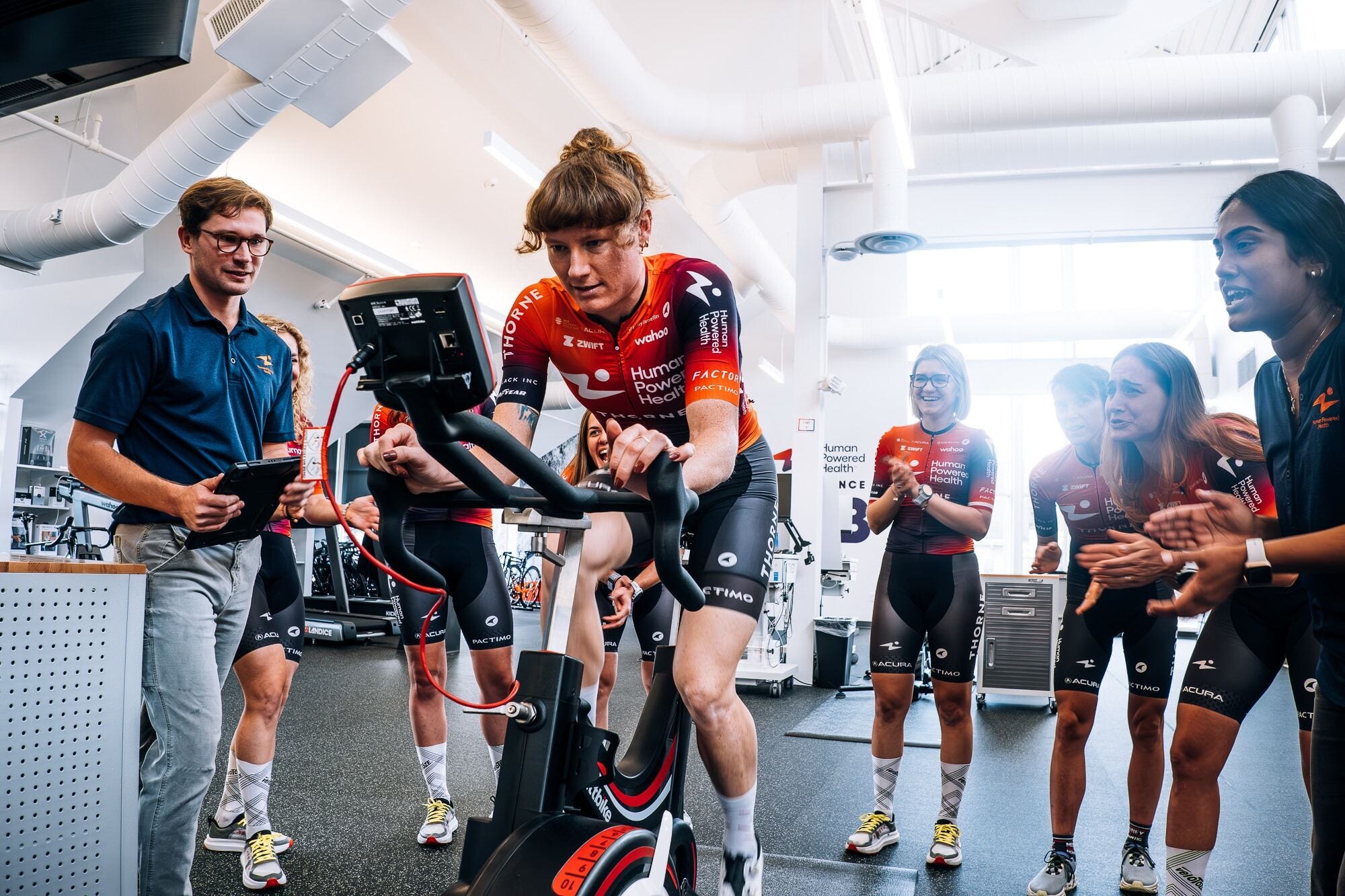
Motivation is the key factor. Everyone wants to be healthy and fit, but a significant portion of the population lacks either the access or the experience needed to act on specific health metrics. Athletes provide a base of highly engaged individuals who will actually follow through on protocols and recommendations. If Human Powered Health can better understand and improve these metrics in people who are already performing at a high level, it becomes significantly easier to develop best practices that can eventually scale across the broader population.
“We started with athletes because we wanted to understand from that population and refine from there, but the overarching objective has always been to get to the masses, the 93% of the US population that are of poor cardiometabolic health and the numbers continue to go in the wrong direction. That’s really the ultimate goal.” — Dan Cohen
Now that we’ve established the problem and starting point for Human Powered Health, what are they doing to address and solve the issue while also producing the best training platform?
Performance labs
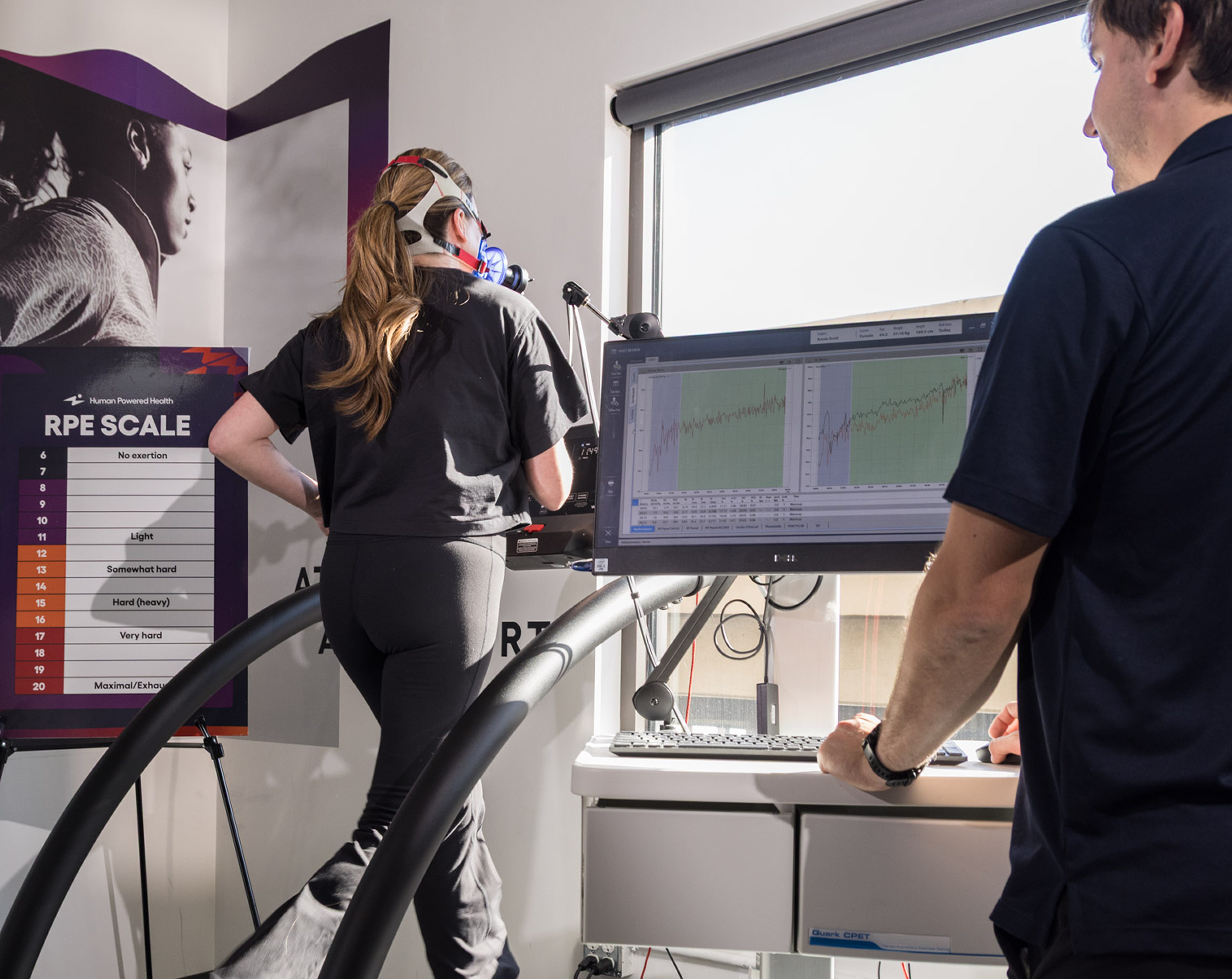
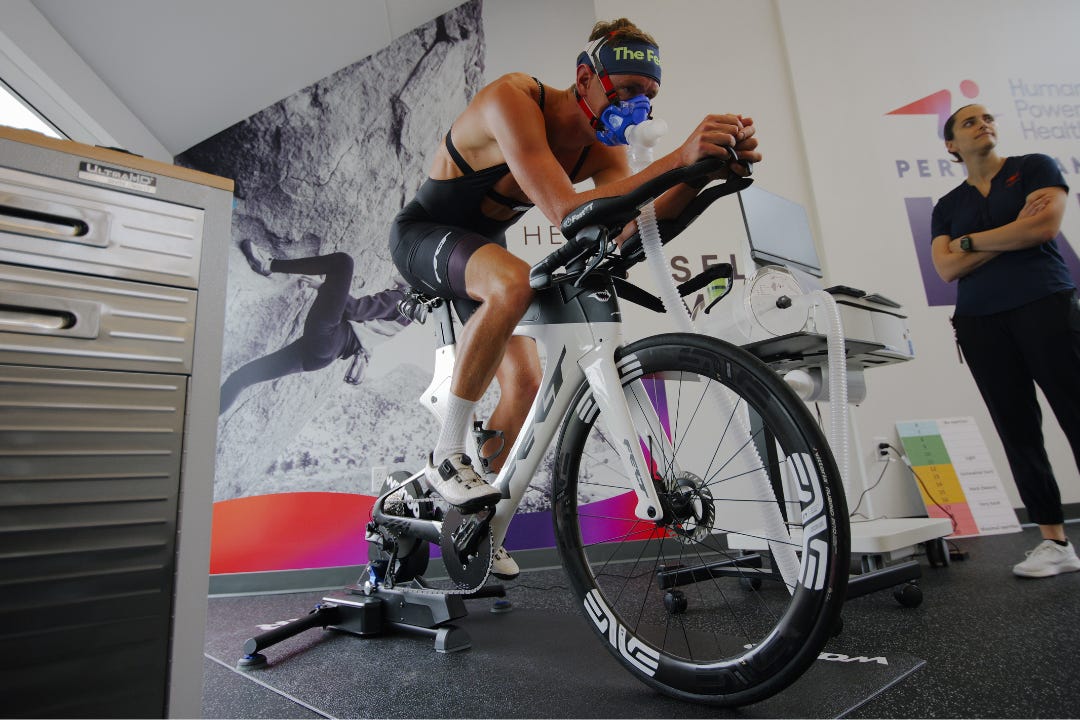
Human Powered Health provides access to accurate biometric and biomarker testing. If the mission is to improve longevity through the targeting of specific indicators, then athletes and the general population need access to regular data to monitor how their various biomarkers are progressing. When we talk about VO2 Max, resting metabolic rate, and lactate zones, these are not easily or accurately tested by someone on their own, the tests require specific equipment and individuals who know how to administer the test and interpret the results.
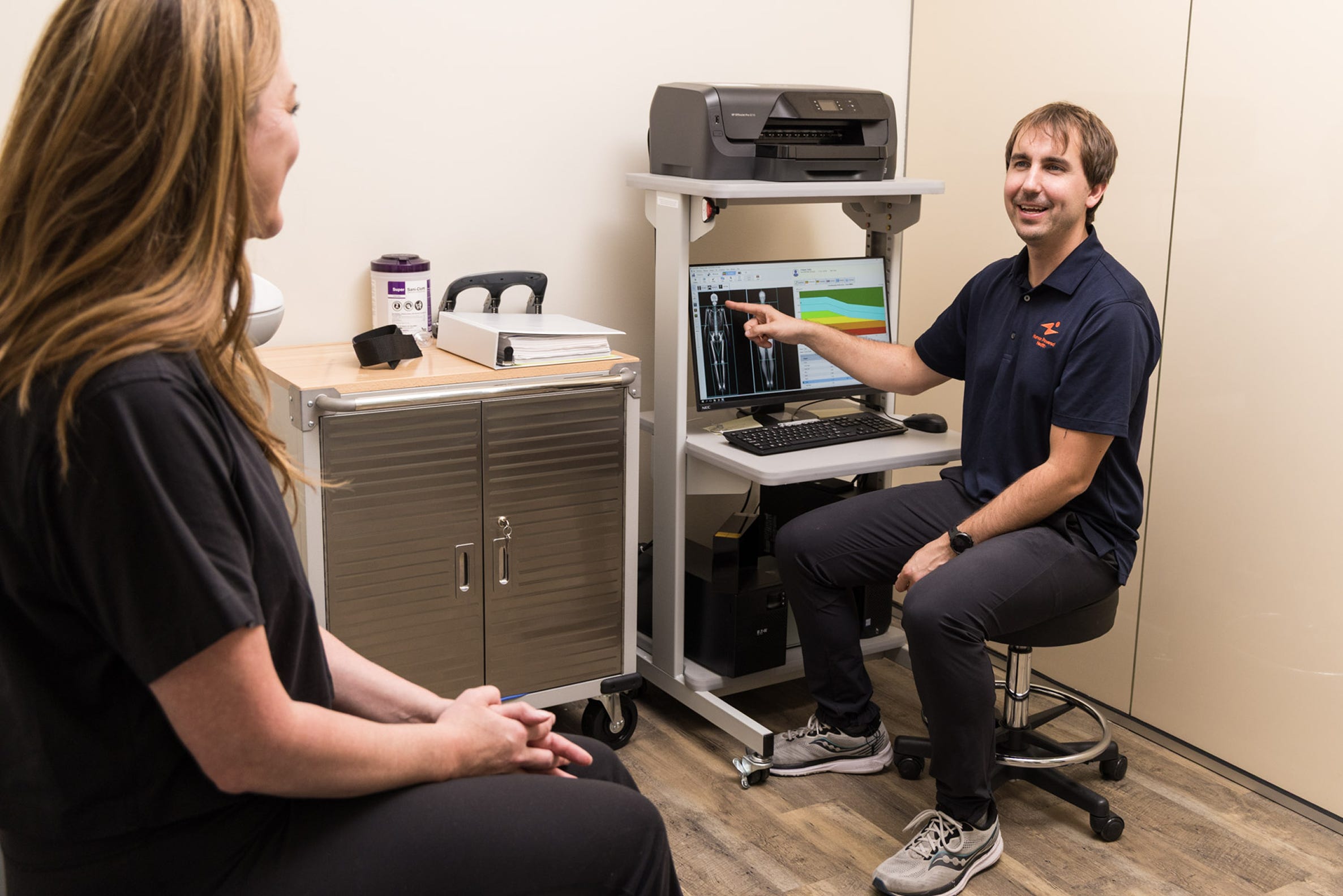
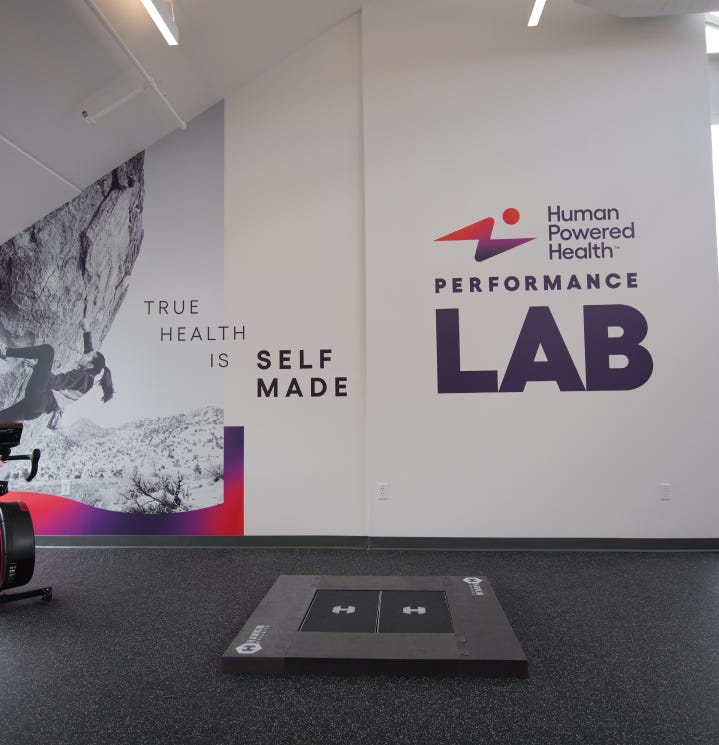
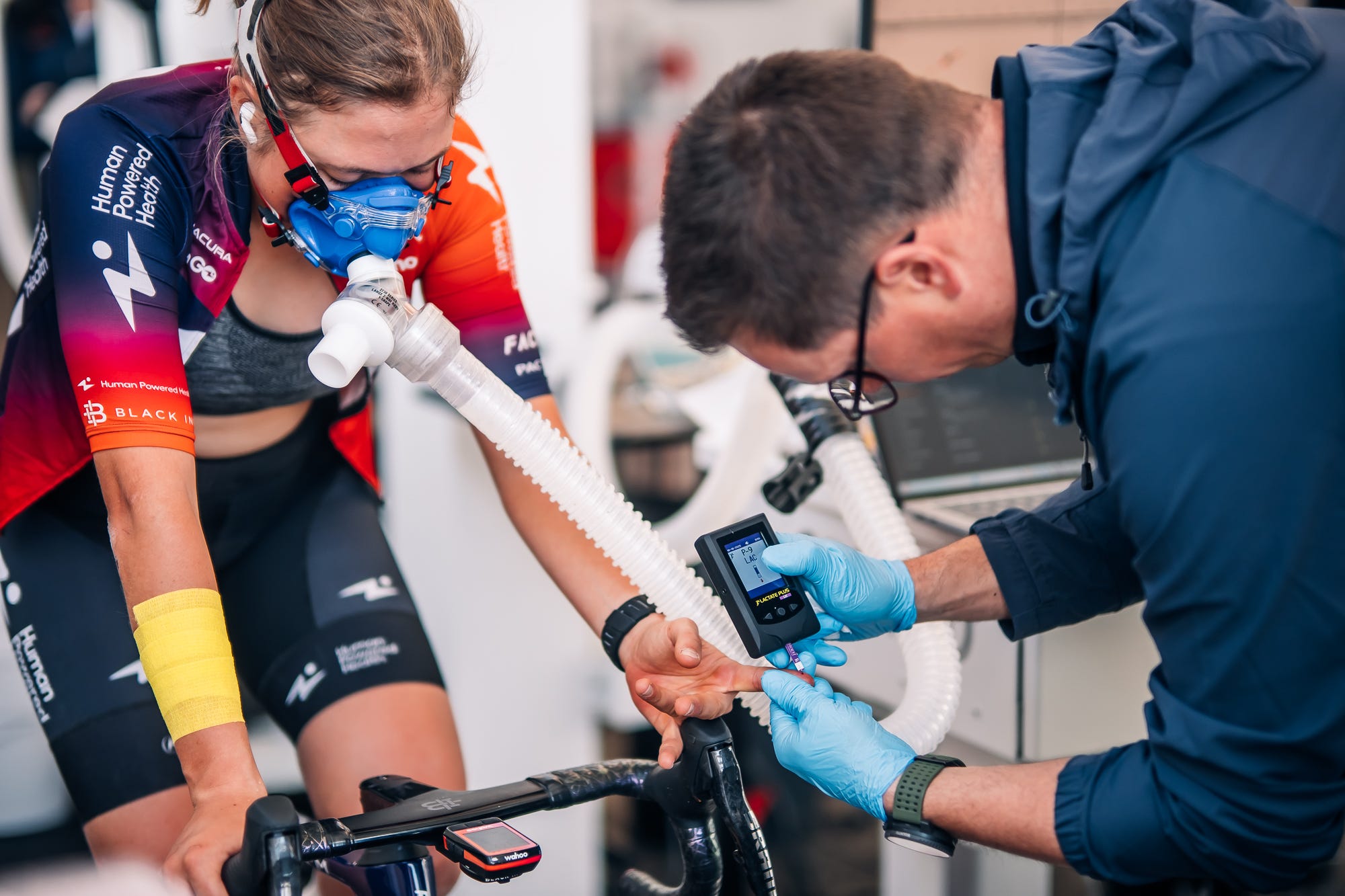
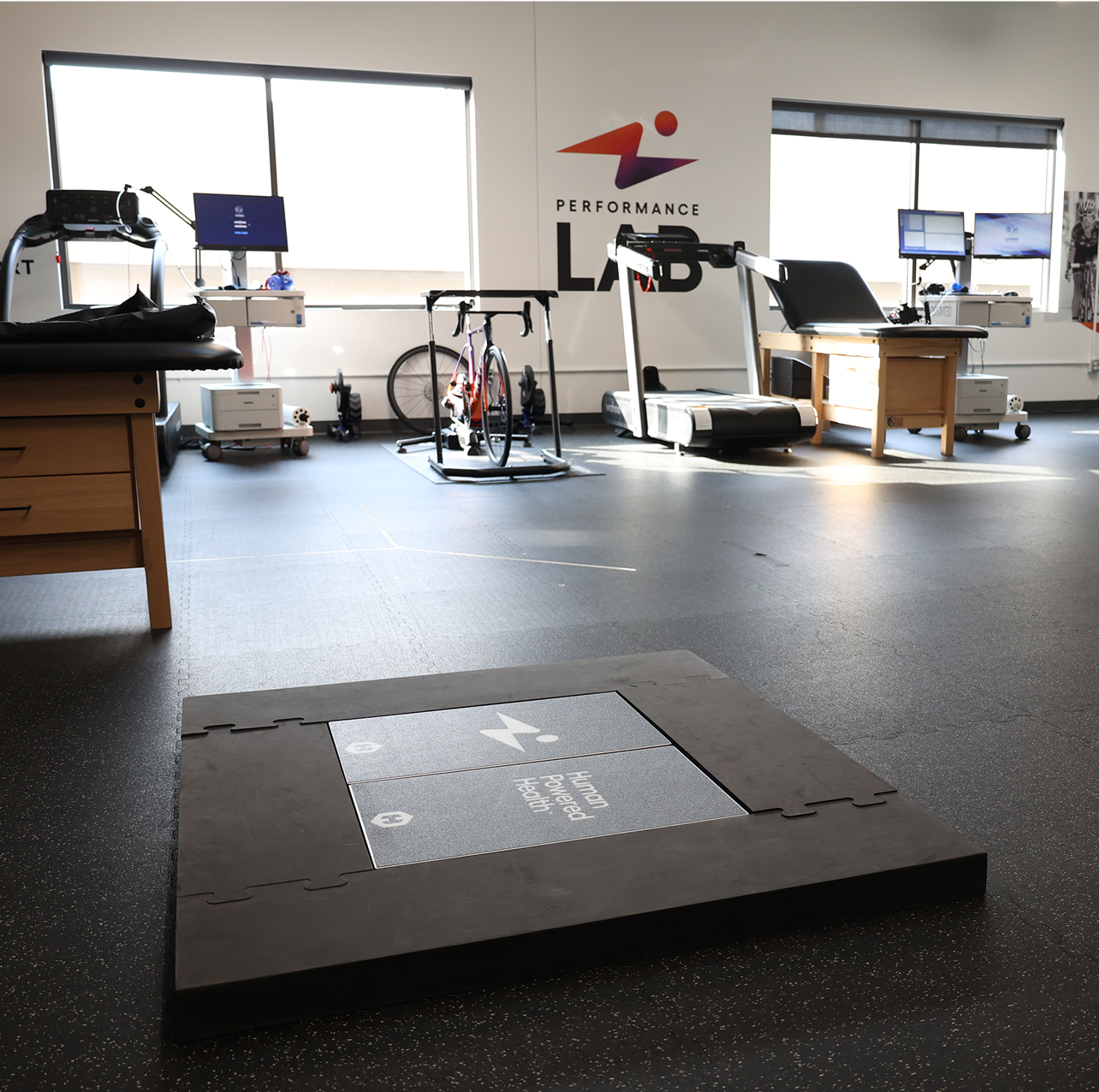
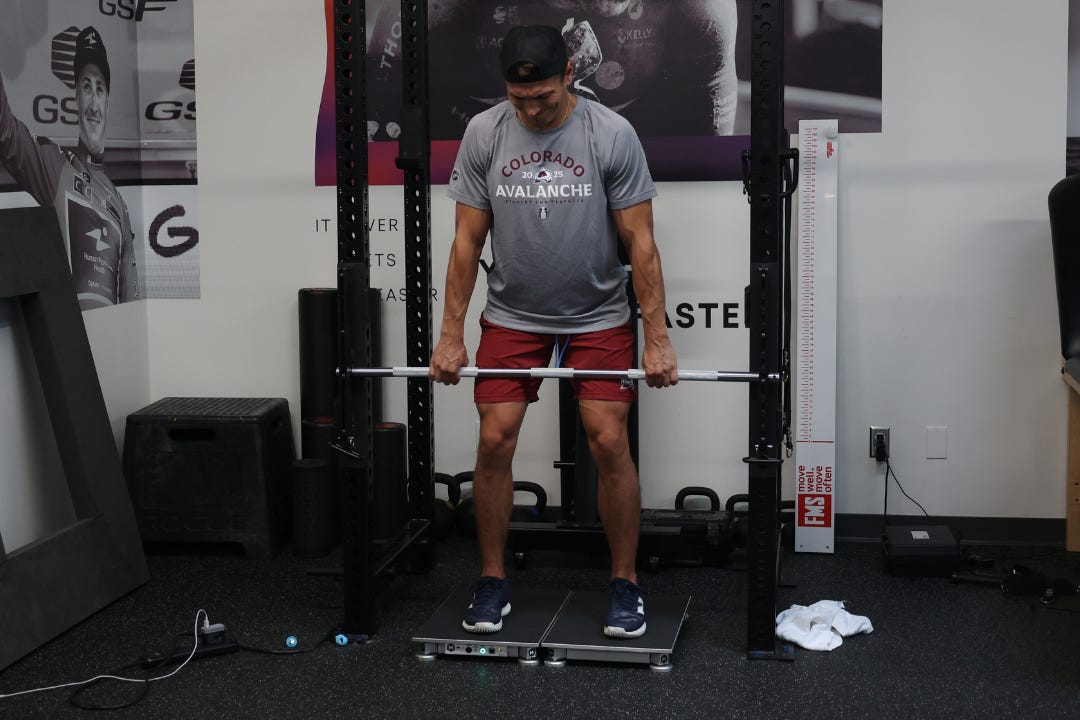
Human Powered Health provides athletes with performance labs where they can undergo testing to understand their baseline biometric and biomarker values. These labs are the physical heart of the Human Powered Health ecosystem. The first step in utilizing Human Powered Health and HumanGo to their fullest potential is completing a lab visit.
What happens in a lab visit:
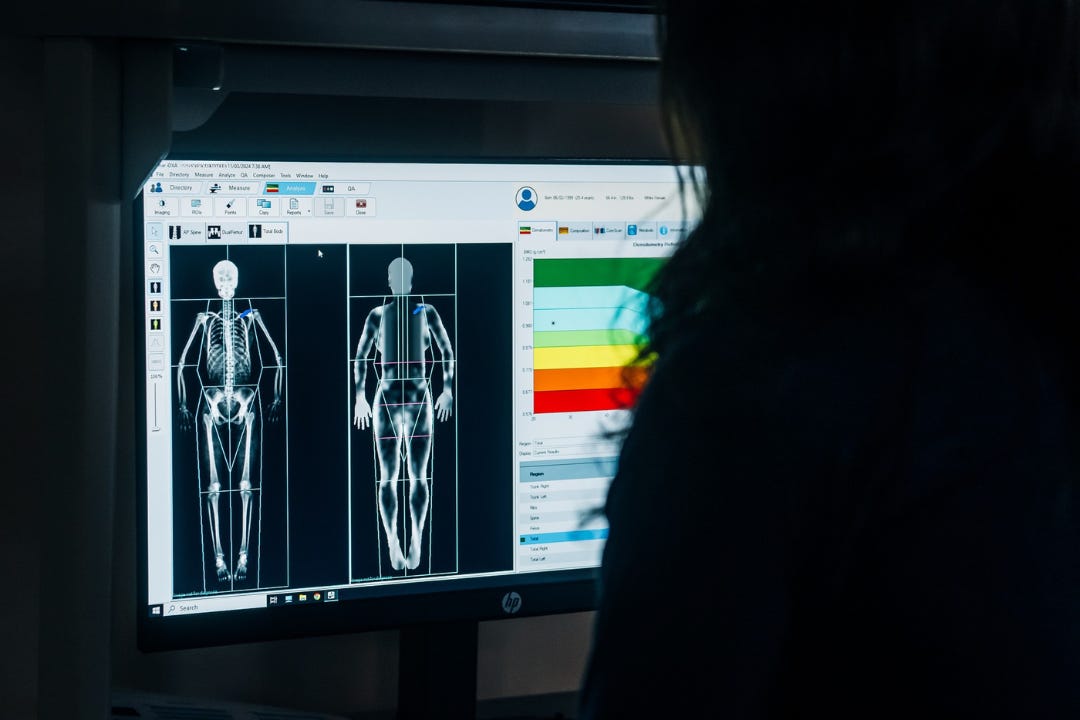
DXA scan for body composition including visceral fat detection
VO2 Max testing from a metabolic cart, gold standard rather than wearable estimation
Lactate testing to establish LT1 and LT2
Resting metabolic rate testing
Bike fit and force measurement for cycling athletes
All data interpreted same day with an actionable insights plan
* These are just some of the tests conducted in the labs. The full scope depends on what testing package an athlete selects
What makes these labs different:
Run by masters and PhD-level physiologists in front-facing roles, not tucked away in research departments
Designed to feel approachable unlike university research labs and sterile medical facilities
Human Powered Health labs have 225 organic five-star reviews
Access to qualified professionals and a welcoming experience are where the brand really differentiates itself, as Franko describes:
“The labs look more like Apple stores than traditional metabolic testing labs or the university research-y behemoth type of lab. We are putting a physiologist in your life, whether you’re an athlete or a general population person, in the same way that you would put a dentist in your life where you have a regular touch point with somebody.” — Franko Vatterott
Currently there are three operational labs in Human Powered Health hub cities: a flagship lab in Boston, followed by locations in Minneapolis and Phoenix, with immediate plans for additional labs in Tampa as well as other markets on Human Powered Health’s radar, such as Dallas, Denver, and Atlanta.
Three labs may not sound like a lot, and admittedly it is not, but there are strategic reasons for the measured pace of expansion. Given the company’s initial focus on high-performance athletes, the demand does not yet warrant rapid expansion. Dan outlined how Human Powered Health plans to grow lab access through a hub and spoke model that scales with the business and eventually brings lab services to the general public:
“We’ll have a hub and spoke model. First you have major regions: north, central, south, east, west where we’ll have our largest hub labs. Next we’ll have smaller footprint labs, think 1,500 to 2,000 square feet, that are more around health optimization and longevity. We’re not going to be doing bike fitting and more of the athlete-focused assessments, rather the things the general population wants.” — Dan Cohen
Thinking back to the ideal training solution, this is one concrete way that Dan and the team are bridging a physical gap in performance tracking. Rather than relying on the inaccurate biomarker estimates that wearables provide, athletes and health-motivated individuals will have access to professional performance testing they can trust. Translating that data into action and putting it to work in the digital world is where HumanGo comes into play.
HumanGo
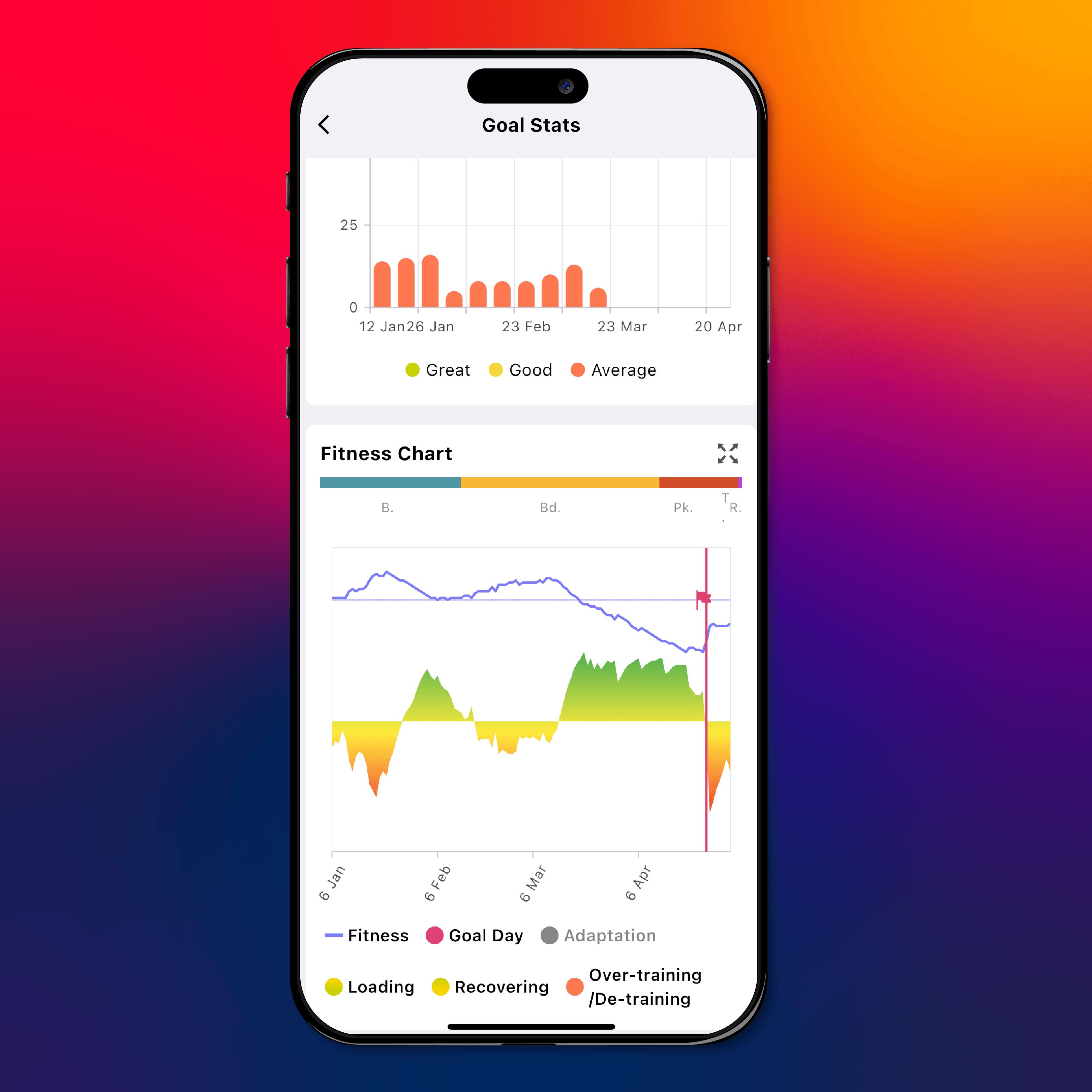
Human Powered Health’s labs generate the raw athlete data and HumanGo is the digital layer that absorbs that data and turns it into personalized and actionable plans. This connection is what creates the full Human Powered Health platform and differentiates it from current adaptive training applications.
The data used in HumanGo’s models goes a step further than traditional static training plans and other adaptive applications that only adjust to past training history and minimal inputs like HRV, FTP, etc. When you look at how HumanGo’s engine actually works, that difference becomes clear.
In my earlier AI training piece, I raised several concerns about the rise of digital training solutions. Specifically, how having a lack of biometric data and scientific literature embedded in models raises the risk of overtraining and prolonged physiological harm. As we saw in my conversation with Veronica Ewers, there is far more to determining healthy training than power numbers and sleep scores alone. When I spoke with Eric, I asked him to walk me through how HumanGo works, how it addresses these concerns, and what the platform has looked like in practice with the Human Powered Health Women’s WorldTour team.
How HumanGo Works
Eric started by making an important clarification about the current state of AI training platforms. As of today, no training solution has enough data to be truly predictive in nature. There simply is not enough individual performance data to build a reliable machine learning model that can safely advise training based on an athlete’s limited historical record.
“When you’re looking at a machine learning problem, you never have enough data in the context of an athlete training to be able to find a model. There are a few things you can do, you can do some mapping between heart rate and power, but being able to decide from data what is a good plan and what is a bad plan from data only, that’s virtually impossible. You need millions of data points. If people lived for a million years, maybe we could do that, but unfortunately their training period is just a few decades at best.” — Eric Abecassis
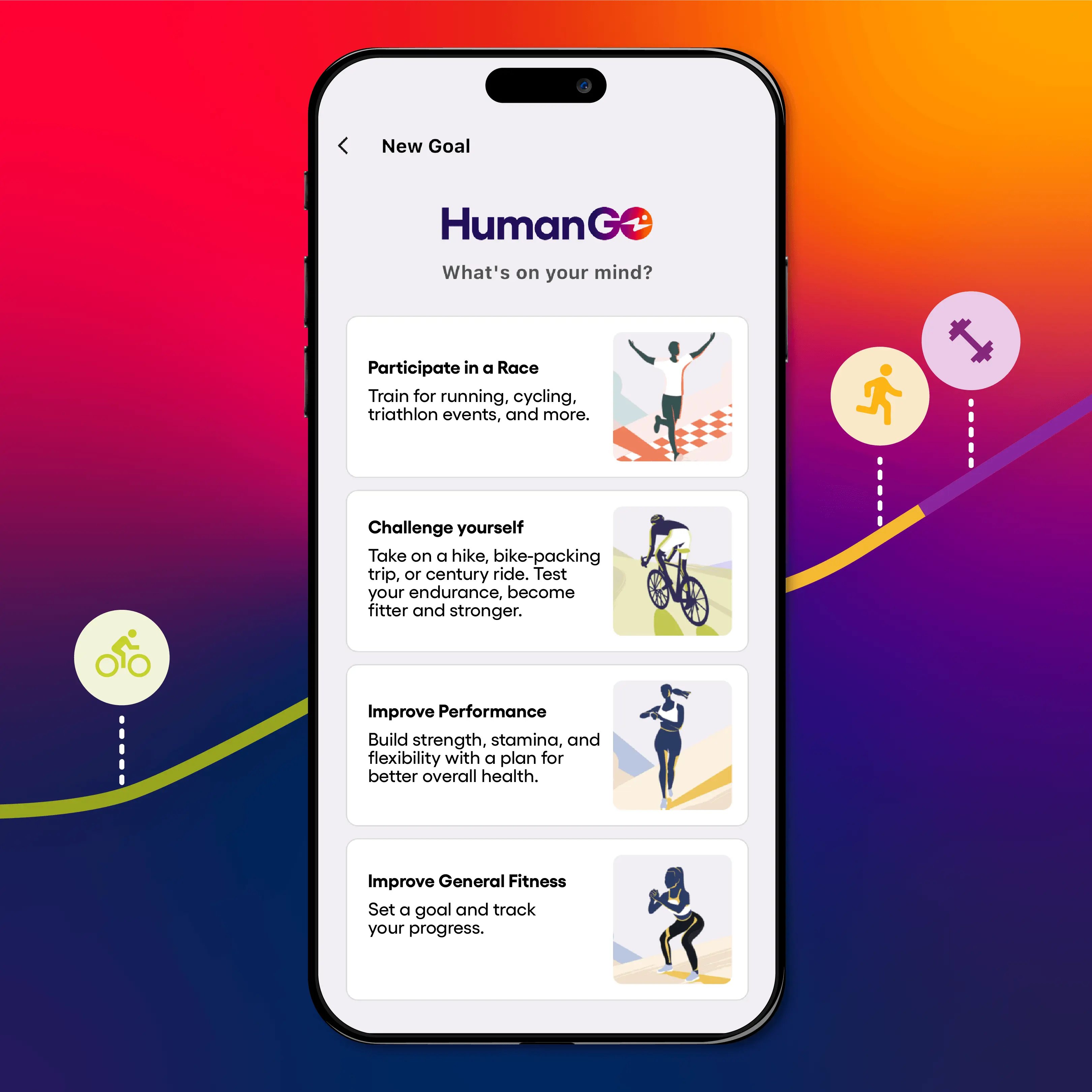
With that clarification in mind, HumanGo is by definition an adaptive training platform, but that is where the similarities with other solutions end. What sets it apart is the depth of user input the platform is built to absorb. Where other platforms may allow users to flag that they feel tired or need a shorter session, HumanGo records significantly more variables that the model can draw from alongside human input.
When it comes time to generate a plan, HumanGo’s optimization engine takes all of those factors into consideration and builds around an applied set of rules, as Eric explained:
“What it does is apply a certain number of rules for what you want to have as a time in zone distribution for a certain event, for a certain level of athlete. Then it organizes that in conjunction with a number of constraints: we don’t want to give you two hard days in a row, we want to track if you are overreaching so we can modulate the load, we want to increase progressively the amount of intensity and duration based on your target. All these things are built in.” — Eric Abecassis
While other platforms also work off zone-based models, HumanGo is currently designed with high-level athletes in mind, meaning the level of specificity and depth of guidance available is significantly greater. True coaching is not a one-way communication channel. It is a continuous conversation between athlete and coach, which is where HumanGo’s large language model comes into play.
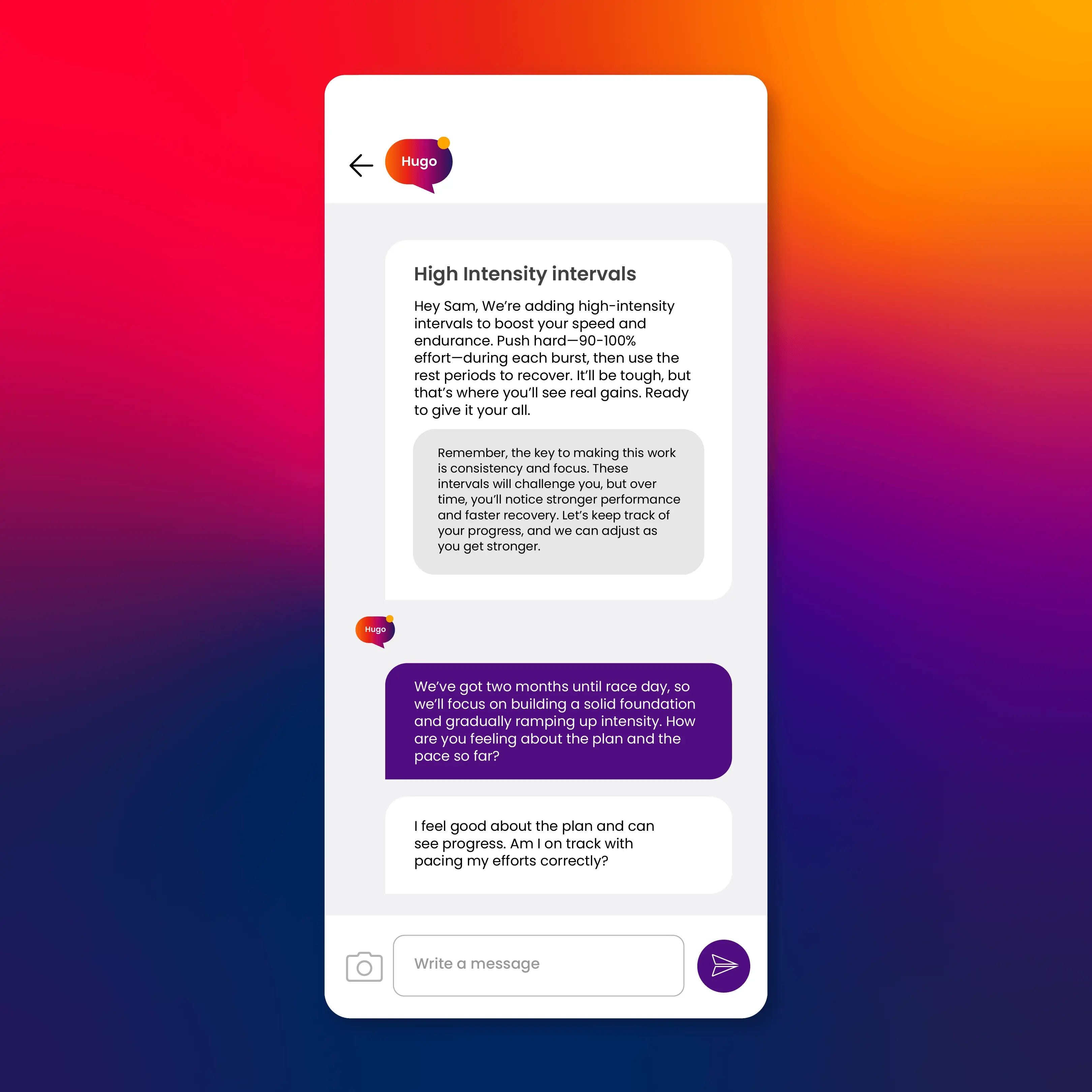
The context the LLM draws from is unusually rich, incorporating both long and short-term memory, bringing it as close to a human coaching relationship as a digital platform currently can:
“We now have a skill architecture where we have about 20 skills. We have long-term and short-term memory. The LLM is scrutinizing everything that you’re doing, triggered by analytics on your data, and the conversations themselves are driven through an LLM that is enriched with accurate information about your data.”
“The LLM knows your goal, it knows all your health data, your activity data, your workout information. It has long-term memory on anything relevant that you could have discussed. Those conversations can also trigger actual adjustments of your plan or changes in the system. The LLM is connected to our app to understand how to change settings in your plan, and so on.” — Eric Abecassis
The depth of user input is truly what makes HumanGo stand out and allows the platform to implement more meaningful changes based on ongoing feedback. The team was candid that this is also one of HumanGo’s current weaknesses. More input variables create more room for user confusion or misconfiguration when setting up the platform. Human Powered Health’s labs help eliminate a significant portion of that setup friction by providing accurate physiological data from the outset, but the added detail is genuinely necessary for a platform originally designed to service high-level athletes.
Addressing safety concerns
No coaching platform will ever be completely risk-free, but platforms like HumanGo carry a meaningful advantage in that they maintain the full historical context of an athlete’s data indefinitely. Human coaches can forget. They make judgment errors, get caught up in ego-driven decisions, or miscommunicate. HumanGo brings an unbiased layer to the coaching relationship that relies solely on user inputs and objective feedback rather than memory or mood. The team was quick to note that human coaches are a good thing, HumanGo just provides another layer of reliable, auditable data that human coaches can use with their athletes.
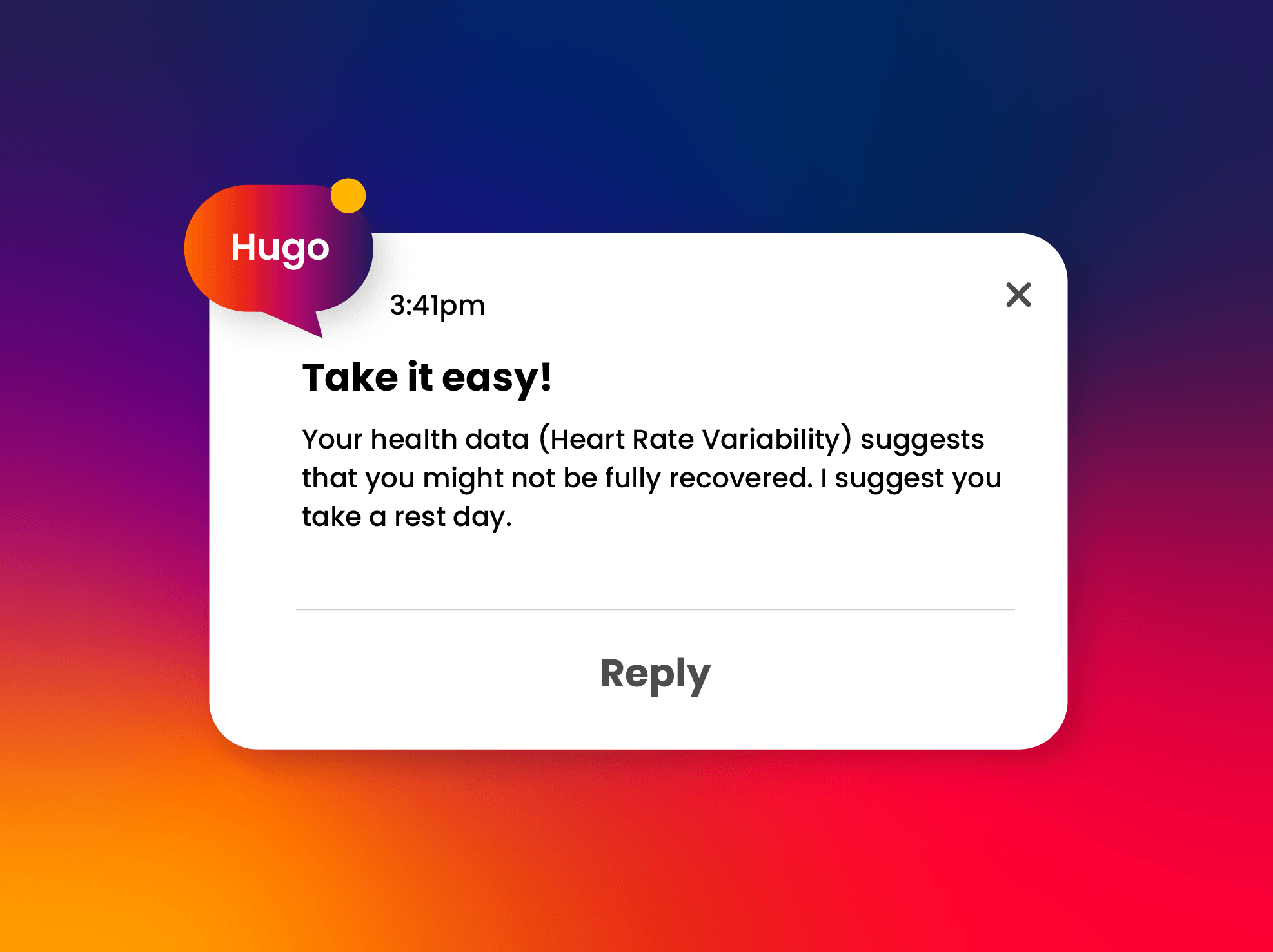
Beyond the platform itself, HumanGo has additional safeguards that help further reduce the risk of adverse training outcomes. The first is access to the professionals at Human Powered Health’s labs, who can provide direct physiological insight when athletes receive their testing data. The second is a deliberate design choice to avoid surfacing raw readiness scores that might push an athlete toward an action that conflicts with how they actually feel.
“The philosophy we have at the moment is we’re shying away from a readiness score, so to speak. We’re more tracking behind the scenes and then when we think it’s relevant making a suggestion: okay, we read maybe some fatigue. Does that correlate with your perception? Do you want to take a few days off? Because my experience of all the devices I’ve used is that it’s becoming an obsession for people to just align their perception to the data. I think we want athletes to believe their perception even before the data.” - Eric Abecassis
This directly addresses one of the concerns raised in my conversation with Veronica, who described how constant exposure to readiness data can cause athletes to distrust their own perception and make training decisions driven by a score rather than how they genuinely feel. HumanGo’s approach of prioritizing self-perception over algorithmic output is a meaningful and principled response to that dynamic.
Women’s WorldTour team use
The Human Powered Health women’s WorldTour team gives Dan and Eric a reliable and controlled population to refine both HumanGo and the broader lab ecosystem. Having a professional sports organization at their disposal helps limit the variables that could lead to adverse outcomes. Crucially, it is not just the athletes using the platform. It is the entire support structure around them, as Dan explained:
“We’re not just bringing the sports performance teams and their coaches. We’re bringing the sports psychologist, we’re bringing a registered dietitian, and they’re all looking at the data, and as a team we determine: does seeing your DEXA report going to be more detrimental to that athlete, or is it going to be a value add? Those are decisions you make on an individual case by case basis as part of the team, because even though it’s a team sport, all these athletes are different and have different mindsets.” — Dan Cohen
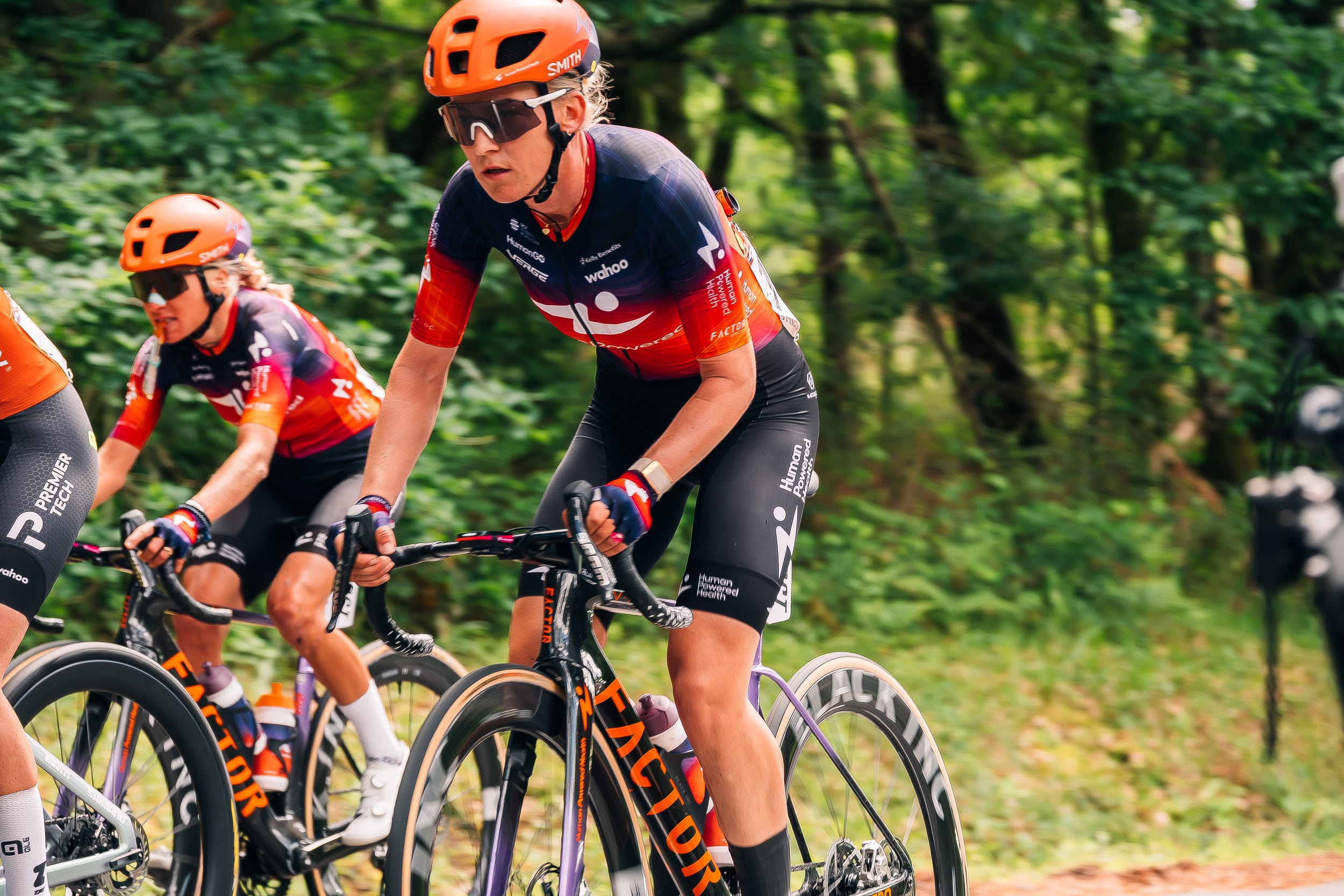
The team also creates a reliable baseline group for measuring app effectiveness and tracking athlete progression as new lab testing variables are introduced:
“For the last three years, when the UCI WorldTour season is over, all the athletes come over to the United States. We put them through four days of very extensive testing. The medical team comes over, the performance team comes over, and we’re doing really advanced protocols. All that data then flows into Human Go and creates a really nice clear picture.” — Dan Cohen
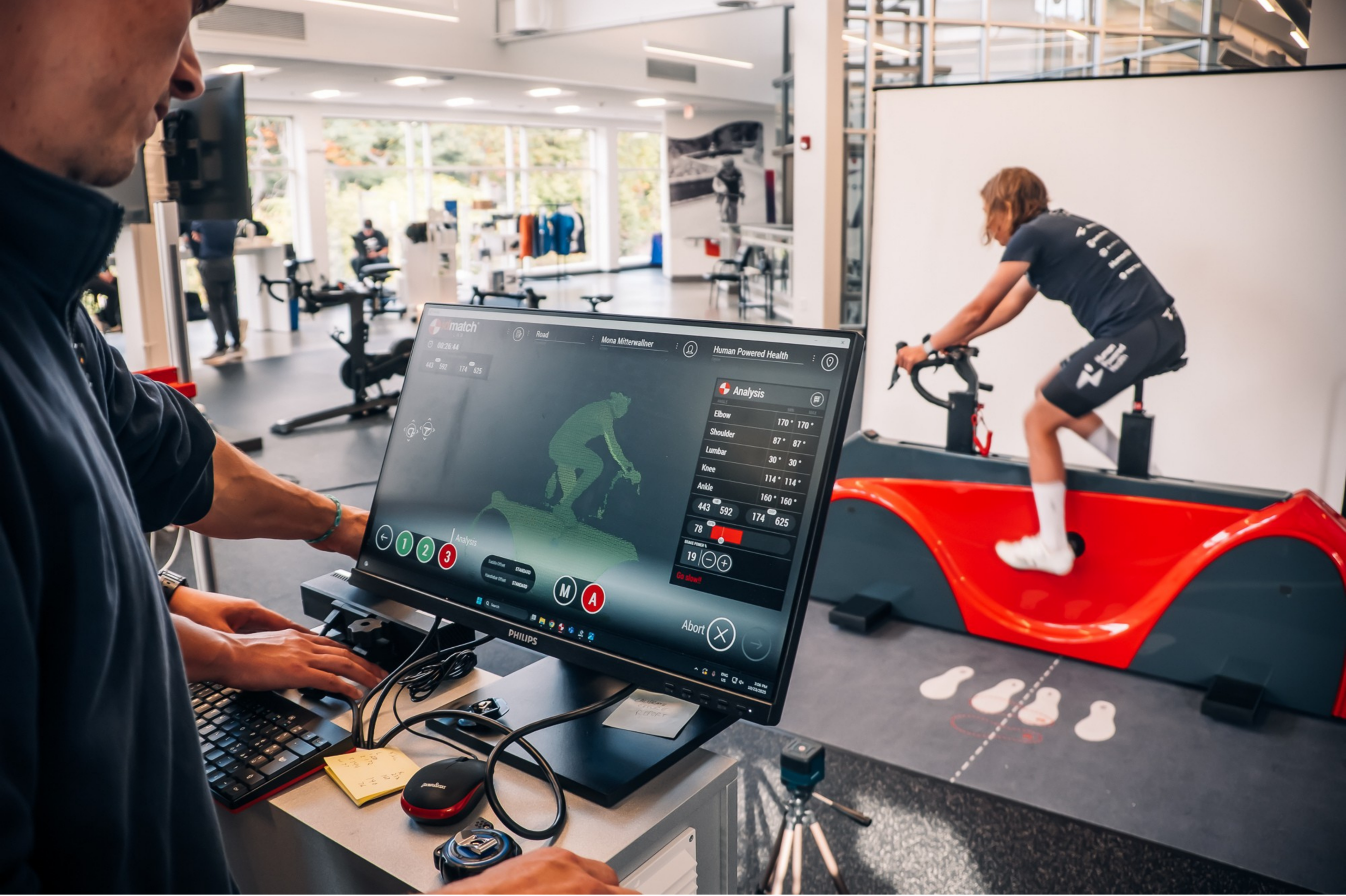
“The real benefit for the cycling team is coming from the integration between the lab and the app. Having the full integration with all their results from the lab, and having a regular rendezvous every year to get full testing for the team and then follow that with different protocol testing that can be done remotely and aggregating all that — that’s where the value is.” — Eric Abecassis
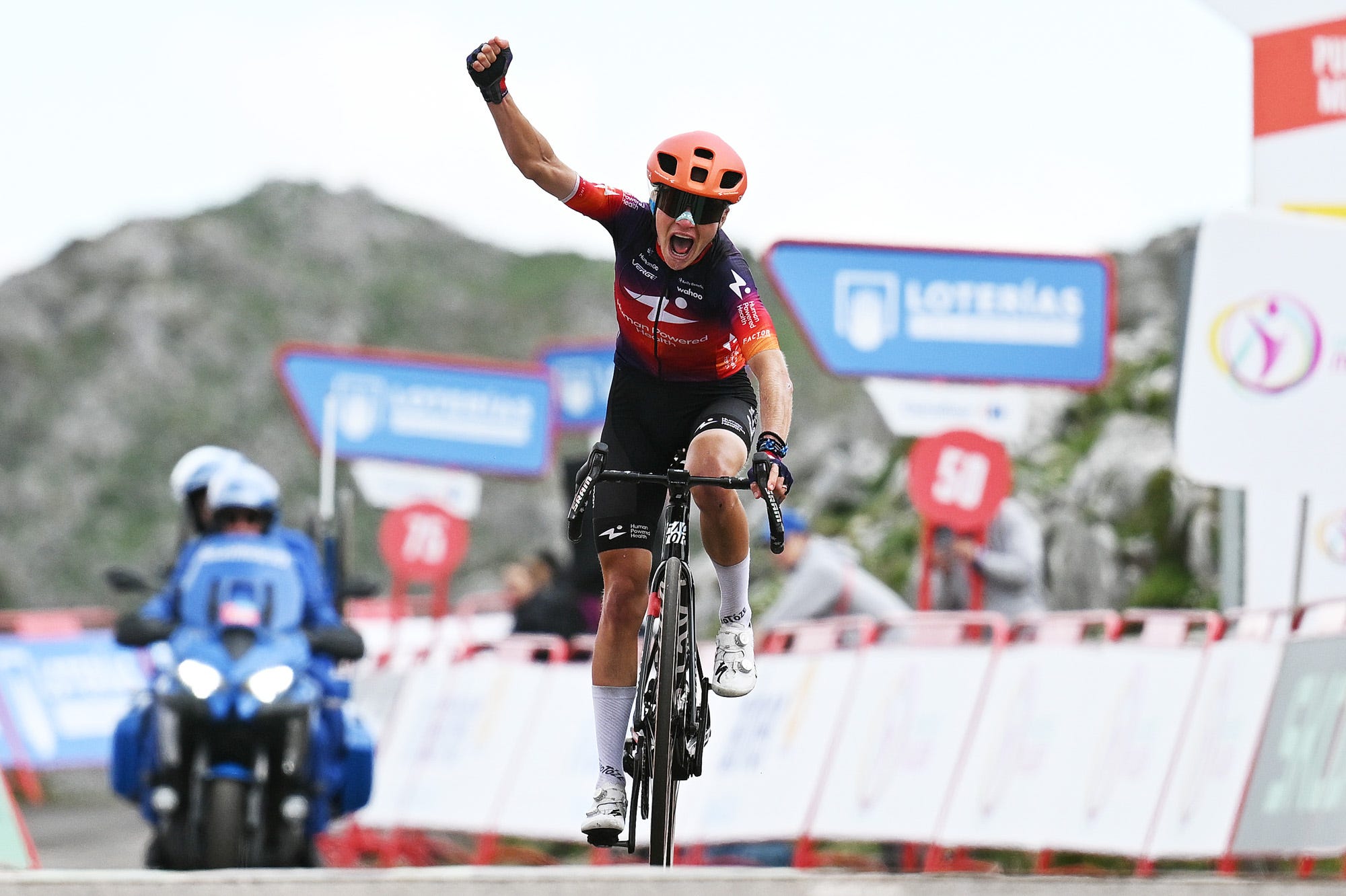
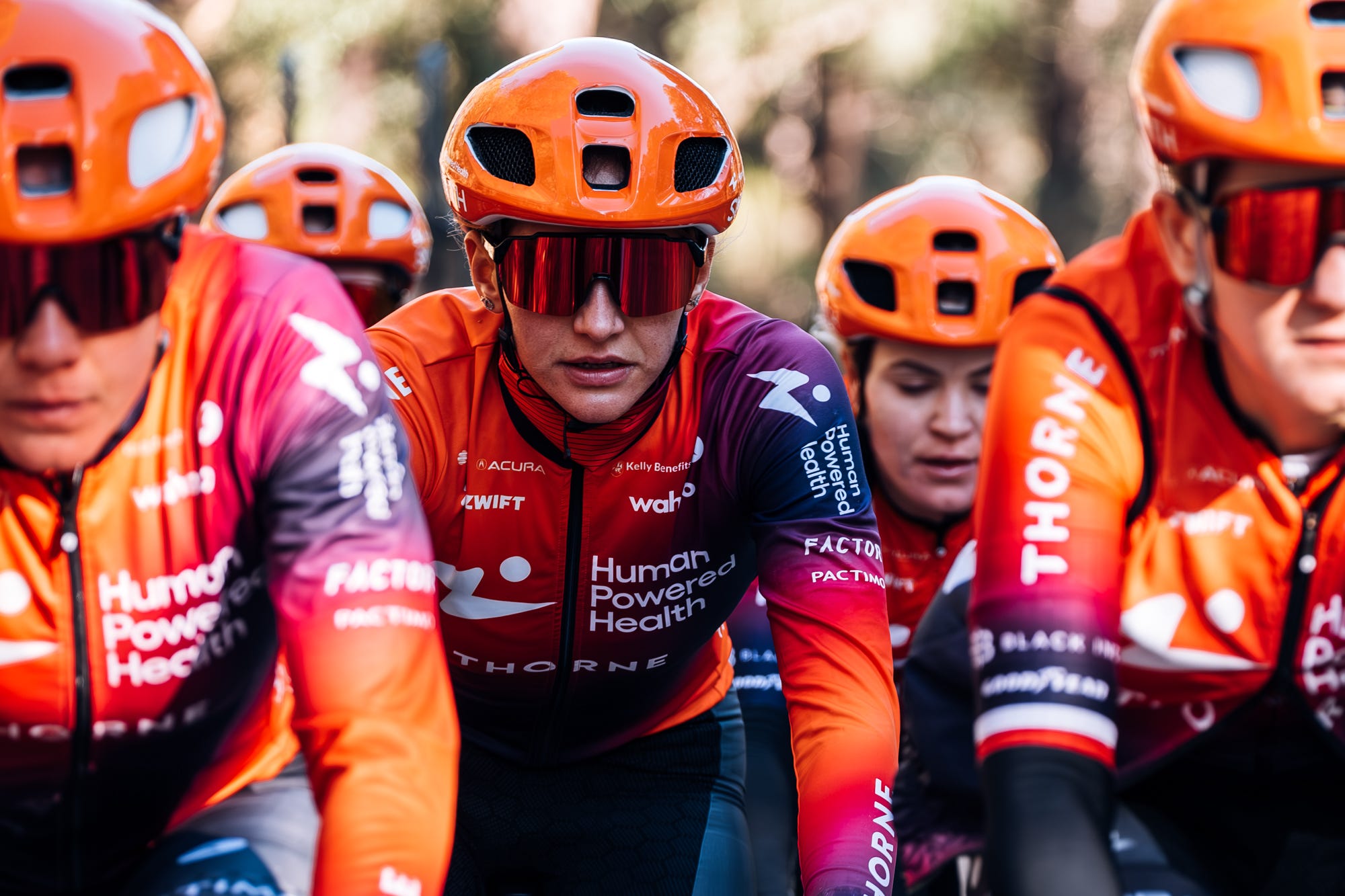
As more WorldTour teams adopt AI-assisted training partners and national federations like USA Cycling explore similar tools, it is clear that Human Powered Health has been ahead of the curve. The team is refining their product at the highest level of the sport and applying those learnings to broader athlete populations before eventually scaling to the general public. If Petra Staísny’s impressive win on the brutal slopes of the Angliru during the 2026 Vuelta Femenina is any indication, the innovation is already paying dividends on the road.
Is HumanGo full context training?
In my previous piece I argued that the ideal training solution should have the ability to advise on nutrition and eliminate the need for multiple disconnected wearable devices. How does HumanGo address these areas today, and does it meet the expectations I laid out?
Nutrition
The short answer is that HumanGo does not yet solve the nutrition problem comprehensively within the platform, but the team is thinking about it the right way. When speaking with Franko, he was clear that HumanGo is currently focused on refining its core training functionality and is leaning on best-in-class third parties to handle nutrition in the meantime.
“We have been exploring every nutrition and sports nutrition app out there for the last couple of years. We’ve landed on Fuelin as probably the best one, the most clear cut and comprehensive and somewhat simple to use. We’re doing the same integration with Fuelin right now that we do with Wahoo, Zwift., Rouvy, Garmin, etc.” — Franko Vatterott
Fuelin is an app I know well and have had the opportunity to discuss directly with their founder. Having a direct integration with a dedicated nutrition partner is meaningfully more valuable than running several apps in parallel without any data connection. Training data will flow from HumanGo into Fuelin, making Fuelin’s nutrition recommendations more precise and more relevant to what an athlete is actually doing in training.
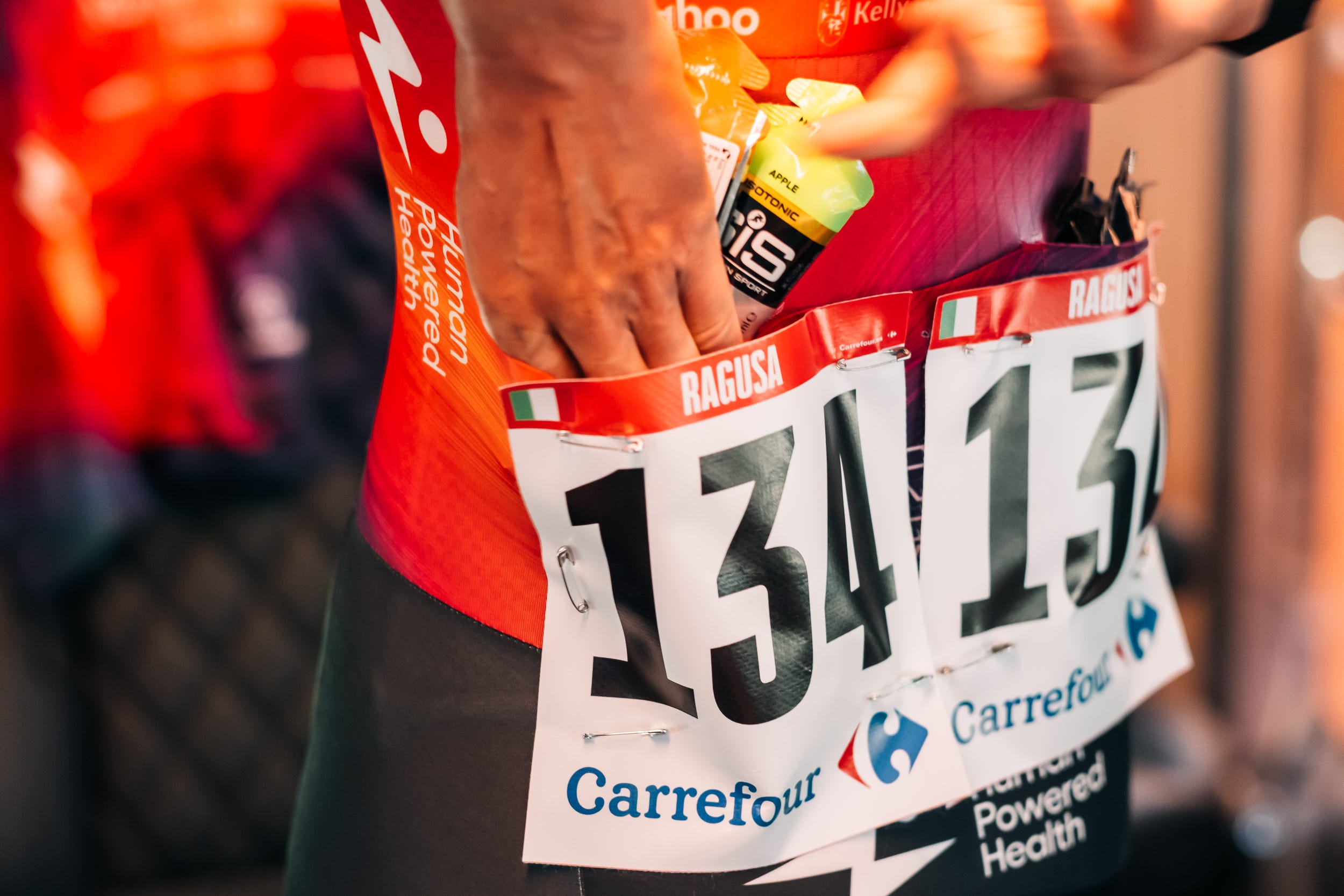
One way HumanGo is already moving in this direction is through the Hugo Metabolic Test, which also serves as the primary solution for athletes who are not able to visit a Human Powered Health lab in person. Using a peer-reviewed protocol, the Hugo test helps HumanGo derive an intensity-duration curve, identify an athlete’s lactate profile including LT1 and LT2, and estimate a VO2 Max value, all of which allow the app to establish accurate zone definitions. Beyond zone setting, the test also opens the door to more precise nutritional guidance.
“It’s also calculating substrate consumption as a function of intensity. So I can tell how many carbs you require to produce that intensity. And if you correlate with some model for glycogen stores, you can start to have optimization on understanding how many carbs you can actually ingest to maintain a certain intensity based on your glycogen stores, so you’re not depleted before the end of the race.” — Eric Abecassis
Recently, Human Powered Health partnered with the science-based supplement brand Momentous to provide preferred nutrition products to Human Powered Health users, and added Momentous CEO and Co-Founder, Jeff Byers to their board of directors. The stage is certainly set for further nutrition integration.
Hardware
The second expectation from my earlier piece was reducing dependence on multiple external devices. In hindsight this was the most unrealistic part of my ideal platform. Software development and hardware manufacturing are fundamentally different businesses, and it makes complete sense that HumanGo and Human Powered Health would partner with best-in-class third parties for wearables and training equipment rather than attempting to build their own.
HumanGo has chosen Wahoo as its primary hardware partner, providing seamless integration with Wahoo’s ecosystem of trainers, bike computers, and wearables and reducing decision fatigue for consumers who want everything to work together out of the box.
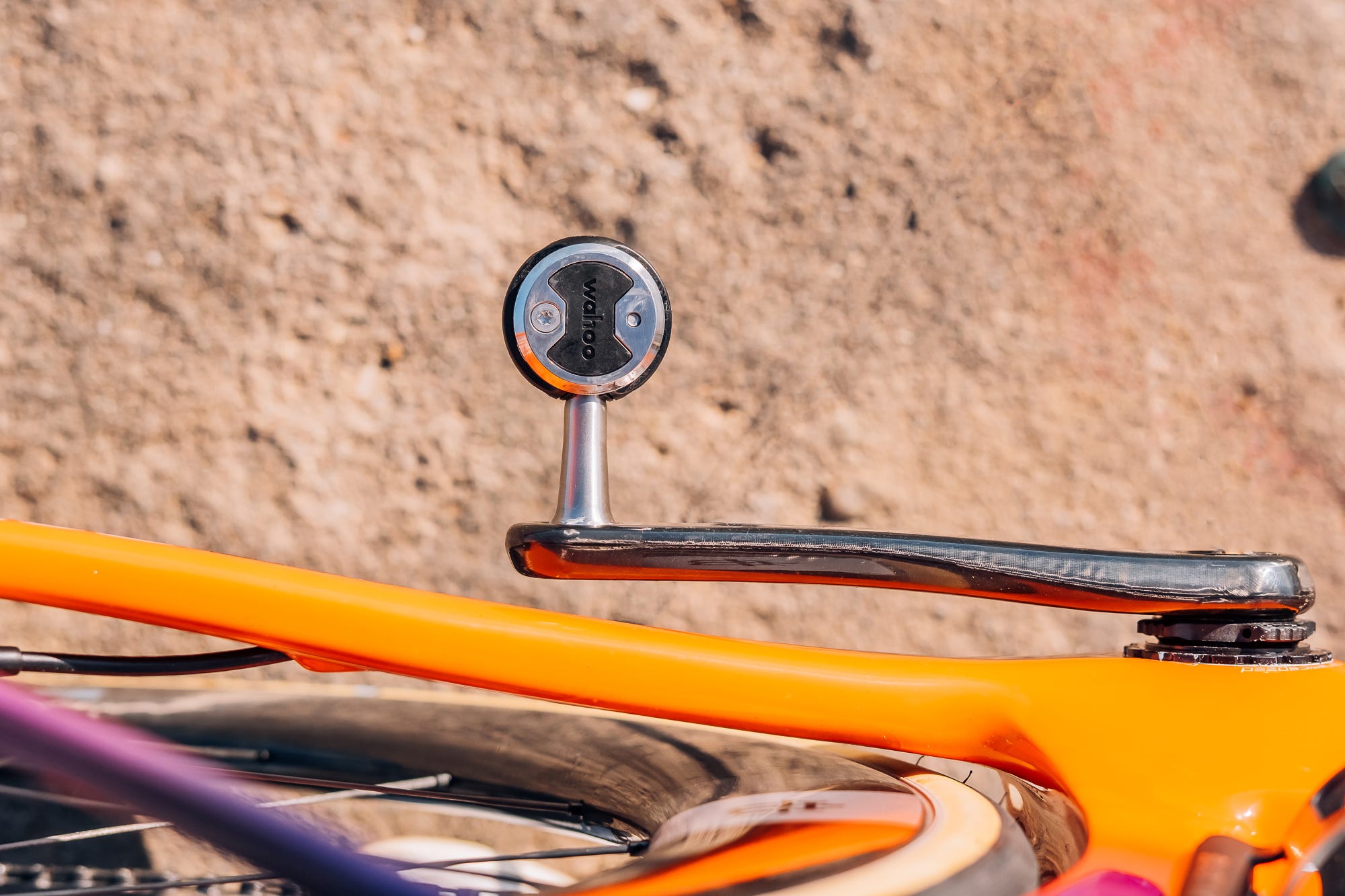
The relationship goes considerably deeper than a standard integration. Wahoo CEO Gareth Joyce sits on the Human Powered Health board of directors. That level of strategic alignment means Human Powered Health labs are equipped with Wahoo hardware for testing, and the HumanGo integration is not an afterthought but a core part of both companies’ product roadmaps.
Zooming out
We have now gone deep into the performance ecosystem that Human Powered Health and HumanGo are building together. From strategy to feature sets, we have a thorough understanding of how both entities are executing on their missions. We also got a glimpse of their longer-term aspirations and the macro problems they are working to address.
While this represented the bulk of my conversations with Dan, Eric, and Franko, I did have the opportunity to ask harder questions, propose hypotheticals, and connect their work back to the broader goal of growing cycling in the United States. That is where the remainder of this article is headed. First, I want to return to my conversations with Dan about Human Powered Health’s mission to improve general metabolic health, both domestically and globally.
Avoiding slippery slopes
The only area of tension for me throughout this process was when discussing Human Powered Health’s vision for Healthcare 3.0. If you are anything like me and have a family member who works in healthcare, you probably have strong opinions about the current system in the United States. For me, strong opinions is putting it lightly.
My primary concern was around possible data integration with health insurers. If the long-term goal is to prescribe Human Powered Health and HumanGo to large populations to track and improve metabolic health, could that data ever be used as a basis for denying coverage to patients? Dan was direct and unambiguous in response:
“We’re not connected to any payers or insurance plans or anything like that. We want to work with the employers that have benefits plans through these providers.” — Dan Cohen
The word employers is doing a lot of work in that statement. Human Powered Health’s long-term scaling strategy runs through the employer benefits channel, not through insurers directly. Dan explained why that market is so compelling and so underserved:
“Most employers will offer some sort of wellness program. They’ll have their employees go into a Quest or a LabCorp, get their blood drawn, get their basic biometrics, and then they’re told they have high blood pressure and high cholesterol, and then they get thrust into some kind of coaching program that literally adds no benefit, no value whatsoever, and they’re back at the doctor and it’s the same story but worse. That is a very attractive market. If you can come up with a solution that is evidence-based and set up to actually provide the employee the metrics they need to stay healthy and then the programs to stay healthy based off of their data, that’s how you scale things up.” — Dan Cohen
If the employer channel succeeds and Human Powered Health becomes a standard benefit for millions of working Americans, the data generated will dwarf anything currently available in the endurance sports ecosystem. The normative benchmarks to compare someone’s physiology against pro athletes, competitive athletes, and sedentary populations, will become dramatically more precise and more valuable as the dataset grows.
That candid exchange gave me more comfort around the mission of Human Powered Health. Moving forward I hope to see continued commitment to that mission, their support of cycling, and their role as a neutral party in the American healthcare system. Speaking of their commitment to cycling, I immediately followed up with another question that had been on my mind throughout our conversations: how could Human Powered Health have a meaningful impact on the development of young athletes in the United States?
Affordability
Another question I brought to Dan was around affordability. As it stands today, both the lab services and HumanGo subscription sit firmly in the premium price range. HumanGo is subscription based, with their Essential package at $16.99 per month or $155.99 annually and their Premium package at $28.99 per month or $264.99 annually.
For lab testing, Human Powered Health offers a range of packages built around different health goals. The most accessible entry point is their Longevity Core visit at $405, which includes a DEXA scan, resting metabolic rate test, force plates, grip strength assessment, and movement screening. At the upper end is the Performance Elite package at $780, which includes everything in the Longevity Core plus sweat testing, running gait analysis and bike fit, VO2 Max, lactate analysis, and 12-month subscriptions to both Wahoo X and HumanGo.
The packages offer strong value relative to what you would pay for these assessments individually or through other performance lab providers. Even so, for the average consumer, a voluntary health screening starting at $400 is simply not accessible. It raises a legitimate concern that these services will remain isolated to those with disposable income and continue to be out of reach for the majority of the general population and underserved communities. That pattern is not unique to Human Powered Health. It reflects a much broader inequity in how preventive healthcare is distributed in this country.
Since the platform currently serves high-level athletes and motivated individuals with the means to invest in their health, the pricing makes sense at this stage. But what happens as the vision of Healthcare 3.0 starts to scale? The Hugo Metabolic Test addresses part of the access gap from a digital perspective, but Dan also outlined a more systemic path forward:
“There’s an organization called the United States Preventive Services Task Force. One thing we want to do is make a pitch: if you really want to get the country healthy again, you need to actually do things differently. Getting a DEXA scan covered as a preventive medical service would be massive. Because after a certain age, bone mineral density starts to go down, people start to accumulate visceral fat on their organs, which drives the vast majority of metabolic disease in this country.” — Dan Cohen
While the current pricing reflects the platform’s starting audience, Human Powered Health appears to be thinking seriously about what mass adoption would require and laying the groundwork to get there.
Team Genius
The Human Powered Health women’s WorldTour team is already providing meaningful performance benchmarks to measure training adaptations against, and with HumanGo’s ability to aggregate and analyze user data, could there be a world where the platform significantly impacts the development of junior riders or even functions as a talent identification system? As it turns out, that work is already underway through Human Powered Health’s youth sports platform, Team Genius.
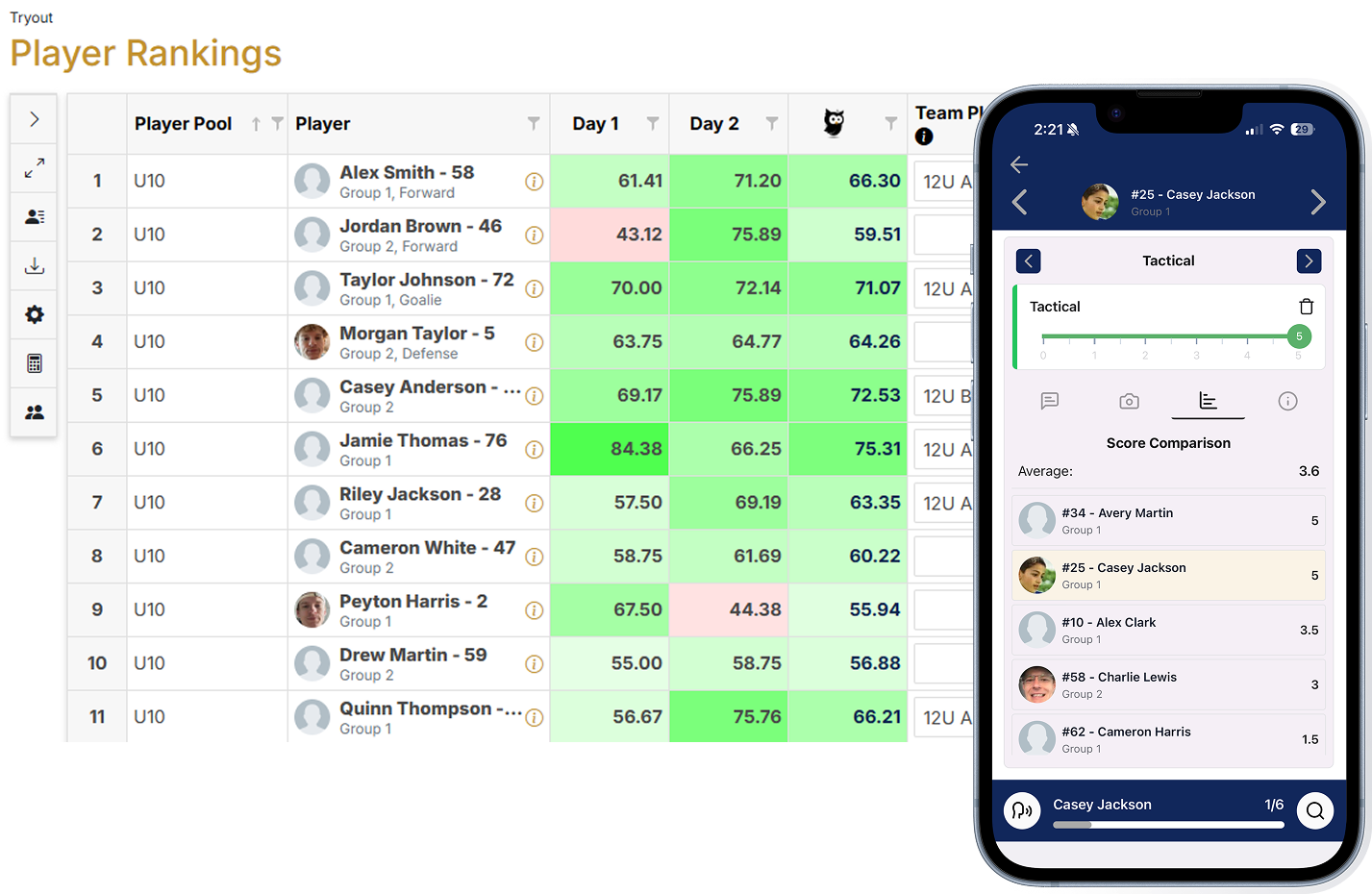
Team Genius is being built and utilized as a normative data platform to help young athletes determine their strengths, identify developmental areas, and benchmark their readiness across a variety of sports. Currently it is rare for junior athletes to have access to professional lab facilities, making it difficult for them to understand where they stand on the path toward becoming competitive or professional athletes. Through Team Genius, Human Powered Health is beginning to open that door more widely.
“With our youth sports platform Team Genius, we’re doing quite a bit of work on normative data so we can evolve that platform to be more of an objective evaluation tool that can use measurements from our lab technology. We can even bring that to a youth sports combine experience. Have these athletes go through some of this testing, the data flows into our platform, and then we use normative data to create this dashboard for these young athletes so they can take it with them.” — Dan Cohen
The applications of Team Genius get particularly exciting when you consider endurance sports, where individual genetics play such a significant role in performance potential. Whether it is an unusually high VO2 Max, optimized biomechanics, or favorable metabolic efficiency, Team Genius becomes a platform where endurance athletes can discover and begin developing their potential earlier than ever before. That work is already happening in collaboration with USA Cycling’s Project Podium program.
“We’ve worked extensively with Parker Spencer’s Project Podium team from a talent identification perspective. In fact, our first engagement was when he called us from Cuba after his athletes had a not very good race experience. Three years ago, his whole team came over and nine of them went through three days of very extensive testing to really identify which ones had what it takes to get to the 2028 Olympics. We’re still working with them.” — Dan Cohen
I firmly believe that simply introducing cycling into development conversations can meaningfully increase the number of competitive athletes this country produces. If a young athlete in another sport shows biometric indicators that translate well to cycling and someone takes the time to say that, the ripple effect can be significant. Sometimes all it takes is pointing someone toward a path they would never have considered on their own.
Addressing the international market
Much of this story has revolved around the US healthcare system and domestic populations, but Human Powered Health is a global platform with a global mission. One of the more surprising data points Dan shared was that over half of HumanGo’s existing users are already based in Europe. At the athlete level the product is effectively borderless, but what about the broader Healthcare 3.0 vision?
Many countries already operate strong government-run healthcare systems and report better metabolic health outcomes than the US, which raises a fair question about whether the same urgency exists in those markets. Dan was optimistic about the opportunity:
“There is certainly an appetite from an employer perspective in Europe, similar to here in the US, to keep their population healthy. If we could build the programs here for employers in the US, I think it would be an easy transition over to the European markets, but it would be a different pricing schedule.” — Dan Cohen
Powering forward
Moving forward, success for Human Powered Health will mean different things depending on who you ask. For the general population the measure of success is a meaningful shift in how Americans approach their metabolic health. For the sport of cycling the implications are different but equally significant.
For the general population: Millions of Americans with access to gold-standard physiological data through employer benefits. A preventive health infrastructure that actually changes the trajectory of metabolic disease. A healthcare system that rewards staying healthy rather than treating illness.
For cycling: A talent identification pipeline that systematically finds and develops the best young cyclists in the country regardless of their access to elite coaching or expensive equipment. A women’s cycling ecosystem where athlete health is monitored and supported with the same rigor as performance optimization. A generation of amateur cyclists who train with the same physiological precision as professionals because the tools are accessible and affordable.
For the growth of the sport: If Human Powered Health achieves its mission of moving the general population toward proactive health management, cycling stands to benefit directly. A population that is more physically active, more aware of cardiovascular metrics, and more engaged with the science of movement is a larger potential cycling audience. The growth of endurance sports generally and cycling specifically has always tracked with health consciousness.
“If I was to summarize what we want to accomplish: we fundamentally want to help transform the health trajectory of this country, and quite frankly, the globe. Not just for athletes, but for everybody. That’s our main objective.” — Dan Cohen
Human Powered Health and HumanGo are genuinely compelling platforms with the potential to change the lives of millions of people. I am grateful that Dan, Eric, and Franko were generous with their time and willing to go deep on their products, motivations, and mission. The volume of information and the level of detail they provided actually made this one of the most challenging articles I have written, but I hope it offers a clear picture of how impactful technology can be for endurance sport and, in turn, for the broader public.
To close with cycling: it is a fitting and somewhat poetic conclusion that the sport which gave this company its name may turn out to be among the smaller beneficiaries of what it is building. But cycling will be the first to benefit, the deepest to benefit, and the community that made it all possible in the first place.
Ride and rip,
Kyle Dawes