


Last week I explained why the cycling industry might be on the verge of increased M&A activity. I didn’t focus on massive strategic acquisitions or blockbuster private equity deals, but rather small to medium-sized brands that are operating and scaling efficiently. Those companies may present an overlooked opportunity for investors. Since they have a proven track record of executing and scaling, minimally invasive investments and acquisitions of these brands would likely provide strong returns.
In that piece, I also showcased an industry report indicating that brand and storytelling will be a key differentiating factor for companies moving forward. Smaller brands have known this for a while, and for investors, finding strong stories will be a key factor in their diligence process.
Storytelling has been a major theme since I began writing for Built on Bikes. While analyzing why the Netflix series Tour de France: Unchained fell short, I highlighted its lack of consistent storytelling throughout a WorldTour season, lackluster presentation of grit, and minimal focus on cycling culture. If a brand or documentary could accurately portray those characteristics of cycling, it would be far more likely to find success in the United States and, most importantly, grow the sport domestically.
This week, I had the opportunity to chat with two founders who sit at the intersection of these topics. They are building a scalable business and creating a brand built on storytelling that resonates far beyond diehard cycling fans. Their product is a new race format that is easily digestible and characterized by constant action, much like traditionally popular sports such as basketball and hockey.
For this edition of Built on Bikes, I interviewed James and Clare Grady, co-founders of Formula Fixed, a new professional race series addressing the historical challenge of making cycling entertaining and accessible to mainstream audiences. Together, we dive into their business model, how they are building a strong brand through storytelling, and the future opportunities ahead for Formula Fixed. We also zoom out to discuss how Formula Fixed is benefiting fans, athletes, and the sport of cycling as a whole.

What is Formula Fixed?
Formula Fixed was founded in 2023 by James and Clare Grady. Before Formula Fixed, the pair were running Mission Crit, a fixed-gear bike race in San Francisco. Mission Crit was born in 2014 as an underground race held in a parking lot, but over time became a marquee cycling event that amassed over 6,000 spectators and 300 competing athletes.
While Mission Crit was extremely popular, James and Clare noticed there might be a better way to present fixed-gear racing that could draw in even more fans and athletes. The traditional race format required significant planning, including road closures, media coverage that captures the full race course, and finding ways to help fans enjoy and understand the race while only being able to view one section of it at a time. James summed up the problem well:
“We basically had to build an entire race course every single time we were putting on an event, and we observed that maybe it’s harder for people to get into the story of a race if they can’t see the whole race the whole time.”
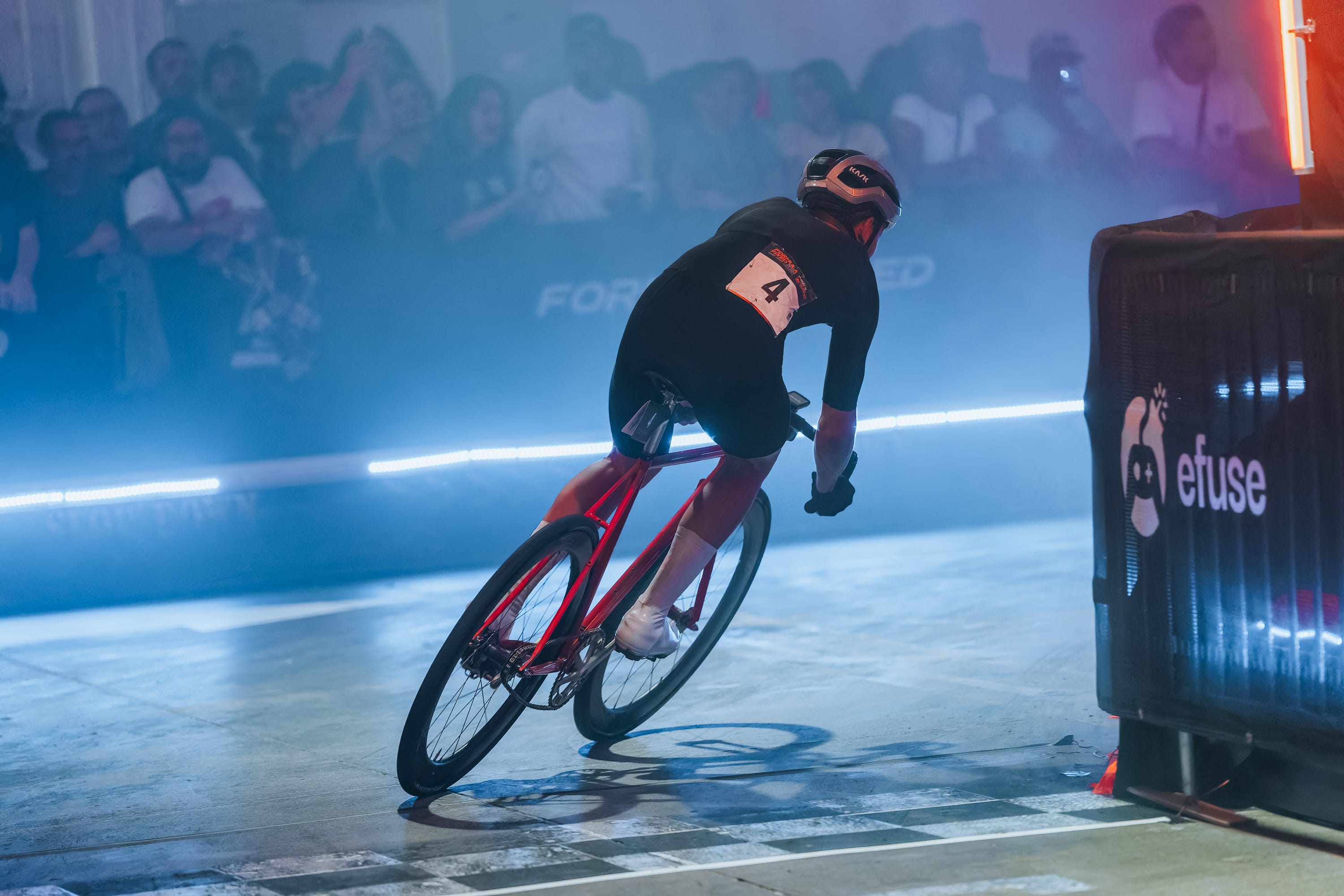
Formula Fixed addresses those problems by organizing short track fixed-gear races that are fast-paced, dynamic, and repeatable. The series defines its event style around four core attributes:
A heat format where multiple 5-minute races qualify athletes into the final
Roughly 400-meter closed-loop tracks that are highly technical
Fixed-gear, brakeless track bikes that produce dynamic racing, bold moves, and physical competition
Events designed for broadcast clarity and a comprehensive fan experience
What is being fixed?
Beyond addressing the challenges that James and Clare experienced with Mission Crit, Formula Fixed is built to address a larger issue, the historic barrier to entry for fans in the United States. I’ve talked about this in length while analyzing why cycling media has not been able to attract a significant amount of new fans, but Clare outlined the challenge clearly:
“Traditional cycling can be hard to follow. The races are long, the storylines are fragmented, and the fan experience just isn’t really built for modern audiences. We created Formula Fixed to be the cycling property that’s easy to understand, easy to watch, and really built around athletes as characters. It’s a format first, story first, race series designed to make cycling compelling in real time, not just impressive in hindsight.
At its core, Formula Fixed is solving for traditional cycling’s complex race formats, costly production requirements, limited in-person viewership, and a cultural disconnect that has historically deterred younger and more diverse audiences.
Where is Formula Fixed at today?
Since launching in 2023, Formula Fixed has grown into a formidable event platform. This year will also mark the launch of a pro series featuring a roster of 48 athletes split between men’s and women’s fields. Formula Fixed events are set to be multi-day experiences, with three short-track races across one week and projected attendance of 2,400 spectators per event.
James and Clare aren’t building this alone either. They have assembled a small but experienced team of sports media professionals, including Emmy-nominated content creators and brand professionals with backgrounds at properties like Wasserman, X Games, the Olympics, and Nike.

The foundation has clearly been laid, but what will make Formula Fixed succeed and make it an enticing brand for sponsors and investors alike?
Fan engagement is a formula for success
We’ve seen cycling try to engage larger, mainstream audiences over the last few years. Netflix France released three seasons of their documentary series, Tour de France: Unchained, and gravel race series like the Life Time Grand Prix and Gravel Earth Series have led the charge for adventure ready consumers. TDF: Unchained proved to be underwhelming and not engaging for mainstream audiences while gravel still relies on participation to bring in new fans.
Gravel is certainly having an impact in the United States by getting more people on bikes, but no mainstream audience will be watching a five hour livestream that has a rotating set of characters and little storytelling in between. With engagement being a rare commodity in domestic cycling, Formula Fixed is framing it as the main issue it’s trying to solve.
As I see it, Formula Fixed attacks live and virtual fan engagement on four fronts:
Optimizing for repeatability and scalability
Utilizing fixed-gear culture to make attending live events enticing to fans
Prioritizing story to create a brand that will engage fans beyond events
Producing media and coverage that is palatable and easy to consume virtually
Repeatability & Scalability
As they learned with Mission Crit, James and Clare know that having an event format that is easily repeatable and scalable across geographies will be crucial to growing Formula Fixed. By implementing a consistent race format, they are positioning the business to benefit from economies of scale. As production becomes more efficient, the costs associated with each event will stabilize while revenues from ticket sales and sponsorships grow.

When describing the challenges of traditional race formats, Clare highlighted unit economics as a key factor affecting growth:
“The unit economics of races as they currently exist are hard. Because you have to create the event infrastructure every single time.”
James shared the thinking behind the Formula Fixed format:
“We thought we might be able to put on events at scale more easily if we have an economy of scale and we’re not building a race course on city streets every single time.”
If Formula Fixed is able to scale over the coming years with an established race series that delivers significant value to sponsors and investors, the long-term ambitions become really exciting. James and James have made no secret of where they want to take it:
“Long term, we do want to put team based events in stadiums, specifically fixed gear criterions in stadiums.” - James
“I also have this dream of doing cyclocross in a stadium, in the dead of winter, where it’s all snowy, and you’ve just got 50,000 people yelling.” - James
We’ve seen the format succeed in cycling with one-off events like the Little 500, and we’ve certainly seen commercial success from similar sports like motocross. If James and Clare continue to grow Formula Fixed sustainably, they will have the chance to put those long-term aspirations to the test.
Culture is the entry point
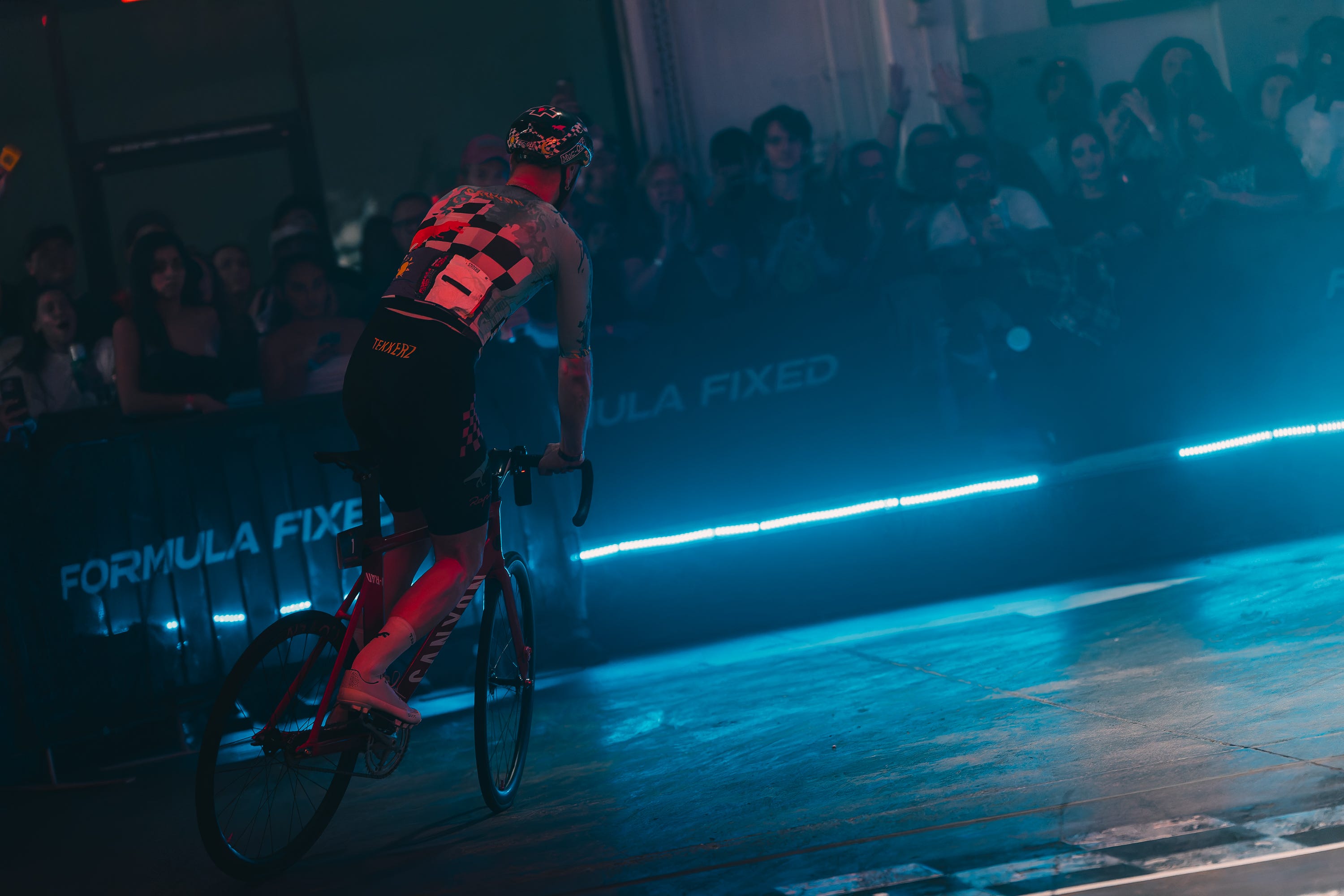
Formula Fixed is merging these two sides of fixie culture, and it’s working. On the race course, the strength and ability of the cyclists is on full display, and the racing itself is as chaotic as a bike messenger weaving through traffic in a major city. For the audience, it’s a party-like atmosphere. Drinks are flowing, vibes are high, and whether you’re a diehard cycling fan or a first-timer, you will quickly fit in and have a blast.
That loose, welcoming nature of fixie culture is opening doors for new fans and giving Formula Fixed a marketability that doesn’t exist in other cycling formats. As James put it:
“We regularly hear from people who come to the live events who are not cycling fans whatsoever. And they’re just blown away, and they’re like, ‘Is all cycling like this? I’ve been missing out.’”

The bikes themselves also act as an entry point for new fans and athletes alike. Rather than racing bikes that cost upwards of $10,000, top athletes can compete on stripped-down equipment that could be bought for a fraction of the price. Clare outlined the appeal:
“It’s got this cool factor. It might be tied to the fact that the bikes are kind of sexy. They’re just a machine that you connect to your body to make yourself go faster. Part of that is access, because the fixed gear bike is so much less expensive to get started on.
The reason why we’re doing fixed-gear is because we’ve seen from the start, the culture is as important as the sport itself.”
Telling stories is a requirement
I’ve touched on this point often since starting Built on Bikes, but James and Clare clearly understand the importance of good storytelling and consider it an integral piece of their overall strategy. Formula Fixed is putting all the pieces together to create what could become the strongest media engine in domestic cycling.
They have already assembled a strong team of brand professionals and storytellers, while simultaneously laying the groundwork for compelling content through a 48-athlete race series that will give them an abundant source of athlete stories that are easy for fans to understand and connect with. Clare made a comparison that put the storytelling style of Formula Fixed into perspective:
“An early comparison that I used was professional wrestling. What do they do really well? They tell stories. They build characters, and they build the world. That’s what we want. Because we’re a centralized league and we’ve got a recurring cast and a consistent format, the continuity is the product.“

The audience growth engine
Traditional cycling formats have always struggled to rapidly grow audiences. Disciplines like mountain biking and cyclocross get little airtime in the United States, and even the Tour de France struggles to capture mainstream attention. Long, tactically complex races aren’t built for social media or live viewing. Formula Fixed was designed to be the opposite: short, fast, and made for social media.
Scaling Formula Fixed will only happen when more fans show up to events, post about them on social media, and eventually draw in remote viewers. To grow their audience, Formula Fixed takes a three-tiered approach to content that drives higher monetization over time:
Always-on content: daily short-form posts and highlights that drive consistent engagement
Amplifying race moments: action clips that produce high-intensity spikes in engagement
Growing their distribution network: gaining organic reach from athletes, fans, Formula Fixed, and partner channels sharing content
James and Clare are building a media engine that meets people where they are, and most of the time, that’s online. The goal is to give people content they are already comfortable consuming, but with the added novelty of showing them something they’ve never seen before. James summed it up well:
“Putting on events is only one part of audience growth. We have a really robust content strategy backing everything up. We basically present Formula Fixed from all angles and give everybody an on-ramp.”

With Formula Fixed, athletes win on and off the track
When our conversation shifted to the types of athletes competing in Formula Fixed, I was curious how James and Clare are able to attract the caliber of athletes that they do. Is it the prize money, the racing style, or the pure love of the culture? Culture yes, prize money no.
“If the only way that they make money is through prize money, it’s always going to go to the same small group of people that have more resources.” - James
As Clare went on to explain, the biggest draw for athletes is exposure and financial support.
Athlete support
When I asked the question, I was not expecting financial support to be part of the answer. Marquee series like the Life Time Grand Prix are only now introducing rider stipends, and those likely cover travel and lodging for one race, if that. In 2024,Formula Fixed provided athletes with a stipend based on several criteria, including distance traveled. Starting in 2026, the series will provide travel and accommodation as standard support for rostered athletes. As Formula Fixed scales, so too will athlete compensation
“The cost of having to travel around to these events is something that makes people be like, ‘oh, I’m going to choose to do this one and this one.’ So, for our athlete roster, if you’re racing in the series, you’re racing every single race. We have resources set aside to make sure that you can actually do that financially.” - James
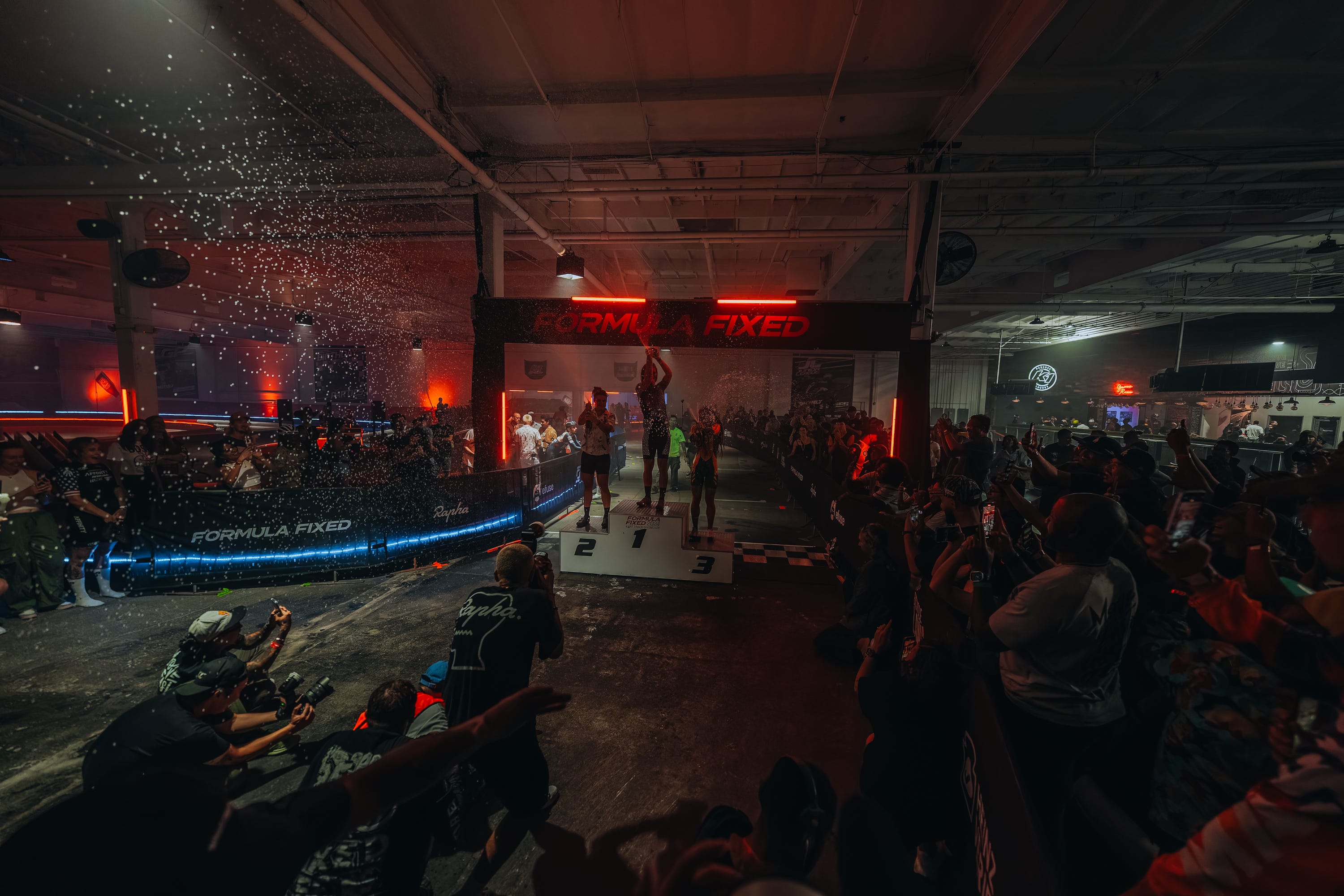
For a new series, that is a remarkable level of support, but it is already paying off. By committing to their athletes financially, Formula Fixed has built loyalty and trust within the community, establishing a reputation that will continue to draw future talent to the series.
New talent pipelines
As I discussed with Hayden Christian, younger athletes are venturing outside of standard development pipelines and opting for paths that provide more social capital, attract brand sponsors, and showcase their abilities to a wider audience. Formula Fixed is all in on their media machine, and for many athletes that is a massive draw.
Unlike the Life Time Grand Prix, which gained notoriety largely from the fan bases of its participating athletes, Formula Fixed is able to provide athletes with a media platform that can reach far beyond what they could build on their own. James, Clare, and I all agree that there is an abundance of talent in the United States, but not enough development pipelines or marketable events to make those athletes full-time professionals.
“We suffer from a wealth of talent in the United States, and those super talented athletes are underserved by the platforms that they currently have. The best riders in the country were just racing in Tucson, Arizona, and the majority of sporting fans in the country didn’t hear anything about it. We’ve got athletes on our roster who, if they were playing basketball, would be all-stars.” - Clare
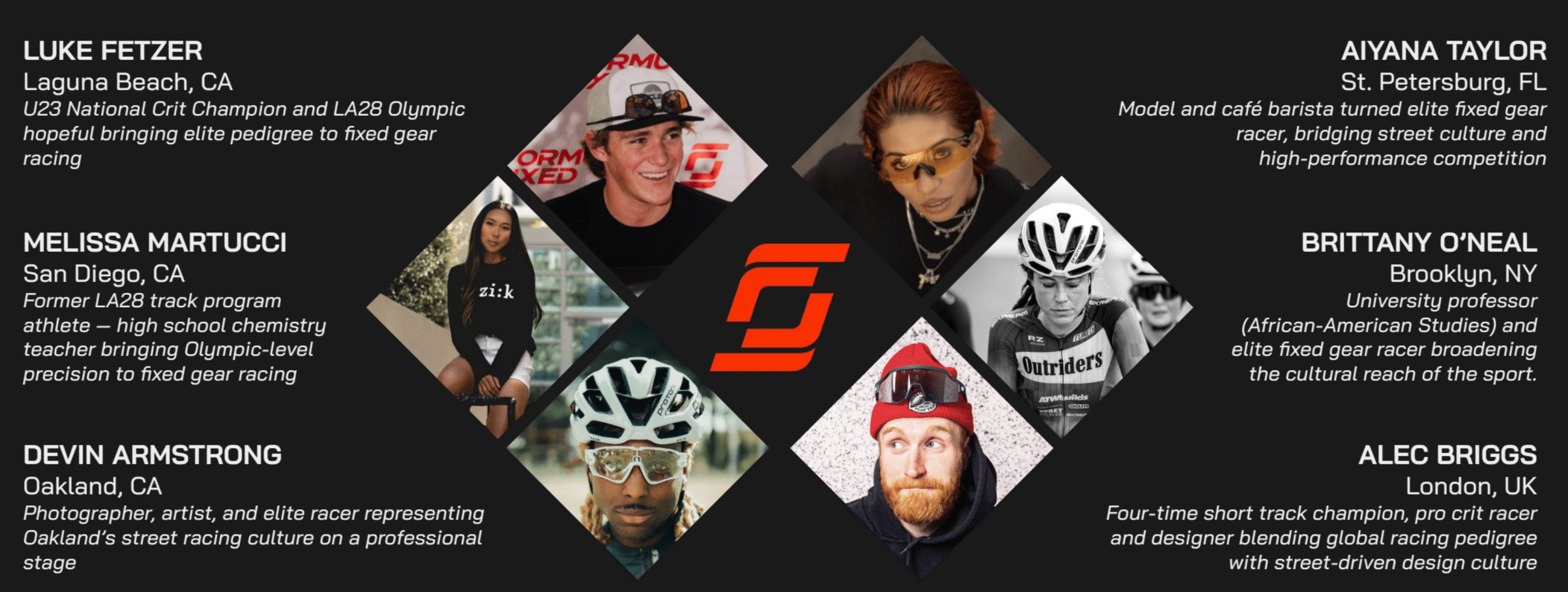
The Formula Fixed media strategy has made it easier to fill rosters with talented athletes from a diverse set of backgrounds, whether that be from a different cycling discipline, underserved communities, or even newcomers to the sport entirely. For all of them, Formula Fixed is presenting an enticing platform and a genuine entry point into professional racing.
Simple but powerful: the Formula Fixed business model
We’ve talked about all the characteristics that make Formula Fixed an attractive entity, but their business model is just as compelling. It is simple, scalable, and pitchable. Formula Fixed has three main revenue streams.
Brands
Formula Fixed has already a proven track record with brand partnerships, like collaborating with notable brands Rapha and Red Bull in previous seasons. Paid partnerships, branded content, and brand licensing all create an outsized revenue stream as long as Formula Fixed continues to grow their audience.
In 2024, Formula Fixed reached a projected audience of 5.6 million viewers with zero dollars in ad spend. As long as they continue to grow audiences organically, Formula Fixed will remain an attractive partner for major brands. Clare also highlighted why their focus on storytelling creates a stronger value proposition than a typical race series. When speaking about their previous partnerships with Red Bull and Rapha, she said:
“They saw culture. Formula Fixed lives at the intersection of performance and culture. It’s urban, it’s fast, it’s youth driven, and that really aligns with brands that want relevance, not just exposure. It’s not just logo placement. It’s identity alignment.”
Fans
Ticketing, merchandise, and associated experiences represent core operational income. As with any live events business, Formula Fixed is aiming to generate predictable attendance that will drive higher consumer spending over time.

Media
While media may not be a significant revenue driver yet, Formula Fixed is laying the groundwork through their social engine and focus on storytelling. Over time, this will allow them to generate revenue from media rights, content monetization, and licensing.
Clare summed up where revenue comes from today and where they expect it to come from in the future:
“At outset, revenue is driven by paid partnerships, ticketing and merchandise are secondary revenue streams. At scale, our revenue drivers are brand, fans, and media, and revenues coming from key partnerships and brand integration.”
A compelling economic entity
Investment will be crucial to growing cycling in the United States. In some instances it will mean making the case for wealthy individuals to donate to collegiate programs or USA Cycling. In others it will be venture capital and private equity investing in businesses that provide the goods and services that make the sport possible. Investing in Formula Fixed would be a financial investment that directly contributes to the sport’s growth, but with the possibility of a real return.
Even for an investor who is disinterested in the growth of cycling and purely seeking economic gain, the unit economics of Formula Fixed are compelling. As we discussed last week, Formula Fixed falls firmly into the small to medium-sized business category. A venture investor won’t be generating hundreds of millions in return, but they can most certainly outperform the market when it comes to percentage return on investment.

James and Clare were gracious enough to share their pitch deck with me, and I can confidently say no numbers were pulled out of thin air. They know exactly what impact additional capital would have on the business. There are plenty of sports focused VCs that invest in small sports entities, and they should not overlook Formula Fixed.
Created by two determined partners, Formula Fixed is offering a fresh take on cycling that is built for the digital age. Nothing about the format is traditional, and for cycling, that is its greatest strength. Non-cycling fans will see an exciting new sport and be drawn in by a true live viewing experience. If James and Clare continue on their current path, Formula Fixed is about to redefine what cycling can look like in the United States.
Do yourself a favor now and follow Formula Fixed!
Formula Fixed | Instagram | YouTube | Strava
Ride and Rip,
Kyle Dawes