


The very first feature piece I ever wrote for Built on Bikes was with Natascha den Ouden, the founder of the women’s WorldTour team AG Insurance–Soudal. That conversation centered on the structural development challenges facing women’s professional cycling, particularly the historic imbalance between the three tiers of professional road racing (take a look at that article where I breakdown the three tiers of pro racing). At the time, third-tier Continental teams were, in some cases, racing directly against top-tier WorldTour teams. The result was a distorted competitive environment that did not allow riders to progress at a natural pace before reaching the highest level of the sport.
When we shifted the conversation to women’s racing in the United States, Natascha pointed out an additional and uniquely American problem. The U.S. does not offer strong scouting or development opportunities because the style of pack racing differs so dramatically from Europe. As a result, American women face a double barrier to turning professional. Not only is the domestic racing ecosystem underdeveloped, but relocating to Europe is effectively mandatory for career progression. By failing to build credible developmental pathways at home, the United States is leaving significant talent untapped.
Women’s cycling is growing rapidly on a global scale, but especially in the United States with the rise of gravel racing and a broader surge in endurance sports participation. While the U.S. still lacks clear developmental pathways for men to reach the WorldTour, the men’s side of the sport has existed long enough that the ecosystem is relatively established. There is at least a stable group of American teams spread across the three professional tiers.
Women’s cycling presents a very different opportunity. While American representation in the men’s WorldTour remains limited and difficult to expand, the women’s WorldTour is far more open to new sources of talent. As Natascha noted, there is a clear lack of depth across the three tiers of professional women’s road racing in Europe. That reality creates a rare opening. With the right investment in development, the United States has a real chance to position itself as one of the dominant countries in the women’s WorldTour rather than a peripheral contributor.
The United States already has strong representation in the women’s peloton, but there is real potential to expand that talent pool to rival cycling-obsessed nations like Belgium and the Netherlands. The question is not whether the athletes exist, but how we build a system that consistently identifies, develops, and supports them. The real challenge is figuring out how to make that happen.
Two possible routes
As I see it, there are two paths that lead to more American women reaching the WorldTour in a way that is both successful and sustainable.
First, we can create racing environments and courses in the United States that more closely resemble those in Europe.
Second, we can build out the professional development pipeline by adding more UCI Continental and Pro teams based in the United States.
In a perfect world, both happen. Realistically, though, the first path does not exist without the second. Road racing in the United States has shrunk dramatically, and it is unreasonable to expect a meaningful expansion of UCI races without a strong base of domestic teams to compete in them. Right now, we simply do not have a mature ecosystem of Continental and Pro teams capable of supporting a robust U.S. calendar or consistently sending riders to Europe.
That said, a fully built-out American race calendar is not a prerequisite for sustainable development. In my view, simply increasing the number of U.S.-based Continental and Pro teams would quickly create a viable pathway to greater American relevance in the women’s WorldTour. In today’s piece, we will explore how more Continental and Pro teams in the United States could lead to WorldTour dominance.
The current situation in the U.S.
I’ve already talked at length about the three tiers of UCI-sanctioned professional racing, but how many women’s teams currently operate under a U.S. license with rosters that are majority American? As of the 2026 season, the United States has two Women’s WorldTour teams, zero Pro teams, and one Continental team.
Compare that to the men who have one WorldTour team, two Pro teams, and eight Continental teams. It certainly seems like the men’s ecosystem follows my suggestion, just with limited success. Again, that limited success is due to much deeper development pipelines globally that don’t result in Continental teams racing against WorldTour teams.
Circling back to the women, the number of teams in the United States actually isn’t terrible when compared to other countries. Belgium, one of the most historic cycling nations in the world, currently has two WorldTour teams, one Pro team, and three Continental teams. By comparison, the United States is only slightly behind, and in theory should be capable of matching or even outnumbering most nations given its size and talent pool.
For the remainder of this piece, I want to focus specifically on increasing the number of women’s Continental teams in the United States and why I believe that would lead to stronger, more consistent representation in the European peloton.
Why more Continental teams?
As a reminder, WorldTour teams often look to Continental and Pro level teams as primary scouting grounds for rising talent. Having a strong base of Continental and Pro teams is essential for increasing the visibility of American riders to top level programs.
Beyond talent identification, the second and third tiers of professional racing provide greater parity in physical ability, which leads to more dynamic and meaningful competition. These environments better simulate the tactics and structure of WorldTour racing, just at a slower overall pace. That allows riders to develop technical and tactical skills against peers of a similar level, rather than racing purely for survival at the top tier.
As Natascha pointed out in my first article, until 2026, when the UCI made it illegal, there were races where Continental teams were forced to compete consistently against Pro and WorldTour teams. This imbalance severely limited meaningful development and highlighted the need for clearer separation between tiers. Continental teams will still compete against Pro teams in .1 and .2 races, but this structure mirrors the rules found in men’s racing. In those races, the skill gap will still be small enough for competitive racing.
*.1 and .2 races refer to classifications that determine UCI regulations limiting the amount of Pro and Continental teams in a given race.
When looking at the United States, I suggest bolstering our Continental team footprint because Continental teams are the “easiest” type of team to start and operate (more on this later). Beyond lower startup inertia, Continental teams can still race against higher level Pro teams, but without the cost and logistical commitments required for Pro classification.
I feel obligated to say that stronger youth development pipelines, particularly more robust collegiate programs, will only strengthen a healthy Continental ecosystem. More importantly though, by increasing the number of Continental teams, we would be building a far stronger and more accessible bridge to professional racing for women than currently exists.
As we dig deeper into the “why” behind my push for more Continental teams, my hypothesis rests on three key pillars. Ultimately, Continental teams could be valuable assets for the United States because they:
Offer the lowest barrier to entry financially for owners and sponsors
Provide the most flexibility in scheduling and race calendars
Serve as a bridge for less experienced American riders to transition into European racing
A flexible entry point
Starting a women’s continental team is by no means easy, but it is much more doable than forming a Pro team or hoping more American women find their own way to the European peloton. Here’s why.
Lower financial and operational barriers
Any women’s Continental team licensed in the United States must go through USA Cycling to meet the administrative requirements for UCI registration. Conveniently, USAC clearly lists every requirement needed to form a registered women’s Continental team.
Starting with finances, there are four essential fees required for registration:
$975 to Waugh & Goodwin, LLP, the accounting firm USAC partners with\
€7,150 to the UCI for registration and anti-doping contributions
$3,500 to USA Cycling for U.S. registration
A bank guarantee, determined by auditors, with a minimum of €20,000 or 15% of the combined salaries of riders and staff, whichever is higher
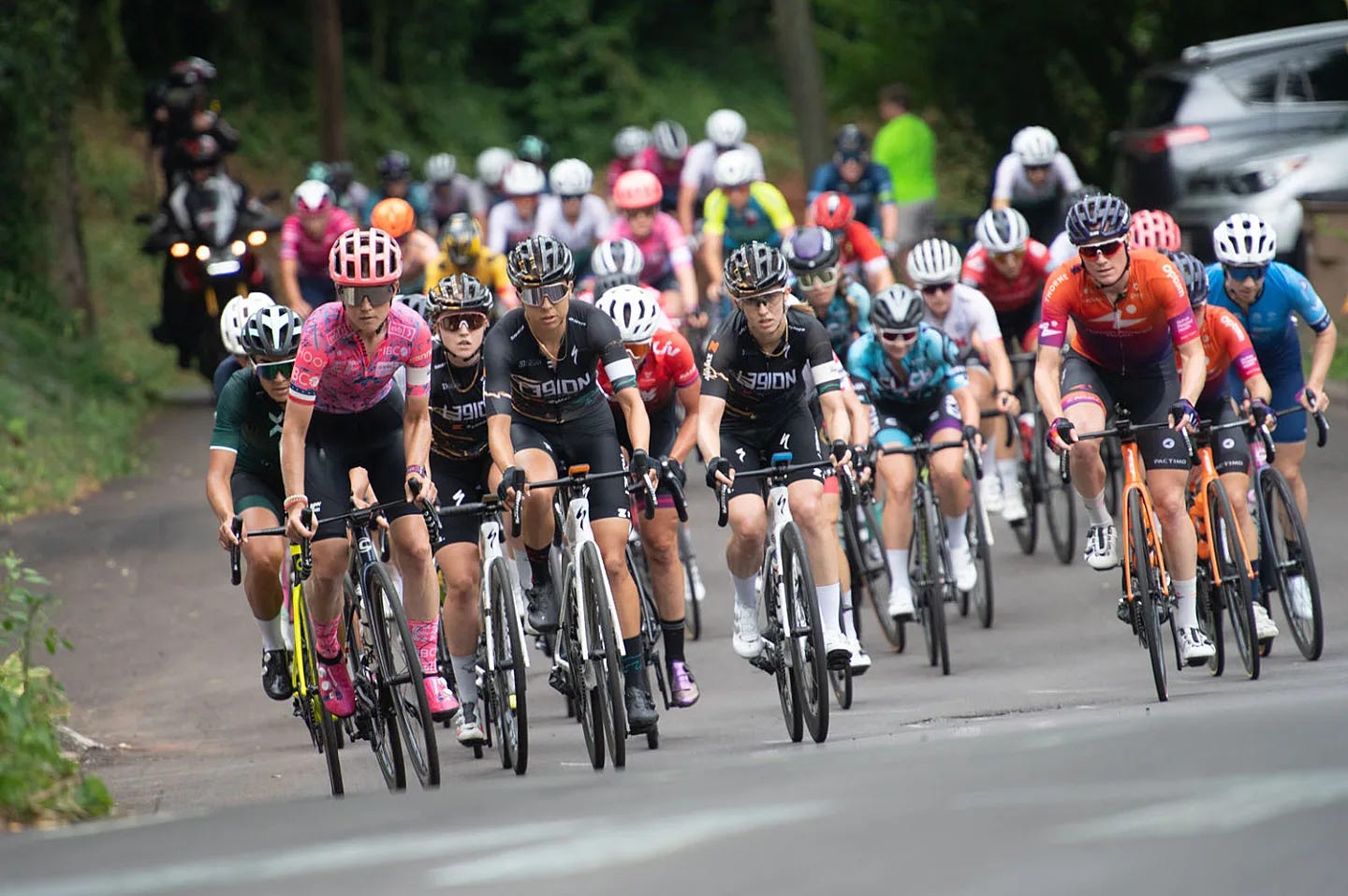
Assuming the minimum bank guarantee, the administrative cost of forming a Continental team comes out to roughly $37,000. That is a good amount of money, but in exchange for the ability to race against top Continental and Pro teams in Europe, it is relatively modest.
Technically, wages are not required for UCI Women’s Continental Teams. But we are not living in the stone ages, and if the goal is to build U.S. cycling with any level of respect or sustainability, paying riders and staff matters. So let’s make some realistic salary assumptions.
The minimum roster size is eight riders. Let’s also assume a staff of four. No one is getting rich, but we’ll assume annual salaries of $60,000 for riders and $70,000 for staff. Finally, let’s be very budget conscious with travel and race expenses and allocate $400,000 for the season. We’ll also assume the team has secured bike and equipment sponsors, meaning those costs are covered.
All in, the total cost to get this hypothetical team off the ground comes to approximately $1.2 million.
That is a lot of money, no question. But in the context of startup capital for a legitimate business, it is not astronomical. There are plenty of assumptions baked into this estimate, but I think it’s reasonable to believe that, with intent and coordination, three or even four Continental teams could be created for roughly this level of investment. I’ll get into how that might happen later.
I can’t provide exact comparisons, but some gravel teams already exceed this budget with fewer riders. If we can justify those investments, we can justify investing in women’s development in the United States. Finally, it’s worth noting that registration itself is not a long process. If riders and staff are already identified, UCI registration typically takes about three months from start to finish.
Flexible scheduling
In WorldTour racing, teams are required to attend all WorldTour-level events, with the ability to miss only one. In Continental competition, there is no fixed requirement for how many races a team must participate in during a season. This allows teams to operate on leaner budgets and prioritize competitions that offer the best opportunities for rider development and results.
If budgets are constrained, an American Continental team would not even be required to race in Europe, although that is the central goal of this plan. That scheduling flexibility can actually help American teams gain visibility in the European peloton. European UCI races are invite-only and often have team composition requirements, which means teams from the United States are frequently deprioritized and not guaranteed an invite.
At present, the U.S. has only one women’s Continental team. If that team were invited to a European race but could not attend, the United States would lose its only opportunity for representation at that event. With multiple teams, another could step in and fill that slot.
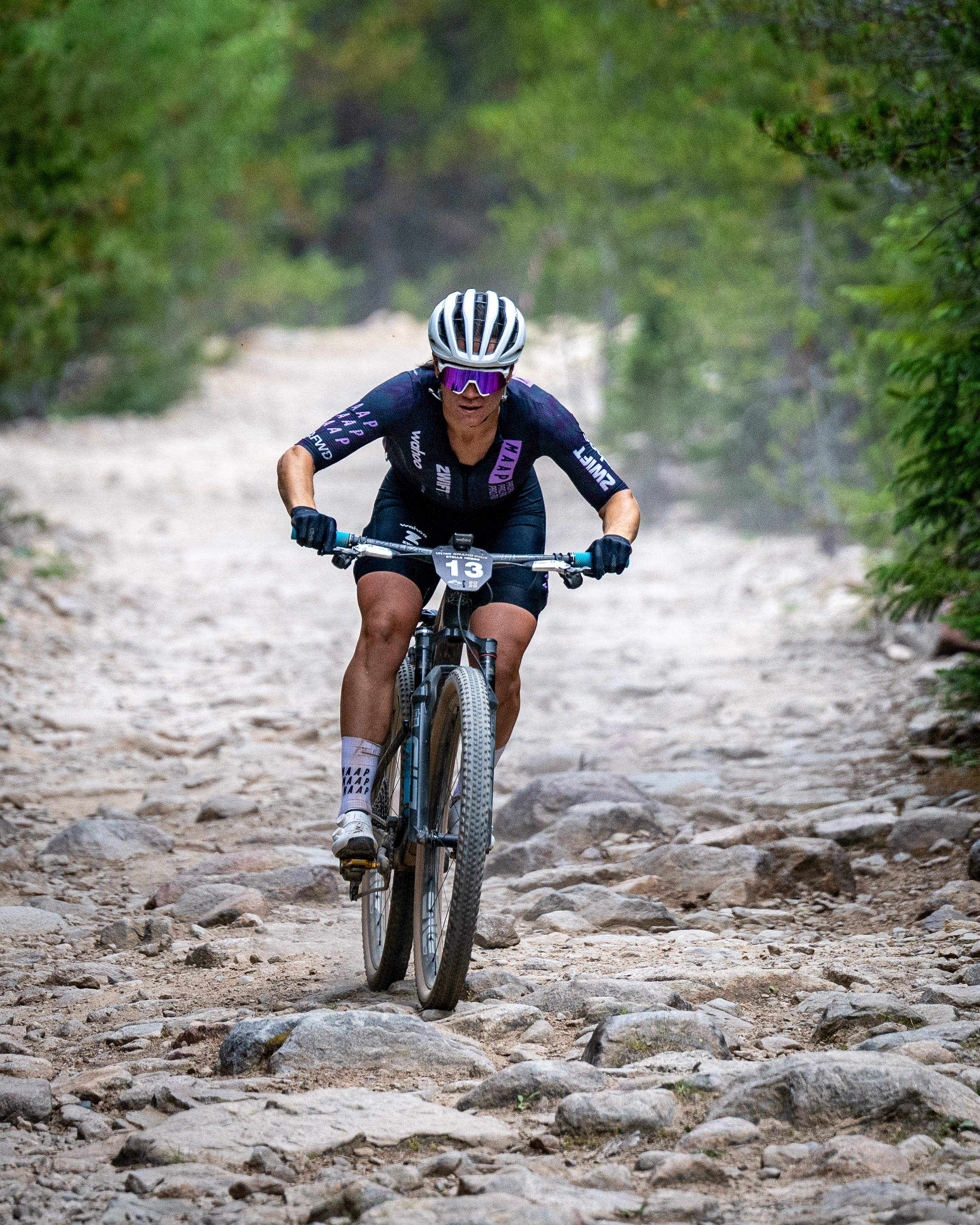
The other major benefit of flexible scheduling is the freedom for riders to compete across disciplines to raise the team’s visibility and earn UCI points. A 2026 rule change allows riders registered on road teams to earn UCI points for their road team by competing in other disciplines, further strengthening the case for this model.
A realistic skill environment
As Natascha mentioned, European teams are often cautious about American riders out of concern that they lack experience racing and positioning within a large peloton. We have, of course, seen exceptions, such as Kristen Faulkner joining the sport late and finding success, but that path is not the norm, nor should it be.
The Continental level gives skilled American riders the opportunity to hone these abilities in an environment that is better suited to teaching them. The United States already produces riders who are strong enough to compete at the Pro and WorldTour levels, but without the chance to learn the tactical and situational nuances of peloton racing, their likelihood of long-term success is lower.
By strengthening the Continental level, the U.S. talent pool becomes far less constrained. There is no shortage of capable riders, and we could confidently fill multiple Continental team rosters with athletes who have the physical tools and the potential to develop into WorldTour-caliber professionals.
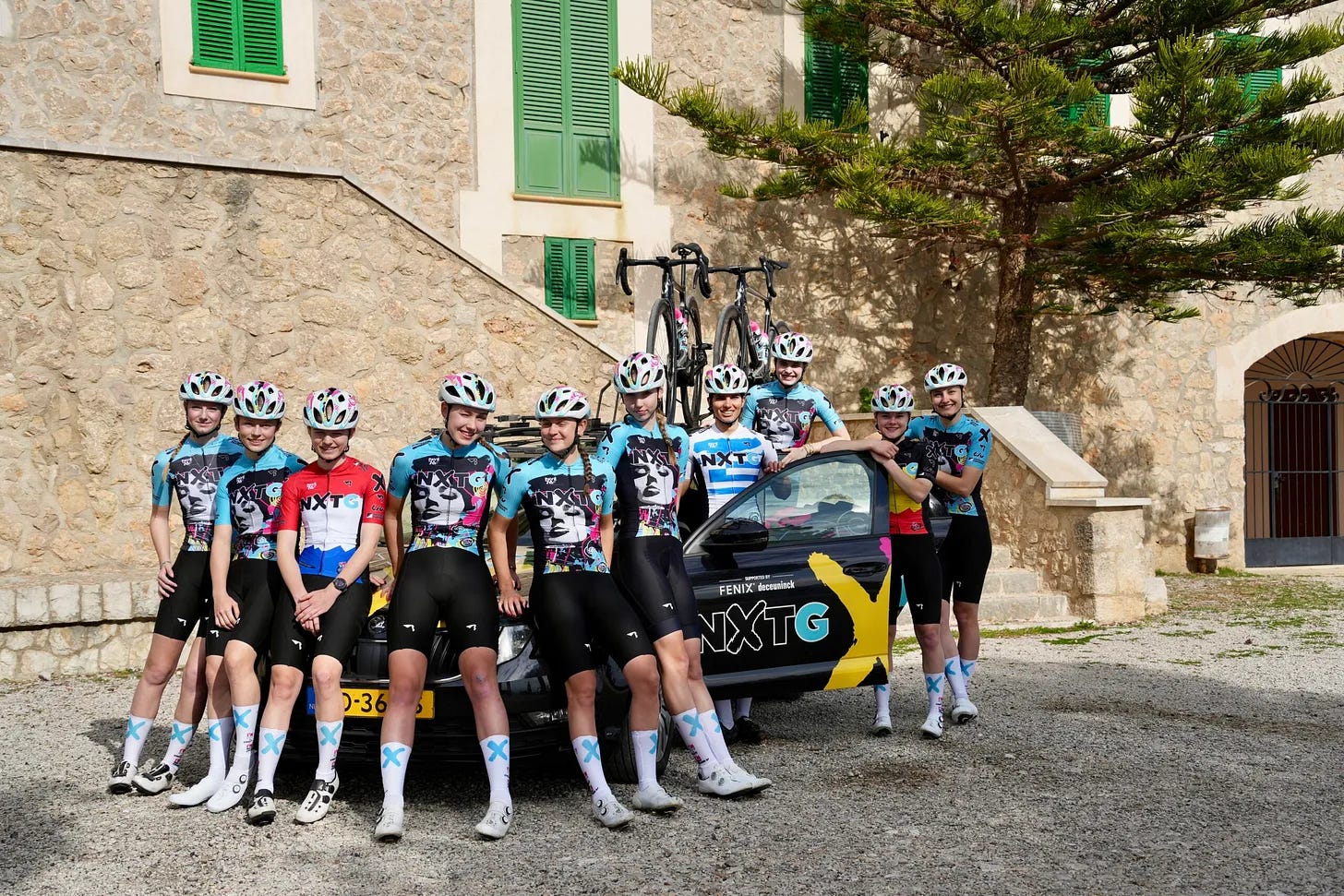
In conclusion, Continental teams offer the lowest barrier to entry into professional road racing from both a skill and organizational standpoint. They expand the talent pool in the United States and, just as importantly, ensure that talent has a place to develop and showcase its abilities. Combined with collegiate cycling, Continental teams allow women who are just entering the sport to race alongside athletes who may have found cycling later in life. That dynamic creates an opportunity to build one of the most comprehensive and mature development environments in women’s cycling.
All of this sounds promising, but it raises a critical question: how do we make it work financially? Especially when, as Natascha pointed out, Continental teams receive little to no airtime in Europe and virtually none in the United States. If visibility is limited, how do we convince sponsors, investors, and stakeholders that there is real value in supporting this kind of venture?
There’s always a pitch
Remember when I said gravel teams often have larger budgets than Continental teams? That disparity exists almost entirely because of visibility. If Continental racing has low exposure compared to the WorldTour, why would a brand or individual choose to sponsor a team? And how could a team operating at that level realistically convince them there is value?
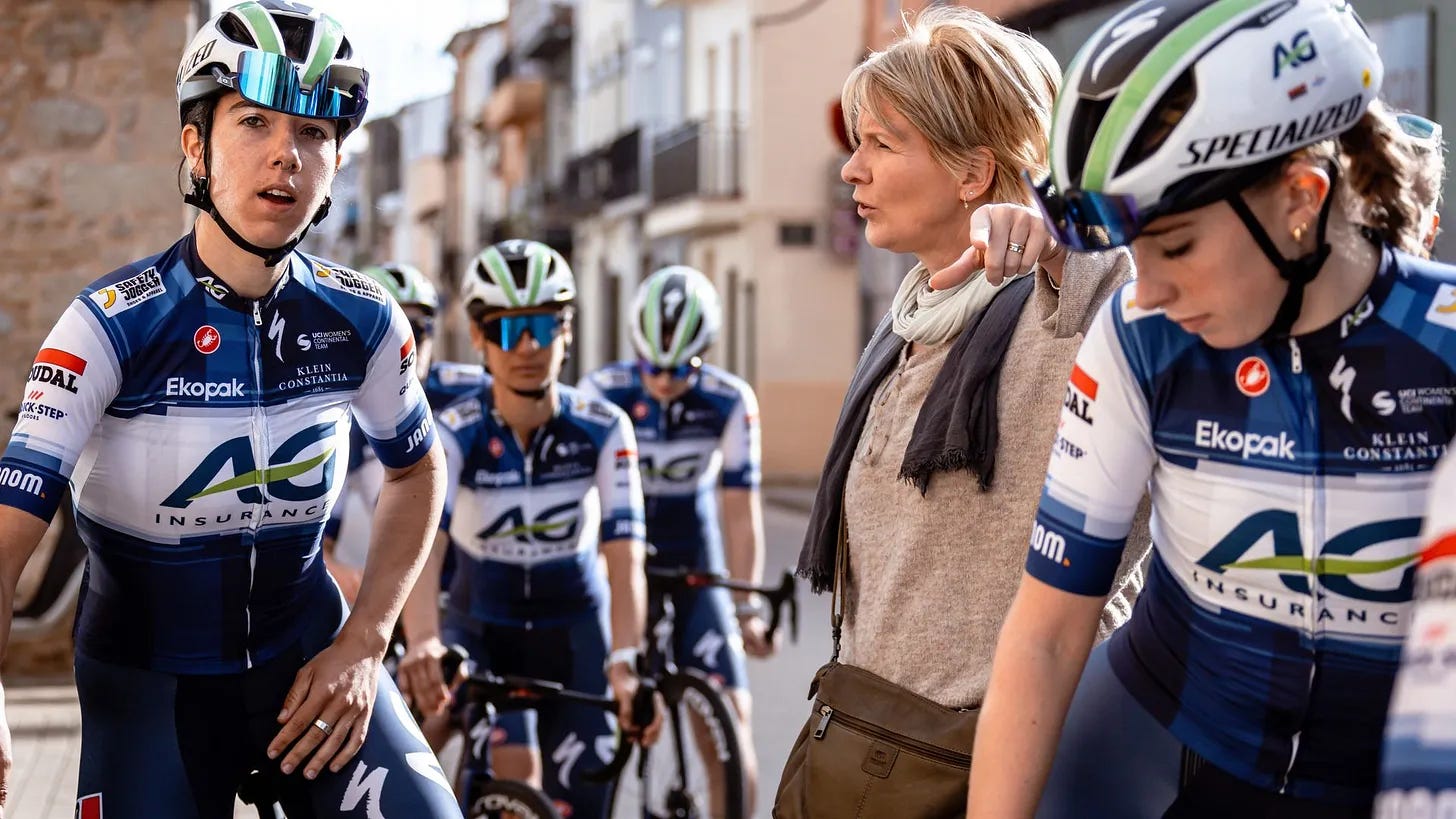
Much like my idea of securing outside funding to make cycling an NCAA sport, the answer comes down to how the opportunity is pitched. To do that successfully, we need to:
Highlight the lack of opportunity for women in the current Continental landscape
Be honest about lower visibility in the short term
Emphasize the upside of developing the next successful American WorldTour rider
Even if the bulk of opportunity ultimately exists in the WorldTour peloton, Continental teams can use that reality to their advantage by building it directly into their story. These teams would be on the front lines developing the next wave of American talent that could eventually break through at the WorldTour level. If a Continental team identifies, develops, and enables the next American star, that narrative alone becomes powerful marketing for a small program.
Scheduling flexibility is another underrated asset. Road racing in the United States may not command the attention it once did, but gravel and mountain biking continue to thrive. Multi-discipline riders can represent their team at those events, extending the team’s visibility beyond traditional road racing and helping build a brand that resonates across disciplines.
We have already seen with teams like Project Echelon that building a team around a clear mission can be an effective marketing tool in itself. If a team is able to pay riders a living wage and operate within a defined geographic region, it can become a pillar of its local community, both within cycling and beyond it. Proximity to collegiate programs only strengthens this effect and creates a natural recruiting pipeline.
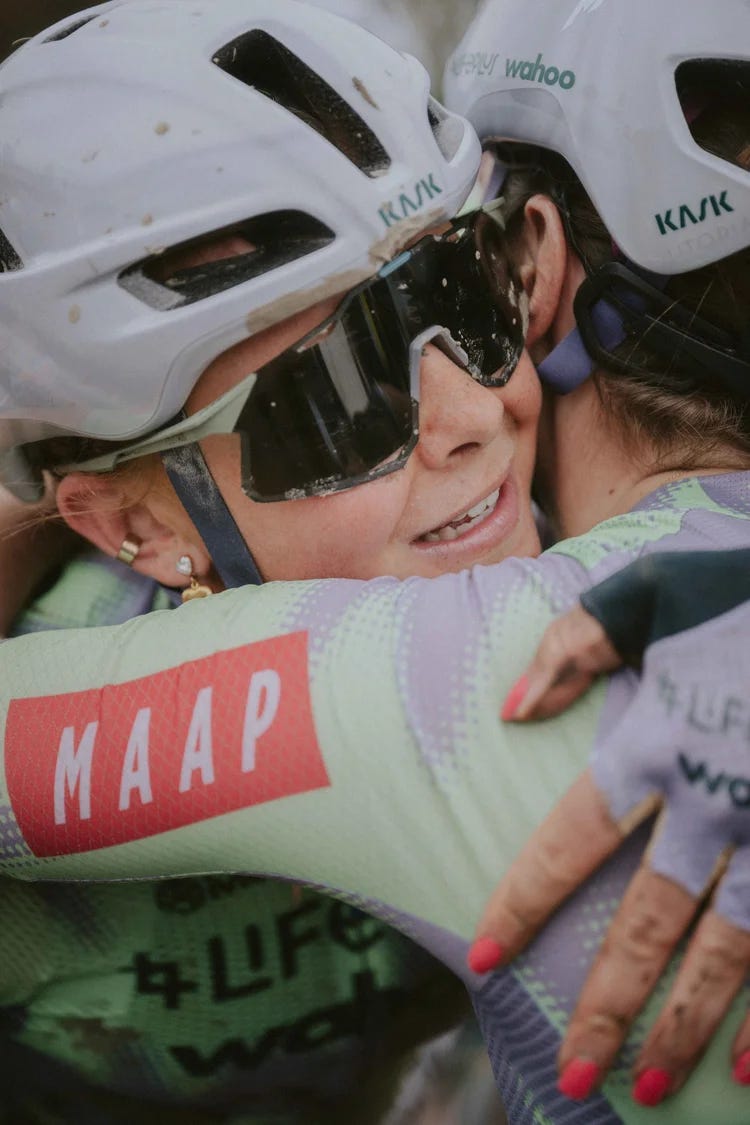
The list could go on, but the flexibility afforded to Continental teams should not be viewed as a weakness. It is an opportunity to create a team with a compelling identity and purpose, one that may ultimately generate more fan interest than a traditional road team whose only story is competitive success.
Finding the right path to relevance and visibility
I’ve said it before, but I spitball a lot of ideas in this newsletter. That’s the point, and it’s something we need more of in cycling, especially in the United States. If we want relevance and visibility on the world stage, there are countless paths we could take. So far, though, we’ve largely stuck to traditional road development models.
Those traditional pathways have produced limited results for men and, in many cases, barely exist for women. Like any emerging business frontier, women’s racing presents enormous opportunity, but it requires people willing to take real risks. If we want a reliable and sustainable professional pathway for women in the United States, people and brands will need to step forward and help build it.
I genuinely believe the United States could become the dominant nation in women’s cycling within the next ten years. The talent is already here. What’s missing is the base. We need to start building it now and give that talent a place to develop.
Continental teams represent the path of least resistance. They offer a realistic, scalable way to create opportunity while also telling compelling stories that can elevate the brand value of an American team far beyond that of a typical European Continental program. It’s hard not to be inspired by what four new Continental teams, thirty-two talented female athletes, and under $10 million in total investment could do for us as a cycling nation.
A message that goes far beyond cycling

The past week, and months, have been very difficult for many of the people who call America home. Many citizens have lost their lives, and on January 24, Alex Pretti was murdered by ICE agents while practicing his 1st and 2nd Amendment rights and while protecting a fellow community member.
Alex was a dedicated ICU nurse who made his living by providing care and respect to our veterans, many of whom have risked their lives in World War II fighting the same hateful ideologies that Alex was standing up against. Alex was also a member of his local cycling community in Minnesota.
My platform here is limited, but I think it’s everyone’s duty to use the platform they have to confront hate and embrace humanity. We need to speak out against injustice and show that hatred and bigotry will never win.
Since my platform is within the world of cycling, I thought the best thing I could do is highlight members of the Minnesota cycling community that you can support in these dark times. I especially want to highlight Alex’s local bike shop, Angry Catfish Bicycle. Head to their Instagram, which is linked below, to see the dozens of unity rides that are being organized across the United States and the world tomorrow, January 31.
Angry Catfish Bicycle
Instagram
Wolf Tooth Components
Instagram

Stay safe,
Kyle Dawes
This is a valid thesis, but 1M+ is a lot of $ for a startup.
I would start with a U19 women’s team, thereby creating the infrastructure, sponsor connections, learnings, and talent ID pipeline that could then be scaled up to a Conti team