


Through past conversations with guests like Natascha den Ouden and Alexey Vermeulen, one recurring theme for Built on Bikes has been the challenges facing road racing in the U.S.
What will it take to construct a stable ecosystem of professional road teams capable of developing and delivering talent to the highest level of the sport? More specifically, what are the hurdles preventing that from happening right now?
The short answer is money. Running a professional team—salaries, travel, equipment, staff, logistics—is expensive. Since cycling teams are reliant on sponsors for money, it’s more important than ever for teams to craft meaningful stories that connect with new audiences and demonstrate clear value for their sponsors.
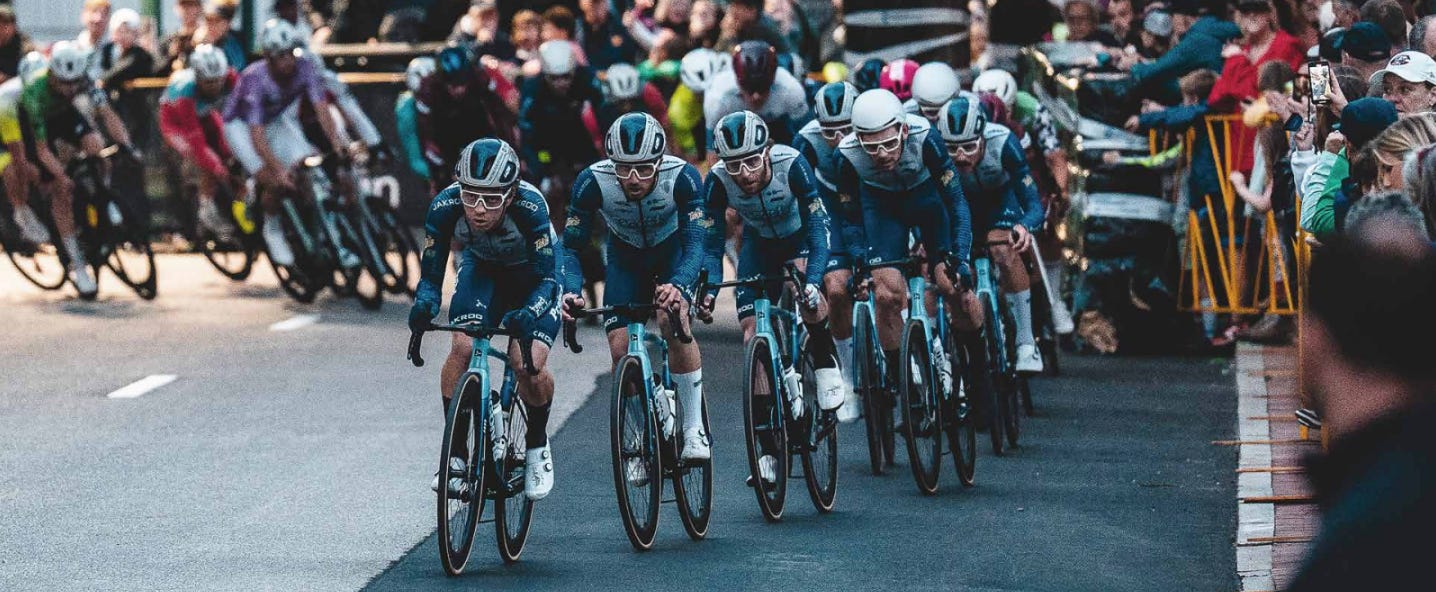
In the U.S., one team is redefining what it means to build a sustainable professional program. Project Echelon Racing has created a mission-driven marketing model that appeals to both endemic and non-endemic sponsors. By giving brands a platform to align with purpose and performance, the team has become a standout example of how to succeed as a professional outfit in today’s U.S. cycling landscape
I sat down with Eric Hill, Co-Founder and Director of Project Echelon, to discuss his approach to team management and growth within the U.S. market.
Why the U.S. is such a difficult place to succeed
Development
Globally, there are more than 70 UCI Continental teams, but only Seven (5 men’s, 2 women’s) are based in the U.S. For a country of 340 million people, that leaves just 70 to 100 roster spots for riders at the Continental level. In theory, USA Cycling could register up to 15 Continental teams with the UCI, creating 150 to 225 spots, but numerous obstacles make that a distant reality.
*For this article, we are focusing on men’s teams, but the inequalities facing women’s cycling are even more pronounced. I’ll be covering this topic in more depth in future pieces, but for now, you can check out my conversation with Natascha den Ouden to learn more about the unique challenges women face in the sport.
Money
Having the ability to expand the number pro roster spots also requires teams being able to survive financially. To do that, teams need to clearly demonstrate how cycling can be marketing channel that gets a lot of visibility, and, in the case of Project Echelon, do it in a very personal way that is more approachable and tangible than other sports.
If that challenge weren’t enough, the landscape is further complicated by the three tiers of UCI professional road racing:
Continental – the entry-level professional tier
Pro Continental – the intermediate tier
WorldTour – the top tier
Project Echelon has managed to stand out among Continental teams because it has created a unique value proposition. The team leverages its mission-driven identity to provide sponsors with benefits far beyond financial gain, an intentional strategy that Eric Hill has built into the organization as a core feature, not an accidental byproduct.
What is Project Echelon
To understand Project Echelon’s success and approach to team operations, you first need to understand the entity and mission that the team represents every day.
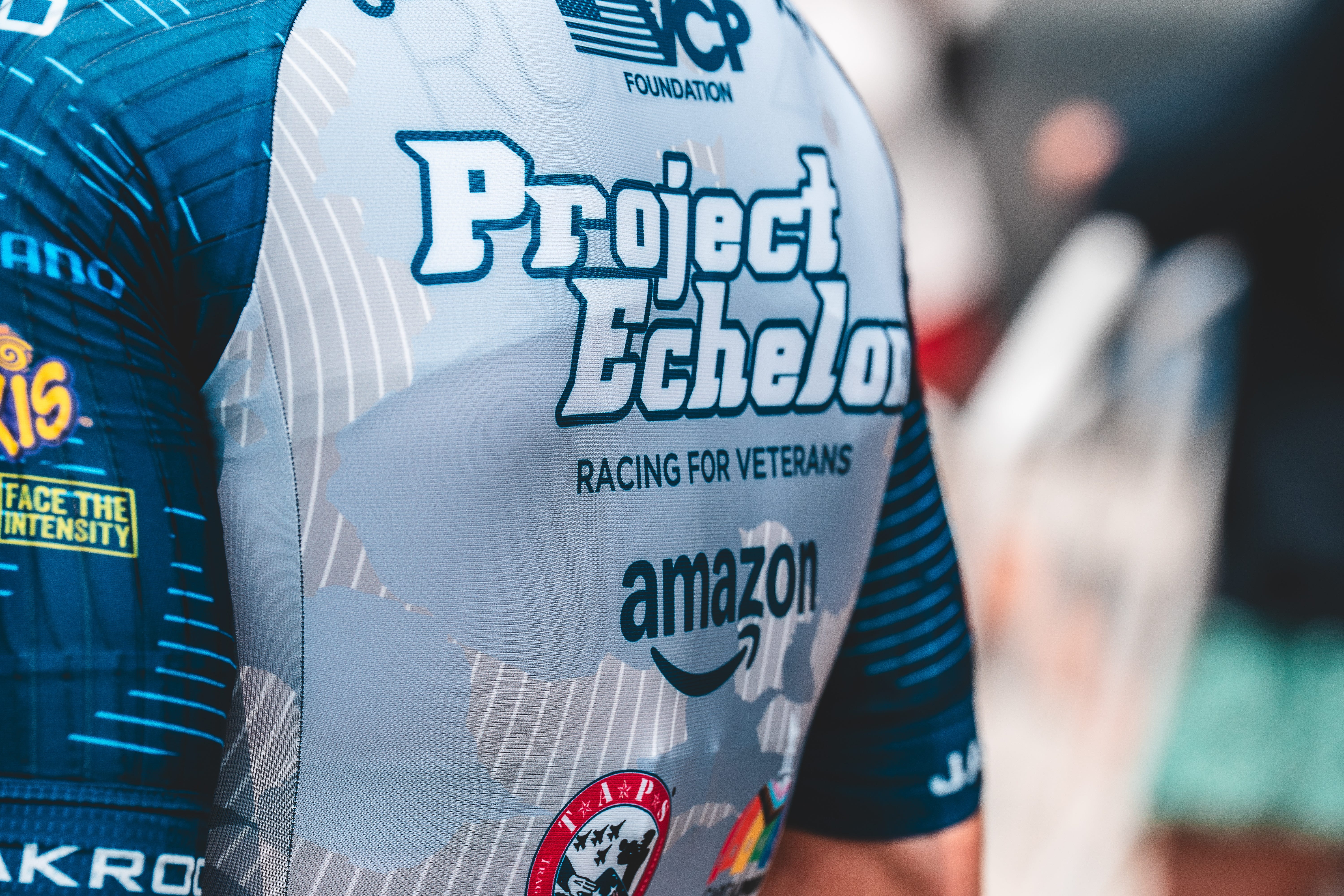
Founded in 2016 by Eric Hill and Eric Beach, Project Echelon is a registered 501(c)(3) non-profit that helps veterans navigate life after service. With suicide remaining one of the leading causes of death among veterans, the organization focuses on engaging them through healthy living, physical activity, and community. Its mission is to turn pain into purpose and isolation into belonging, using activities, like cycling, as a catalyst for healing.
By emphasizing the importance of physical challenges and mental wellness, Project Echelon has supported more than 9,000 veterans in finding structure, purpose, and a renewed sense of direction.

Project Echelon, the cycling team, plays a direct part in that mission. It acts as both a community engagement tool and a platform that directly contributes to veteran support through the donation of sponsorship dollars and from the team providing coaching services to veterans.
As Eric explained, cycling was always going to be part of the equation:
“I was going to start a cycling team no matter what. I wanted to find a way to take one thing I was passionate about and support another thing I was passionate about, which is serving our service men and women.”
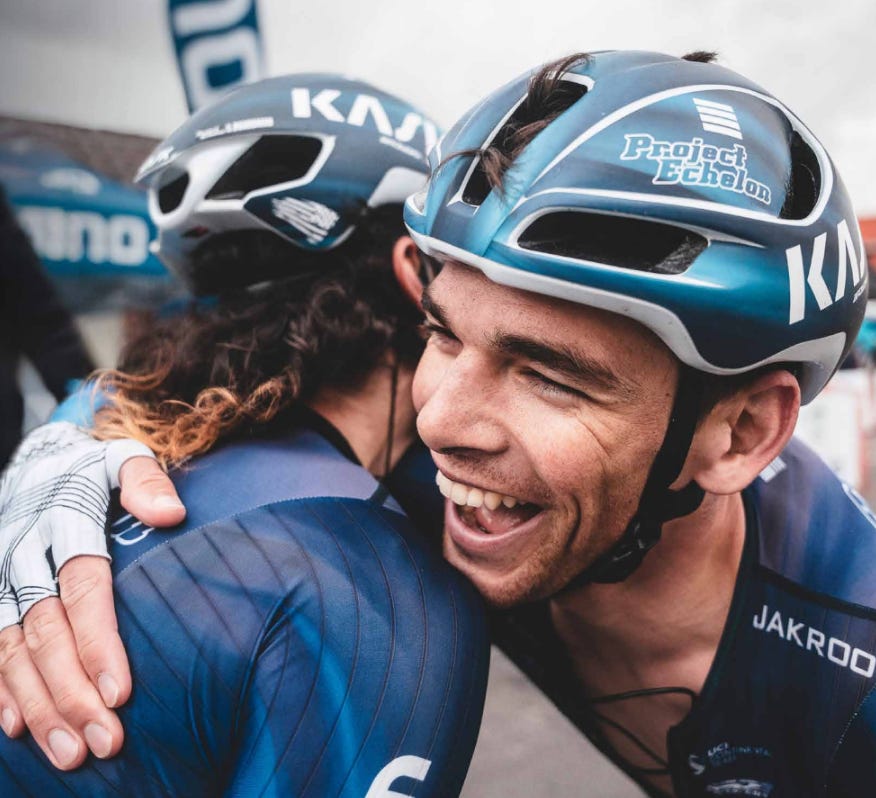
From the beginning, the racing team and the non-profit have operated as a single entity, each reinforcing the other rather than competing for attention. As Eric put it:
“Surprisingly, it hasn’t been difficult to manage [balancing team management with goals of the non-profit]. The two go hand in hand, but as the team grows you never get comfortable. You’re always learning and if you’re not growing you’re dying, so we continue to face these challenges together. Project Echelon’s board makes sure that we’re standing by our mission and not letting racing be a priority over the mission we serve.”
It all starts with purpose
At its core, Project Echelon Racing isn’t just a cycling team, it’s a mission-driven marketing platform to influence positive societal change. The team gives the non-profit organization visibility, connects with new audiences, and provides partners with a way to support both elite competition and meaningful impact. That alignment of sport and purpose is what sets Project Echelon apart in the U.S. cycling landscape.
Having a sports team exist as an integral part of an organization is incredibly rare. Eric made it clear that Project Echelon doesn’t act as the title sponsor for the cycling team, but rather the image, ethos, impact, and brand him and the team have built.
“I can’t find another team in the sport, or honestly, in the sporting world, structured the way we are.”
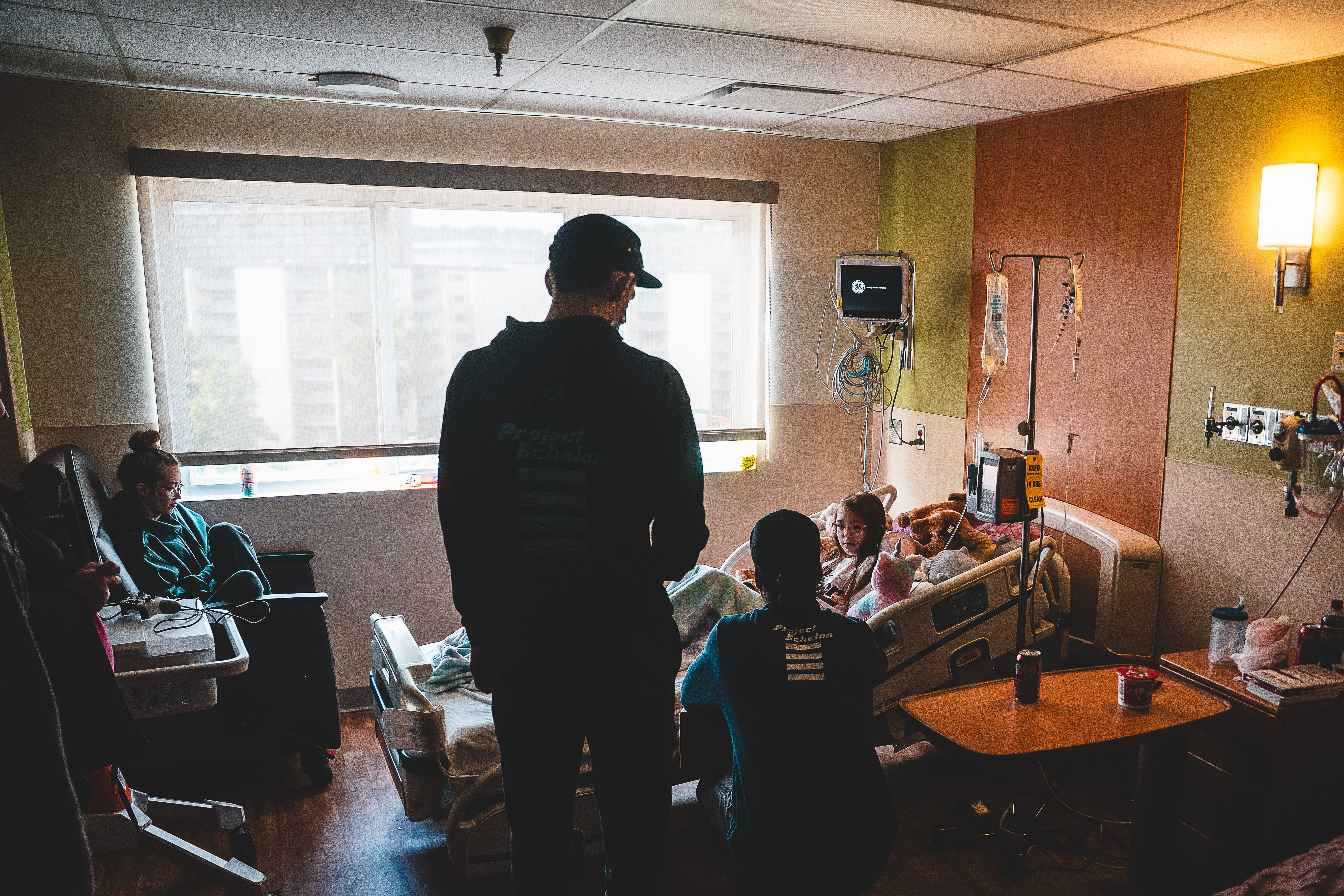
Project Echelon’s dedication to service is the pillar that shapes every aspect of the team and its operations. It is the reason the team stands out and succeeds in the challenging domestic racing environment.
With money and development remaining the two biggest obstacles for U.S. teams, the next question is how Project Echelon’s mission-driven model addresses both of these challenges, helping the team thrive where others might struggle.
Sponsors need a story
Corporate Responsibility
The premise for this piece was originally going to focus on the broader sponsorship environment within U.S. cycling. After speaking with Eric, however, it became clear that Project Echelon’s unique approach to sponsor engagement could serve as a leading example of how future teams can thrive in the modern cycling landscape.
Beyond the usual benefits of sports marketing, Project Echelon’s mission offers sponsors the ability to tie their name to a meaningful cause and tell a deeper, more resonant story. In an era of heavily scrutinized corporate responsibility, donating to a non-profit while receiving commercial benefits from a sporting team is nearly unheard of.
As Eric explains, Project Echelon gives sponsors:
“An authentic and tangible way to say ‘Here’s how we’re serving our community.’”
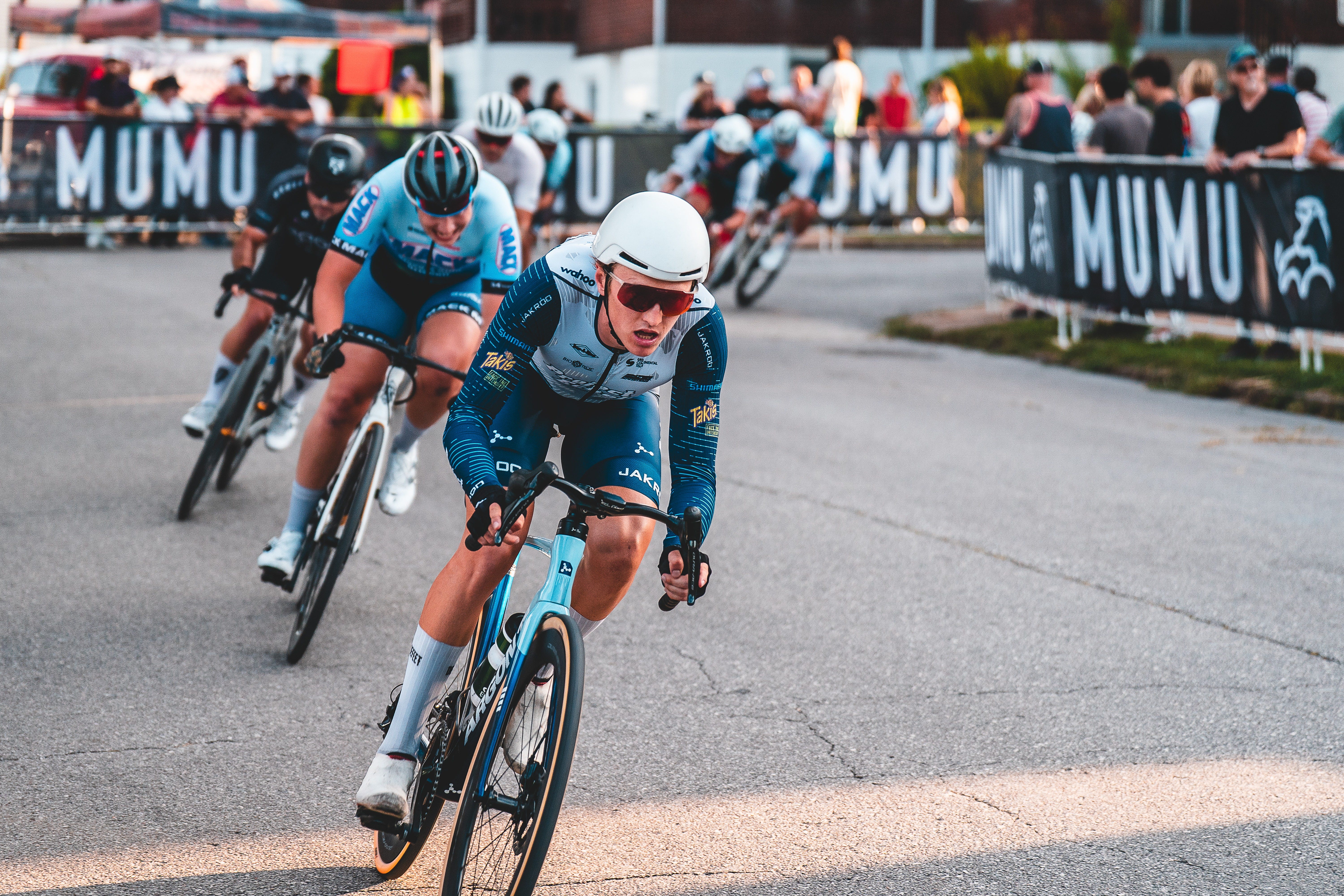
While sponsorships that promote corporate responsibility are usually a smart business decision, donating to every non-profit isn’t necessarily in a company’s best interest. Unfortunately, well-intentioned efforts, such as donations to climate or certain social causes, can even invite political backlash.
Project Echelon offers a more stable and reliable option for sponsors. As Eric pointed out:
“No matter the political climate or economy, people believe veterans deserve our support, and that provides sustainability.”
Domestic Strengths
For teams to thrive financially, it’s critical to maintain a diverse sponsor mix—domestic and foreign, endemic and non-endemic—to optimize outcomes at home and abroad.
One might assume that a team built around uniquely American philanthropy and centered in the U.S. cycling scene would struggle to attract foreign sponsors that carry a reputation abroad. In practice, however, Project Echelon’s mission still resonates internationally.
Eric notes that the U.S. market remains strategically important for any foreign consumer brand due to its outsized economic opportunities. Cycling might not be widely popular domestically, but the U.S. is still the world’s largest consumer market—meaning brands need a presence here.
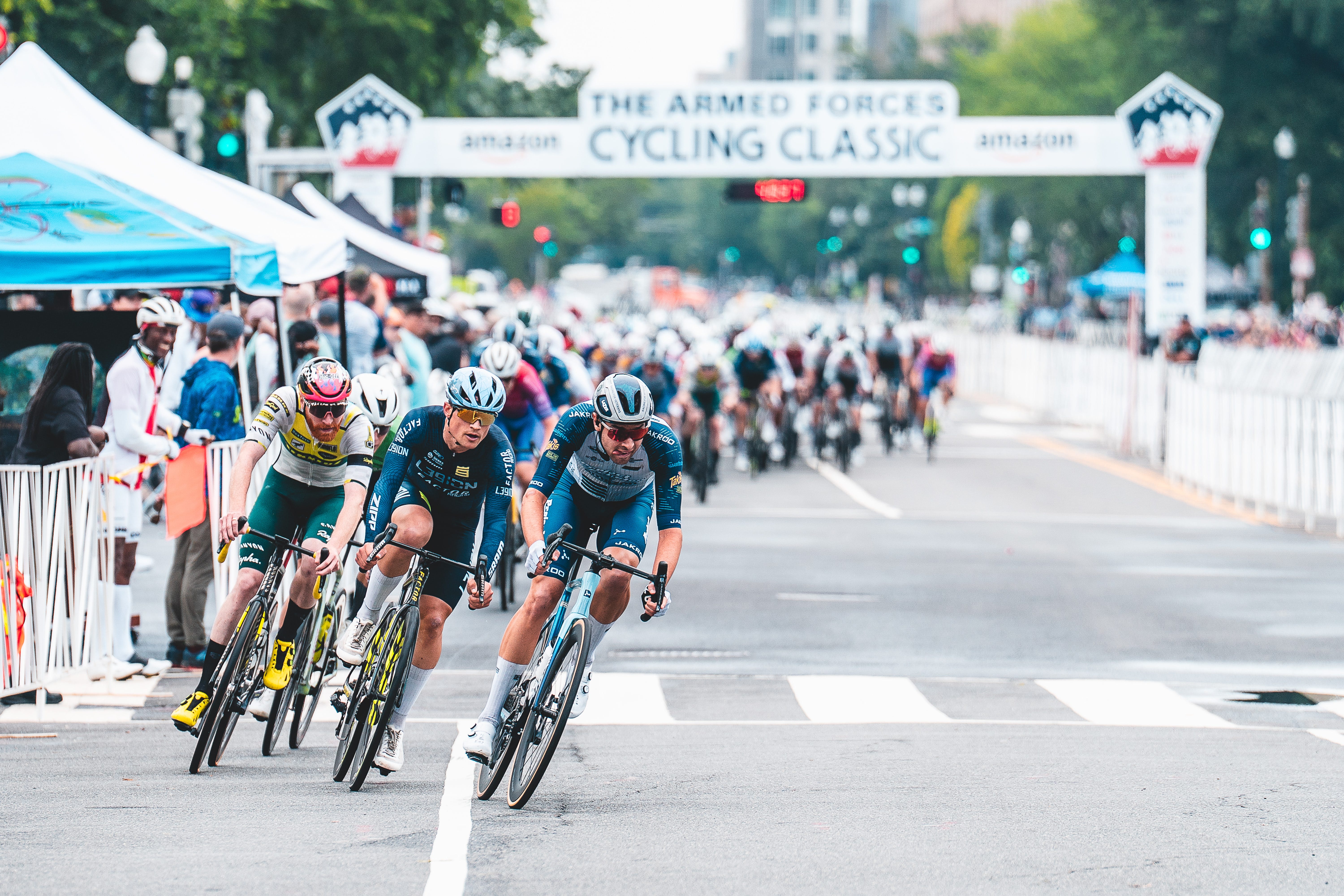
For foreign brands looking to break into the American market, storytelling is key. Project Echelon’s identity, rooted in service to U.S. communities, positions the team as an ideal channel for engagement and impact. Eric explained:
“Even European brands understand that if they want to reach the U.S., it can’t just be through racing—it has to be through community engagement.”
Today, Project Echelon touts an impressive list of sponsors including large foreign brands like Shimano and Argon 18.
A place athletes want to call home
Purpose beyond racing
The other challenge facing American teams is broken access to developmental pipelines. There may only be a handful of continental teams, but the pool of riders capable of competing at the elite level is still slim pickings. If someone is a phenom, chances are they’ve already been swept up by a European program, leaving other teams searching for more riders to fill their roster.
This means teams like Project Echelon must attract enough talent to sustain success while giving riders a reason to stay, rather than take their chances overseas. Once again, the team’s broader mission becomes an asset in recruiting and retention, offering riders a deeper sense of purpose beyond performance. Eric says contributing to Project Echelon’s community work “helps riders level-set. It reminds them there’s more to life than winning or losing a bike race.”
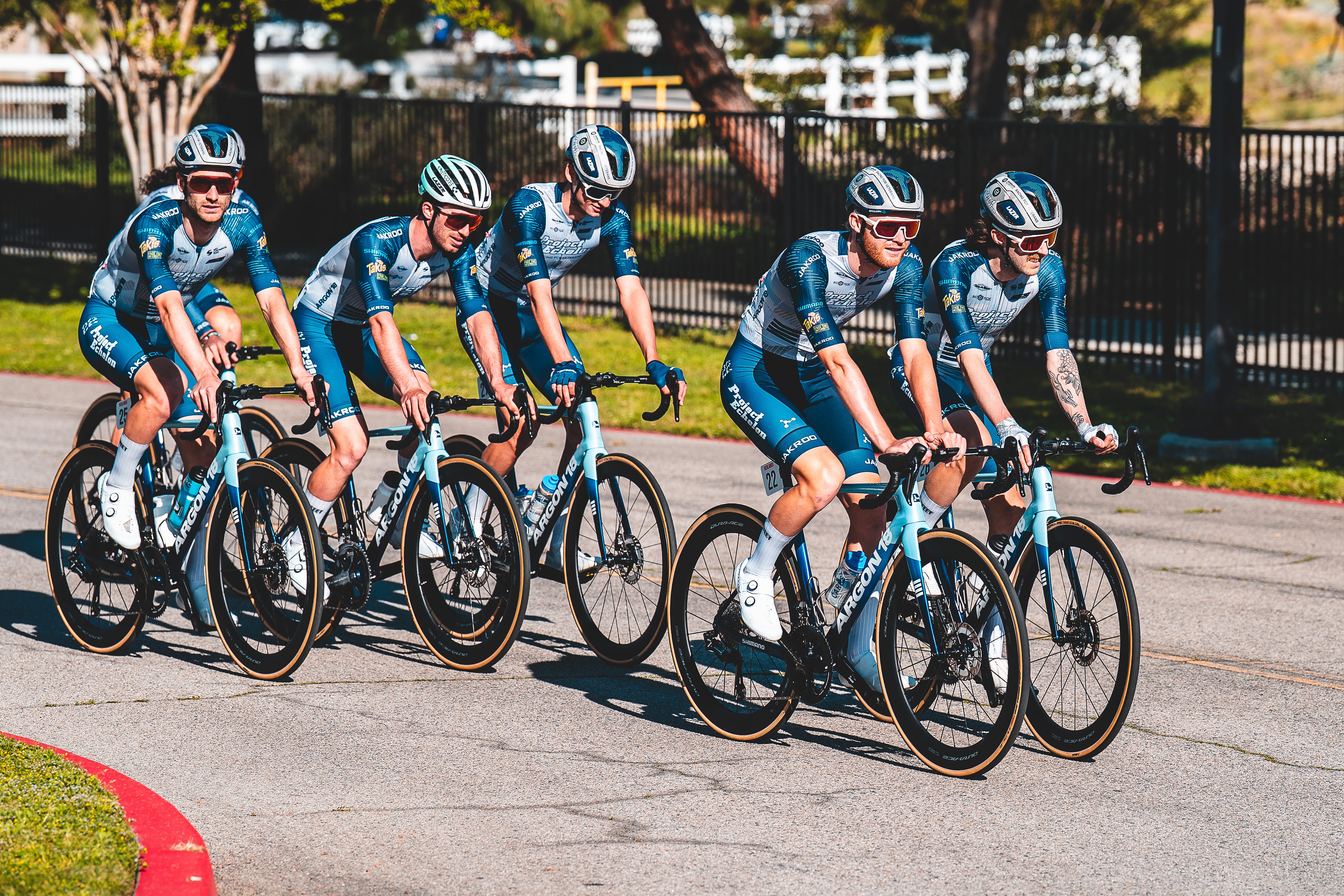
Development beyond racing
Interacting with and assisting the veteran community also helps riders build skills that extend beyond their cycling careers. Every rider, especially those not competing at the WorldTour level, understands that their window to compete as a professional is limited. With the constant risk of injury or decline in form, any rider could be forced to find a new career at a moment’s notice.
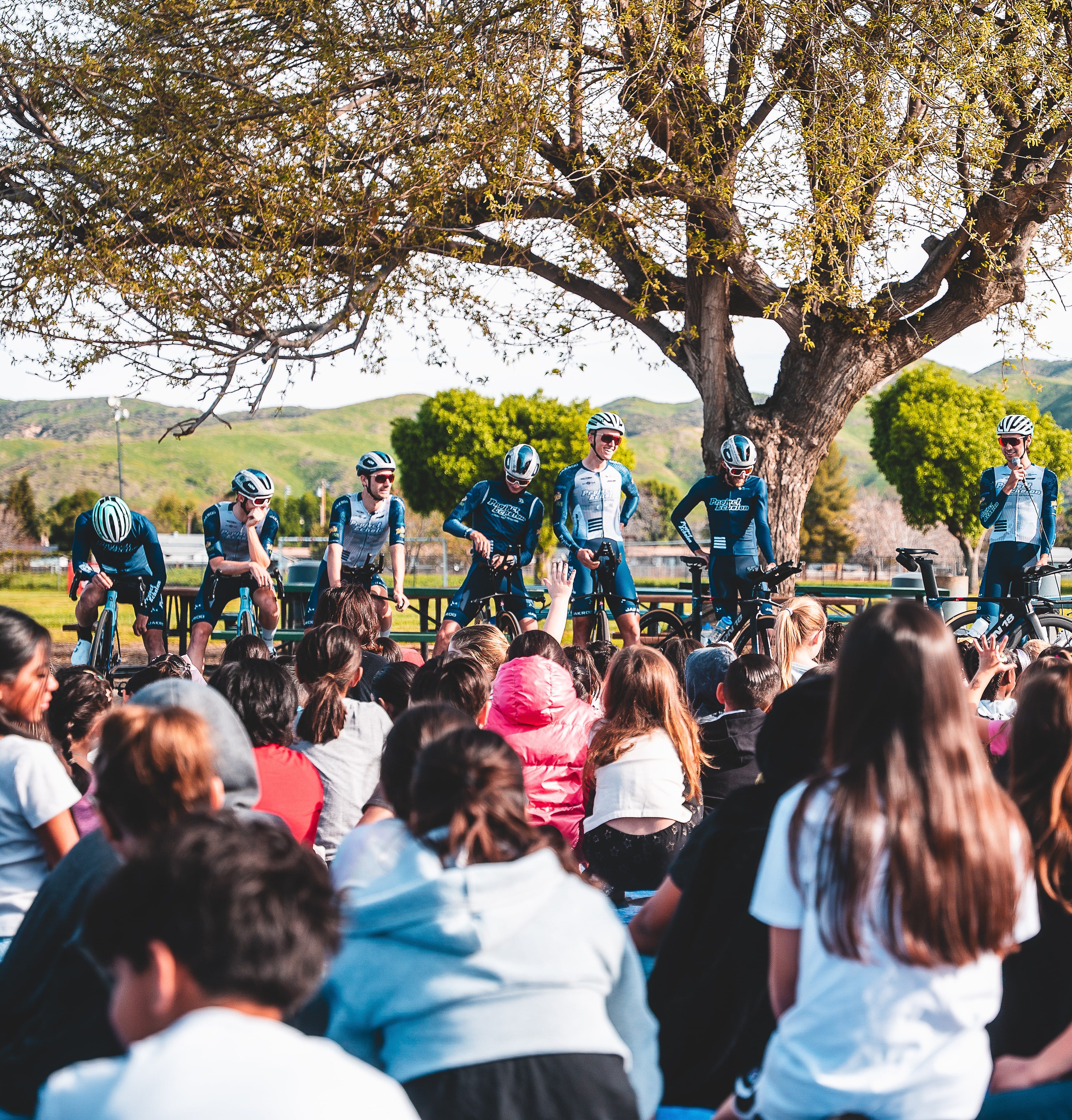
At Project Echelon, racing is only part of the job. Riders are also actively involved in the operations of the non-profit, giving them experiences that most athletes never gain on traditional teams. Eric and Project Echelon take a holistic approach to development and, as he explains,“help riders develop real-world skills like coaching, public speaking, and program development so they have a foundation for life after racing.”
Where some pros might feel lost after their careers, Eric draws on his experience as an educator to ensure Project Echelon riders “grow as people, not just as athletes. If they leave our program better equipped for life, whether in cycling or elsewhere, then we’ve succeeded.”
Balanced objectives across the map
For American riders trying to rise through the ranks in professional cycling, racing in Europe is an absolute necessity. However, the level of competition found in Europe is hard to come by in the U.S.
The path to European road racing is grueling for non-native riders, to say the least. Culture shock, new racing philosophies, isolation, and performance stress mean few American riders who move to Europe successfully progress through the ranks. Project Echelon offers a smoother path forward.
“It’s either come and ride and race with us or pack your bags and spend the better part of a year in Europe. And by the way, chances are you’re going to have a mental breakdown seven months in and you’re coming home. We hope we can be that alternative path.”
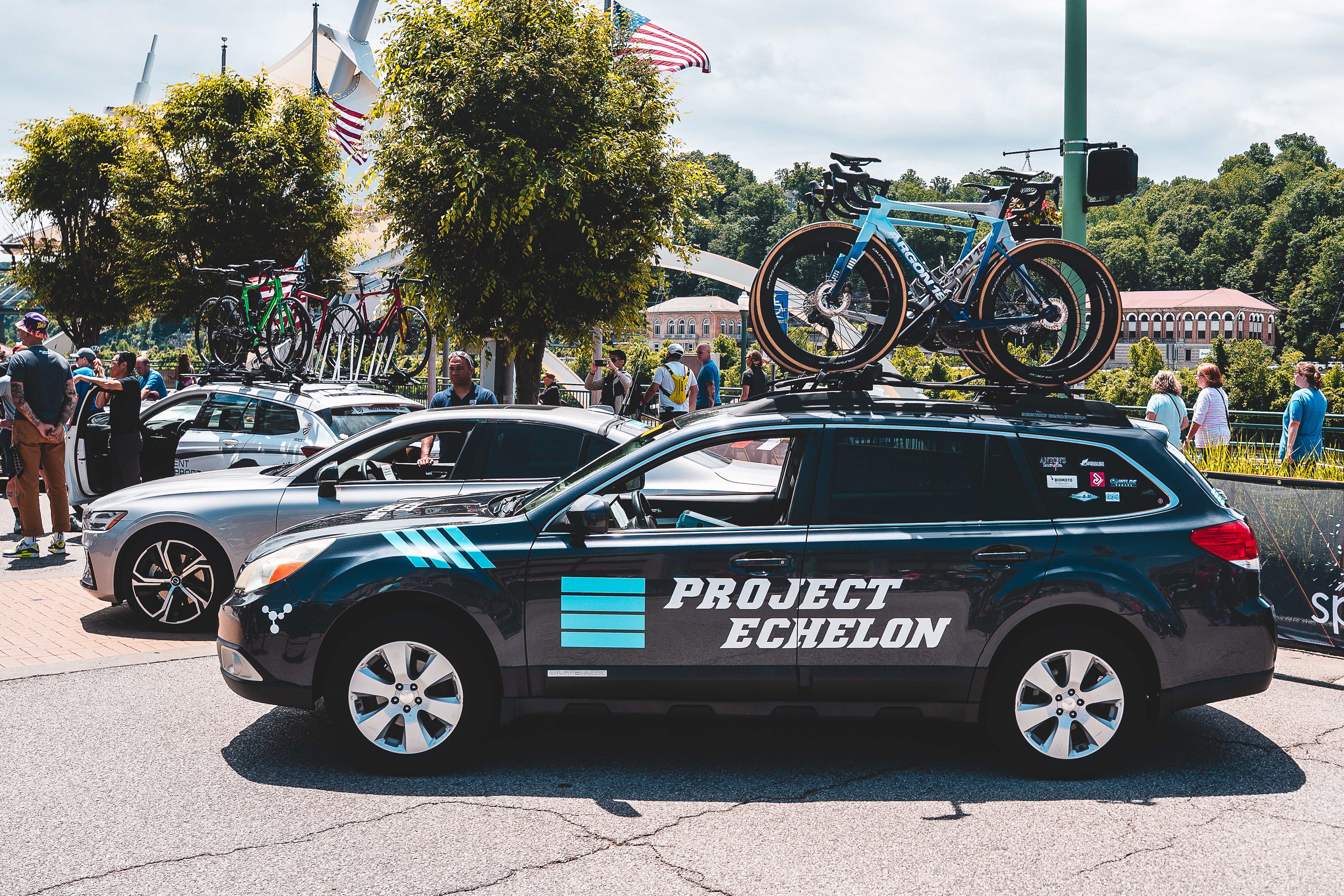
Project Echelon has adopted a flexible, hybrid approach to racing that is both financially viable and optimized for rider development. The team competes in select races in Europe while also racing at all the top events that remain in the U.S.
Being grounded in domestic philanthropy gives the team a reason to split their time between continents and reduces stress on riders while still providing crucial European racing experience.
Superior expectations and resources
While the team exists to serve a bigger purpose, Eric made it clear that athletes joining Project Echelon won’t be trading quality for comfort. His words leave no doubt about the team’s competitive focus:
“We’ve built ourselves to be North America’s top stage race team, that’s our identity. We have the expectation to win. We set an expectation of excellence that draws people in. They want to be a part of that. In North America, frankly, our desire is to win every race we start.”
And when it comes to racing in Europe:
“Winning in Europe is very difficult. A lot of teams say we can bring you to Europe, we get you experience there, and we can do some Spanish national races or whatever. There’s a lot of teams that do that, but it’s very few teams that can say when you’re here the expectation is to win and we’re going to set you up to do that.”
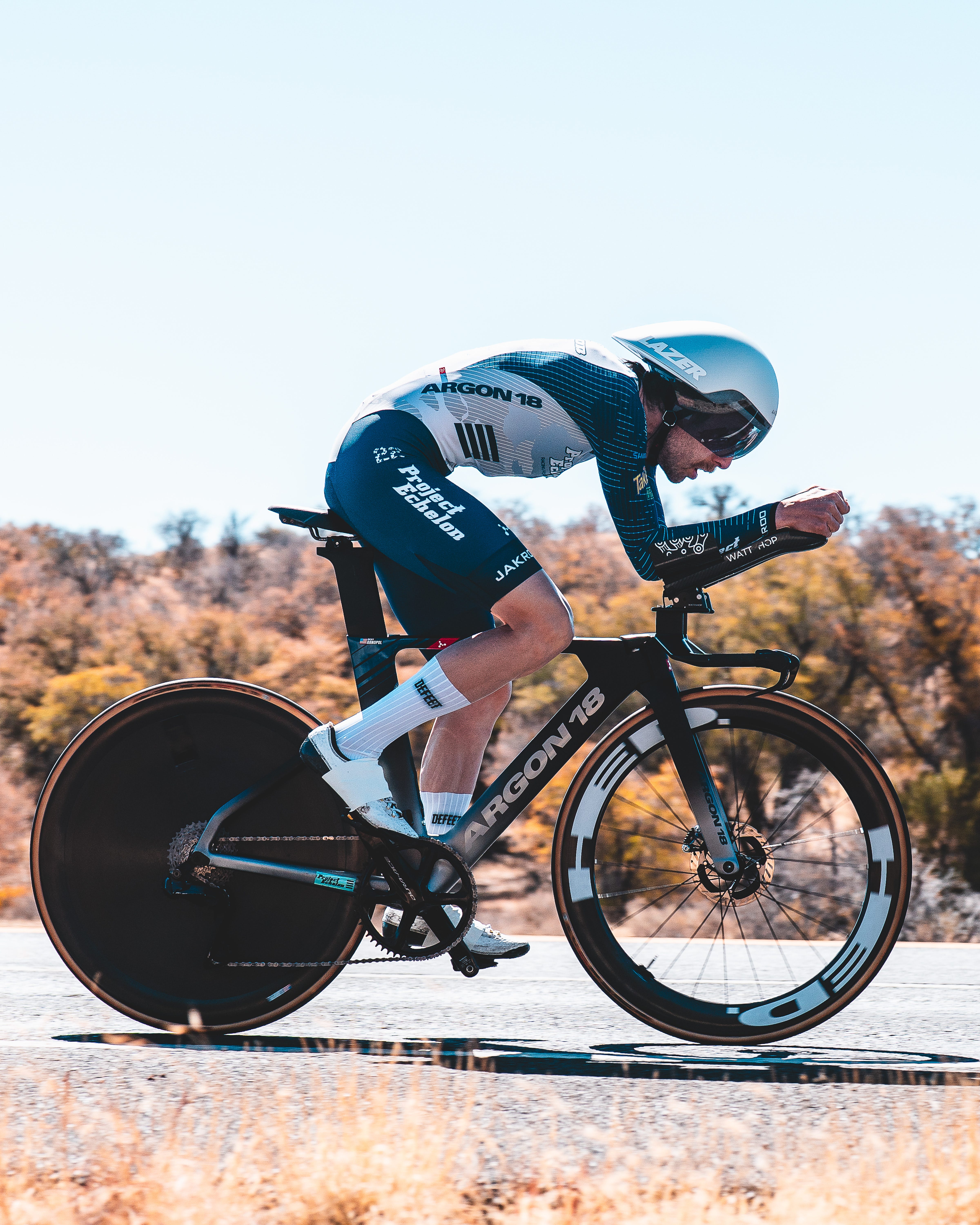
The results speak for themselves. Over the last two seasons, Project Echelon has won twelve races in Europe, while consistently delivering strong performances in domestic competitions.
Coupled with their sponsorship success, the team is able to provide riders with superior training and performance resources, giving them confidence that they will leave Project Echelon as stronger, more capable athletes than when they joined:
“We spend a lot of time and investment on the wind tunnel, nutrition, working with professional performance directors both on the road and from a training perspective. There aren’t very many, if any, teams in the U.S. that can provide that whole package.”
The promotion question
Tying their identity to a non-profit organization has paid off for Project Echelon in the form of stronger sponsorship opportunities and a respected reputation among riders. The early success has been impressive, but the question of scalability will always loom large. Competing at the Continental level is no small feat, yet excelling at this level and then promoting to a Pro Continental license is an entirely different story.
As Eric explained:
“To register as a Pro Continental team, you’re talking about going from a half-million dollar operation to a multimillion-dollar one. You need full-time staff, international logistics support, and a larger race calendar. That’s not something you do overnight.”
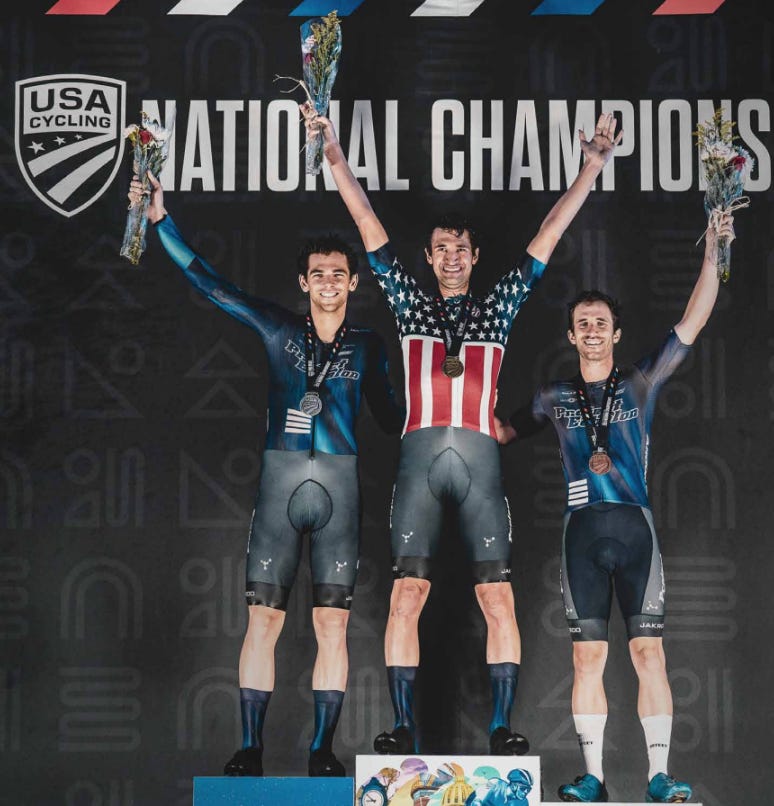
Without going into the nitty gritty details of UCI regulations and financial guarantees required to register as a Pro Continental team, the reality is that it will take years for an American team to move up from the Continental level.
On its surface, a team with a non-profit identity doesn’t necessarily face more challenges than a traditional one when it comes to promotion. However, having a mission-driven identity remains an asset for Project Echelon during that process.
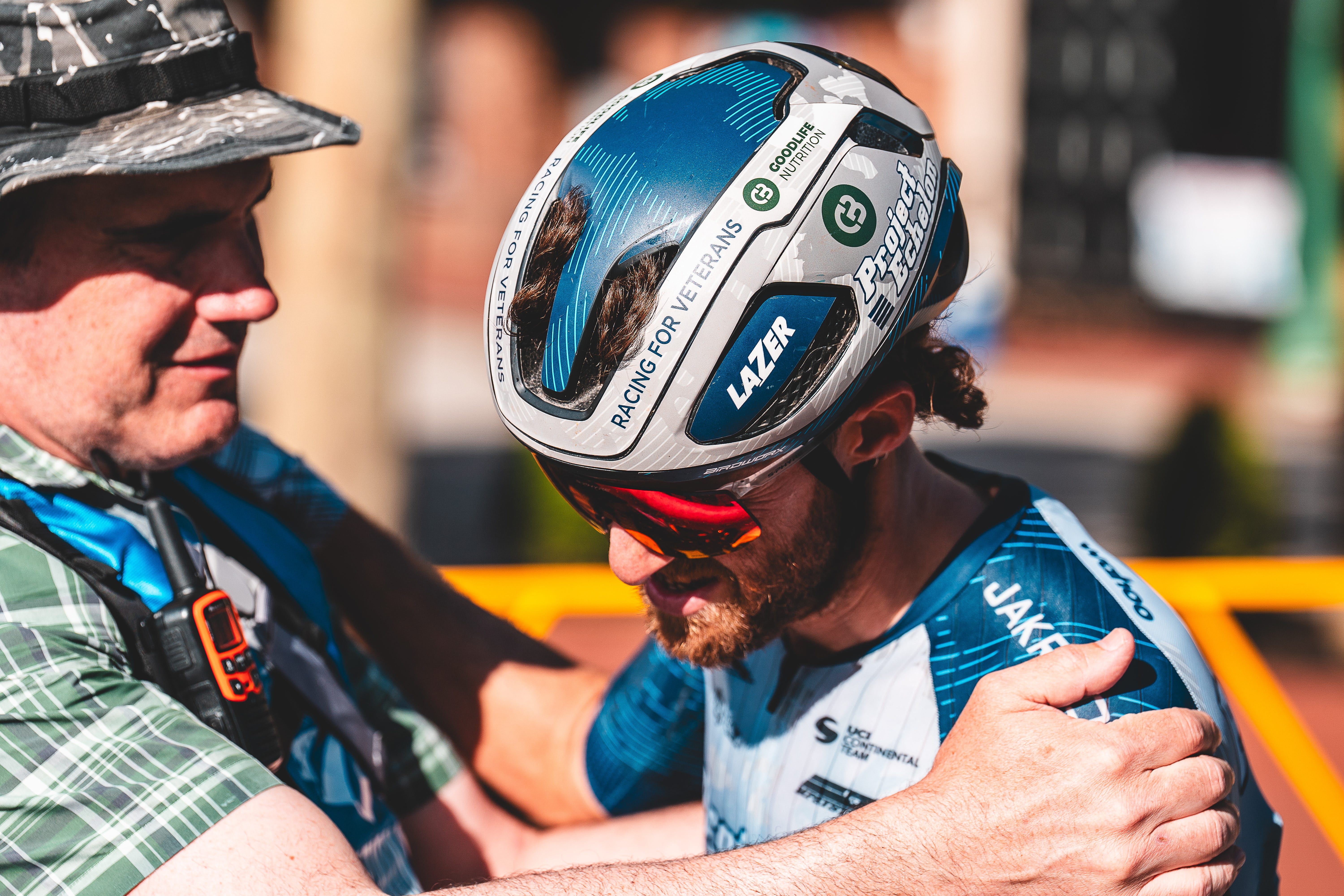
Project Echelon’s mission and commitment to excellence keep the organization grounded, because every decision ultimately comes back to a single question: are we helping or bringing more visibility to veterans? Growing too quickly could blur priorities instead of scaling the team’s purpose alongside its racing level.
“For us, promotion isn’t just about racing at bigger events. It’s about scaling our mission. We want to bring the Project Echelon story, veterans, purpose, and performance, to a global stage. That’s what really motivates us.”
In an era where many new teams race to secure the biggest budgets and buy their way into higher tiers of the sport, it’s vital that more organizations take a measured approach like Project Echelon. Cherry-picking talent and fast-tracking to the WorldTour may bring short-term prestige, but it doesn’t help build cycling in the U.S. What truly grows the sport is a sizable and sustainable ecosystem of teams at every level.
A beacon for the future of domestic racing
In the two years since becoming a Continental team, Project Echelon has reaped the benefits of its unique and intertwined sponsorship model that supports a cause greater than racing itself. The team has proven that third-party sponsors want to partner with organizations that demonstrate corporate responsibility, connect with the community, and tell meaningful stories. Riders, too, are eager to sign with a program that not only performs at the highest domestic level but also invests in their development beyond the bike.
While there are numerous challenges facing the domestic race scene, Project Echelon is presenting an alternative team model that emphasizes sustainability and steady growth over short-term results.
Everyone wants to see more American riders in the WorldTour, but sending young athletes to Europe and expecting them to succeed on their own will only keep U.S. representation limited. By focusing on a strong domestic calendar while still providing select European race opportunities, Project Echelon is taking a measured approach to talent development that gives riders both guidance and visibility.
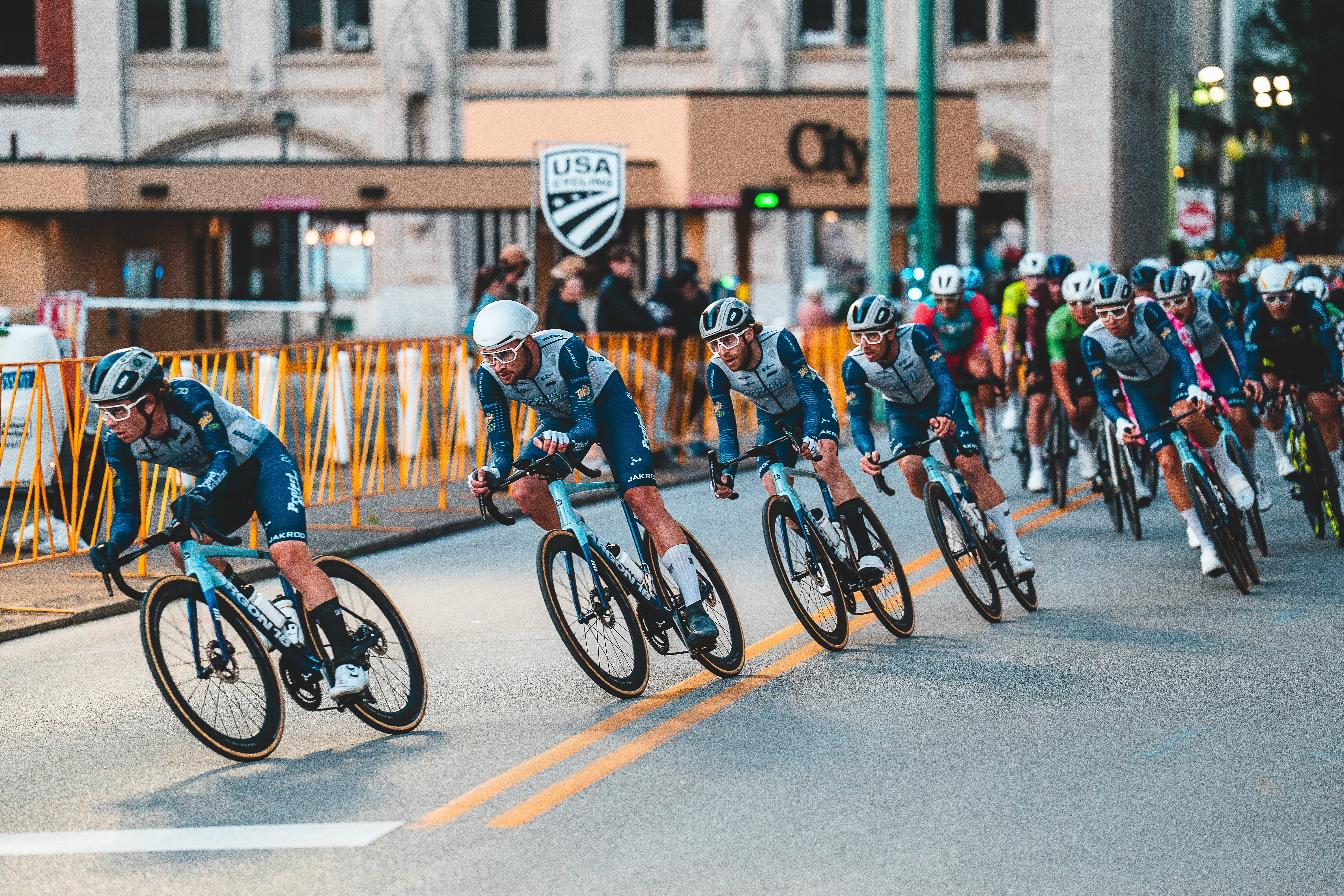
If we want a thriving domestic road cycling scene with real development pathways, the U.S. must maximize the number of team licenses at every level of the sport. A sustainable, multi-tiered ecosystem should be the expectation—not pouring immense resources into one program and hoping it breaks through.
If Project Echelon can achieve this level of success with the backing of a relatively small non-profit, imagine the potential if larger non-profits began embracing sport as a platform to spread their mission and engage new communities.
Ride and rip,
Kyle Dawes