


Another piece in the puzzle
A major theme in many of my recent stories has been growing cycling in the U.S. Specifically, how do we do it sustainably, and in a way that elevates it as a major sport drawing larger audiences?
I’ve explored developmental pipelines with Alexey Vermeulen, the cultural importance of influencers like Holy Spirit of Gravel, and how companies like Movemint are empowering the next wave of events.
Those are all critical pieces of the puzzle, but what about the event ecosystem that ties everything together?
If cycling wants to become major sport domestically, there needs to be known, marquee events across disciplines. They need to attract media coverage, offer professional broadcasting, draw fans on-site, and fit into a calendar that creates storylines worth following.
Right now, the U.S. event landscape is scattered across disciplines, series, and geographies, with quality ranging widely due to limited resources. This piece aims to bring some order to that chaos and explore how organizers are evolving their events to meaningfully grow the sport.
Ultimately, what is the most viable and likely path towards growing cycling in the U.S. through events?
To dig into this topic, I spoke with Micah Rice, a cycling event consultant with 25 years of industry experience. Micah has helped elevate events like the Life Time Grand Prix, SBT GRVL, FNLD GRVL, and USA Cycling’s national-level races.
Cycling in the U.S.
Compared to Europe, where the UCI oversees a well-structured calendar of events and establishes clear tiers of racing across disciplines, the U.S. scene is far less defined. We have events across every discipline, but the structure is loose, with little hierarchy to signal which races are most important.
Several factors contribute to this fragmented landscape, with the main one being who actually organizes any given event. In the U.S., there are four primary models, and they often operate in silos:
USA Cycling–sanctioned events
Grassroots events
Conglomerated events (such as the Life Time Grand Prix or Gravel Earth Series)
UCI-sanctioned events (a relatively small share)
Each model offers unique opportunities to grow the sport, but none on their own provide a clear path to building a wave of new fans.
USA Cycling, often criticized, rarely understood
USA Cycling (USAC) is the governing body for cycling in the U.S. They facilitate events across disciplines, including national championships, Olympic qualifying, and collegiate racing. They also administer a rider classification system, where points are earned through USAC-sanctioned events to categorize athletes by skill level.
As the official governing body, you might expect USAC to play a major role in growing the sport domestically, and in some ways, they do.
Unlike many European cycling federations, USAC receives no government funding. It operates as a nonprofit, relying on membership dues, sponsors, donations, and funding from the United States Olympic & Paralympic Committee (USOPC).
This funding structure limits their ability to invest in promoting the sport, and much of their focus is simply keeping the organization running. As Micah put it:
“We would all like to think of them as this large organization driving growth and making things happen, and that’s true on some level. But in reality, USAC is doing everything it can with the bandwidth they’ve got. They’re roughly a $16 million a year organization. Private organizations like Life Time dwarf them.”
The constraints go even further. Because cycling is an Olympic sport, USAC must coordinate athlete selection and participation within the rules set by the USOPC under the Ted Stevens Act.
Even with marquee events like the LA 2028 Olympic Games on the horizon, USAC cannot be relied on as the default driver of growth for the sport. They will continue to support and develop athletes, but until they can raise significantly more funding, their capacity to promote events will remain limited.
Grassroots and conglomerated events
Unlike USAC and UCI-sanctioned events, grassroots races operate without heavy regulations. Organizers are free to run events as they see fit, generate unrestricted revenue, and even sell their events to larger organizations with more operational resources.
The biggest advantage of grassroots events is flexibility, meaning organizer can start small utilizing the resources they have. The U.S. offers some successful examples like Stetina’s Paydirt, Midsouth Gravel, and Valley of Tears Gravel. All occur in relatively small communities, generate competitive pro fields, and have become popular for their “anything goes” spirit.
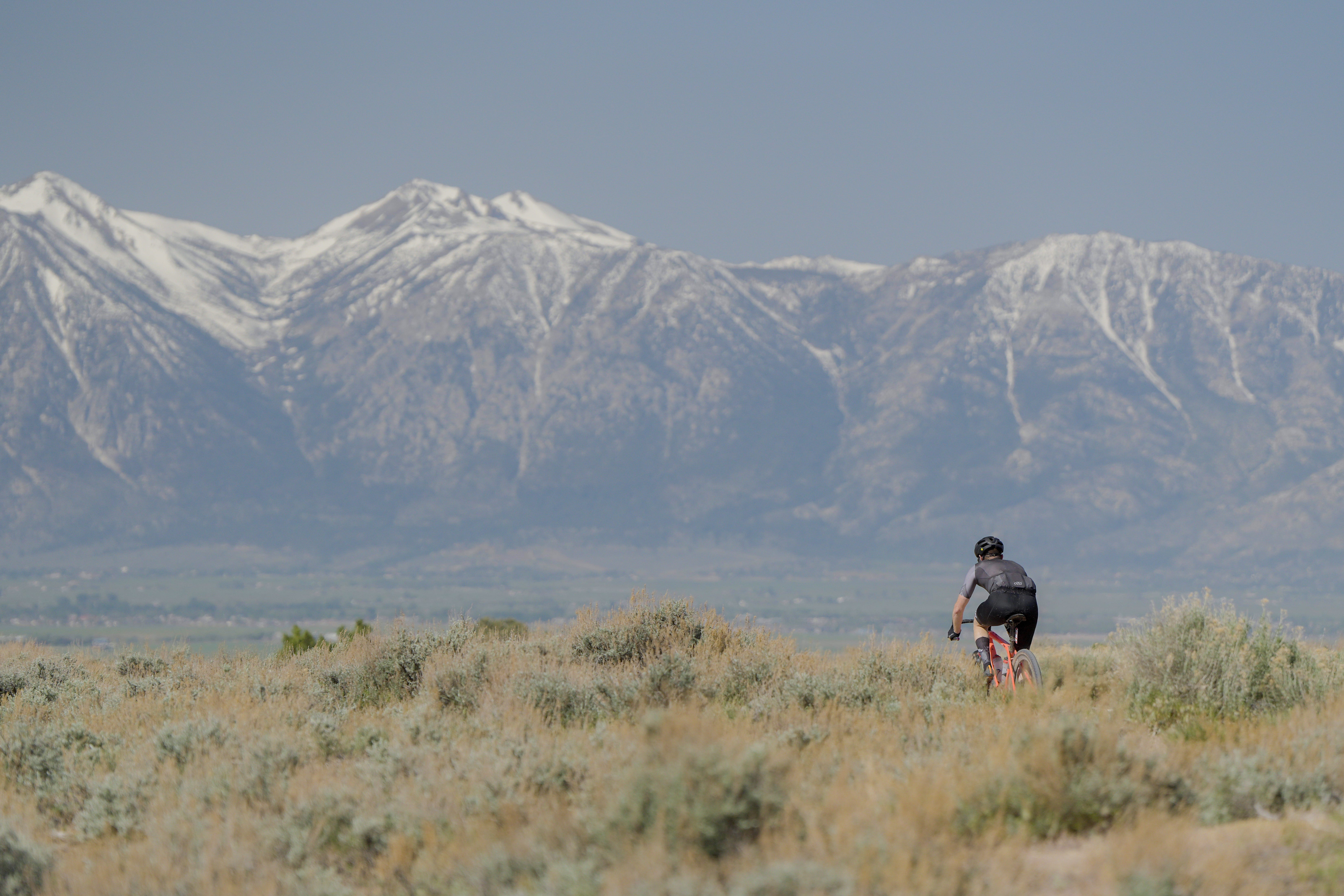
Some grassroots events evolve into highly polished, professional races like SBT GRVL and FNLD GRVL, which have become must-attend events for top athletes.
Then you have the upper echelon of grassroots racing which sees events grow so large and successful that corporations acquire them to maximize revenue and reach.
Two of the most prestigious off-road events in the U.S. started from almost nothing: Leadville MTB 100 and UNBOUND Gravel each began with fewer than one hundred participants in small, isolated communities. Over time, both gained cultural status and community investment, drawing ever-larger fields.
Eventually, Life Time took notice and acquired both events, along with others, to form the Life Time Grand Prix off-road series. Today, these races represent the pinnacle of gravel and marathon mountain bike racing drawing thousands of participants every year.
As Micah pointed out, the revenue generated through events like the Grand Prix dwarfs USAC’s funding. The clearest path for significant domestic growth in cycling appears to be the community taking matters into its own hands by using grit, creativity, and culture to build grassroots events that eventually become giants.
The path forward, elevating grassroots racing
Micah has worked on everything from launching first-year grassroots races to elevating the experience at the nation’s biggest cycling events. From our conversation, it’s clear that growing domestic cycling will require progress across every tier of event. There simply isn’t a silver bullet that will create a massive wave of new participation.
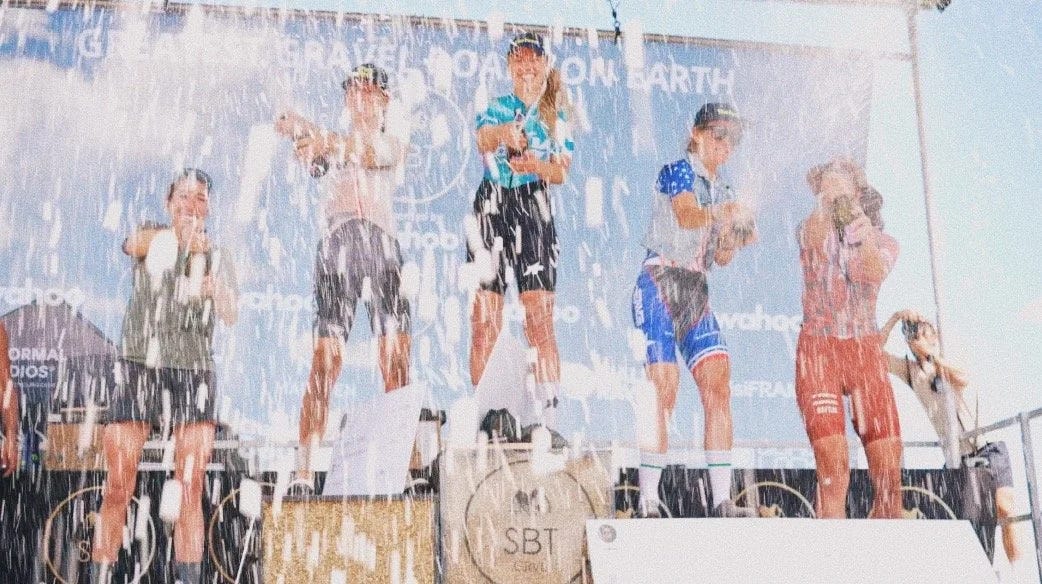
If there’s one area with the most potential, it’s prestigious grassroots races, especially those with the backing of well-funded corporate sponsors who can scale them into premier events. When I spoke with Micah, I wanted to dig into how the Life Time Grand Prix is leveraging his expertise, what he’s learned from helping build SBT GRVL, and his overall philosophy for growing the sport.
Calling grassroots events difficult to fund and organize is an understatement. Progress will look different for every race, and as Micah emphasized, growing these events is a gritty, hands-on process.
“People sometimes think there’s a playbook for building a successful event. There isn’t. You have to be ready to work with what you’ve got: the trails you can access, the volunteers you can find, and the community you can rally. The common thread I’ve seen is grit. The best events are usually run by someone who’s just obsessed with making it great, no matter how many late nights it takes or how many hats they have to wear.”
If the goal is to build races that elevate athletes, provide live coverage, and engage fans, then even the smallest events should start laying that groundwork now, even in simple ways. Post live updates on social media. Invite local pros or semi-pros to race. Go door-to-door in the community to let people know it’s happening. As an event grows, so will the resources.
Micah is now part of a team at Life Time that has those resources and they are utilizing them for maximum effect.
The Life Time Grand Prix is leading the charge

It’s pretty much agreed that events in the Life Time Grand Prix currently represent the pinnacle of domestic cycling, so how is Micah assisting them in the next stage of growth? As he put it, his role has one major overarching goal:
“Life Time brought me in to help build the Grand Prix into a series that isn’t just a collection of events but a true platform for athletes and fans. Our goal is to make sure it’s something that drives participation, attracts the best riders, and tells the story of the sport.”
Telling the story
Creating a compelling story is key to engaging new fans. One of Micah’s responsibilities is to oversee all live and delayed content coverage for the series, ensuring that “more people are tuning in, more sponsors are engaged, and the casual fan sees gravel as worth following.” According to him, it all starts with live race coverage, which he calls “the minimum starting point.”
A major step forward for the series in 2025 was the launch of live broadcasts for events like UNBOUND Gravel and Leadville MTB 100. Providing live coverage for these events is far more complex than in most other sports. Off-road courses can stretch over 100 miles, take place in remote areas with little to no internet, and require simultaneous coverage of both the men’s and women’s fields.
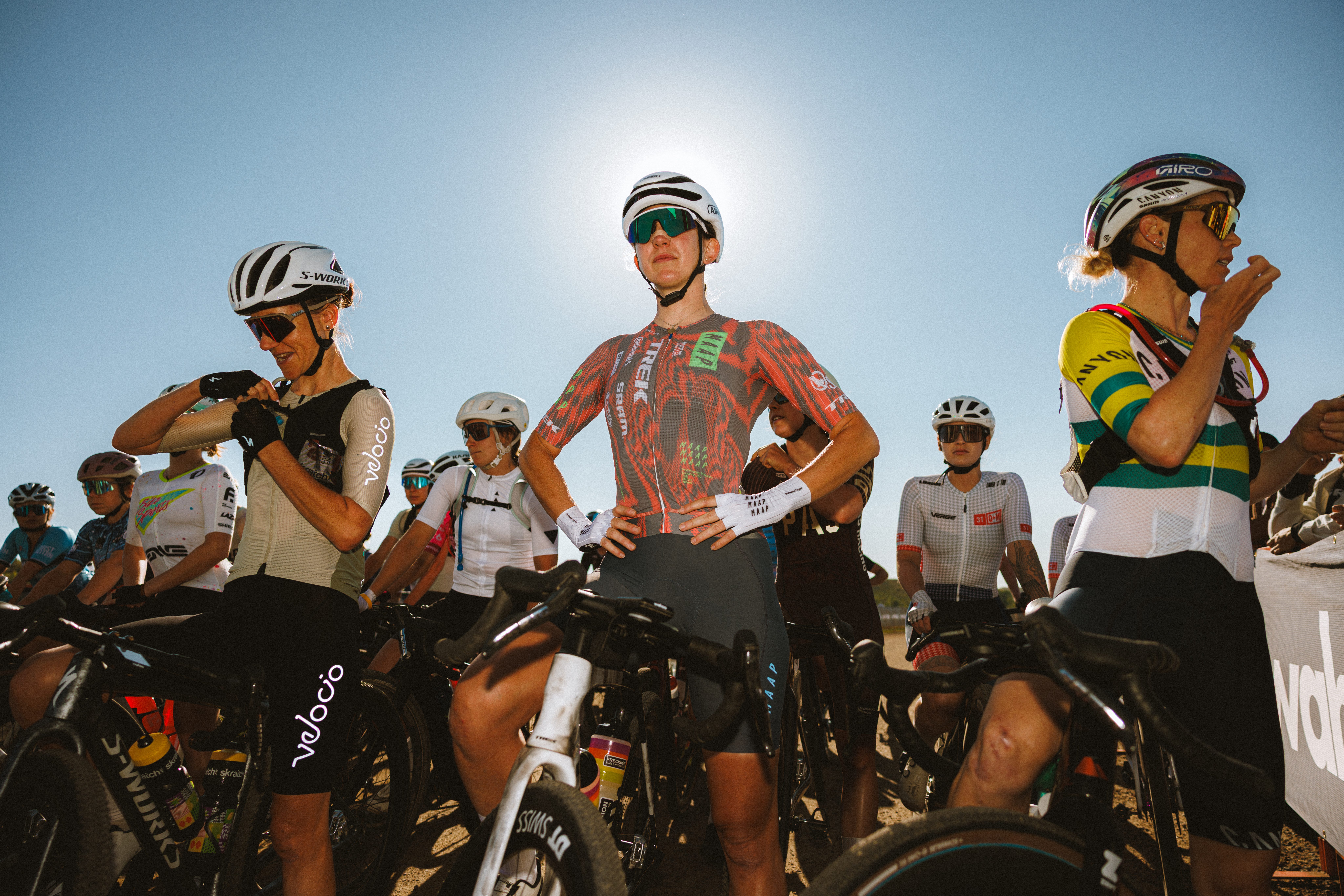
Despite the heavy logistical lift, Life Time provides the capital and human resources to make live coverage a reality. It has been a game changer for the series, helping it “meet fans where they are.” Streaming brings the races into living rooms, but Life Time is also finding other ways to reach and engage new audiences.
Leveraging an event ecosystem
Events like UNBOUND and Leadville are so popular that registrations fill almost instantly. Both races use a combination of qualifiers and registration lotteries to determine participants, and every year the qualifiers draw hundreds of riders. The popularity of UNBOUND and Leadville gives Life Time an opportunity to introduce new races in regions where cycling isn’t yet top of mind.
Life Time is leveraging their event ecosystem to produce the first edition of the Coldwater Trail MTB race in Anniston, Alabama. Under Micah’s direction, Coldwater Trail is the first Life Time cycling event east of the Mississippi River.

In an intentional move by Life Time, the race brings a new population of participants who previously would have had to travel great distances to attend a premiere event. To make it even more enticing, Coldwater Trail will serve as an official Leadville qualifier. Micah explained the effect the qualifier status has on the breakdown of participants:
“About 25 percent of the people that show up are there for the qualifier spot. They’re there to get into Leadville. About another 25 percent of the people there think, ‘Well, I’ll check it out and if I qualify, great. But if not, it’s not the end of the world.’ And then about half the people just want to see the new race, do the course, and be a part of it.”
With roughly half the participants influenced in some way by the qualifier status, Life Time’s backing and event ecosystem give a new race far more visibility than a grassroots event starting entirely from scratch.
Micah emphasized that another big advantage of being a Life Time is the confidence participants feel when signing up. With a Life Time event:
“You know that you’re going to get a quality course, good safety precautions, a solid medical plan, fully stocked aid stations, accurate results, closed streets at the start and finish, and well-marked courses so you won’t get lost. These are the things that elevate the experience at this level of event.”
Coldwater Trail is a prime example of how brand recognition and respect can accelerate growth for a new race. Micah was clear that the event is still very grassroots — lower budget and very much a roll-up-your-sleeves project — but the backing of a reputable organization provides a free boost to grow new events faster.
As more race series emerge in the U.S., they will act as a catalyst for cycling’s domestic growth, offering legitimacy and confidence for both amateur participants and professional riders.
Additional factors that will maximize event growth
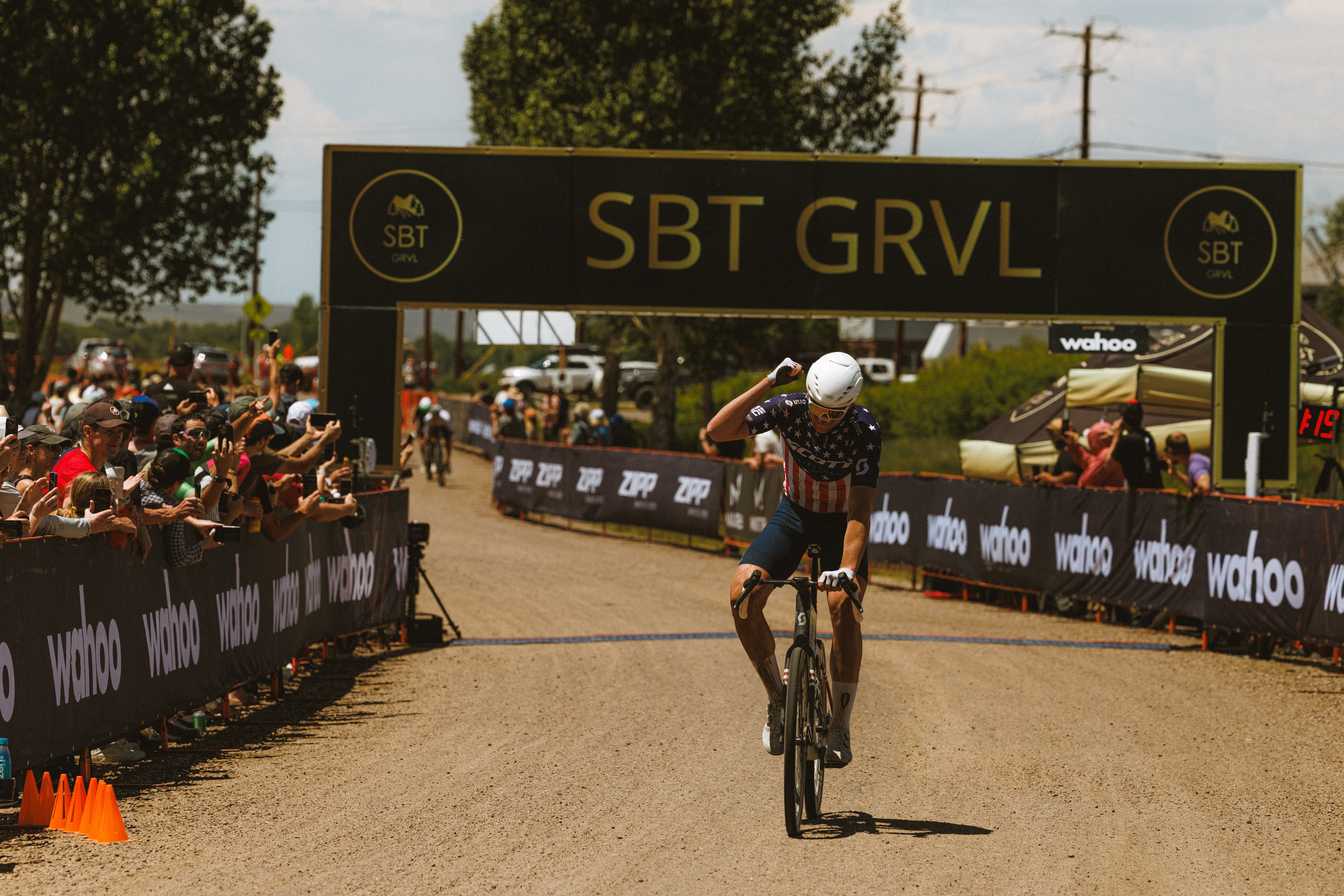
Another wildly successful race that doesn’t fall under a conglomeration of events is SBT GRVL in Steamboat Springs, Colorado. Pros mark it on their calendars, and amateur riders consider it a bucket-list event. The first edition filled quickly, drawing 1,500 participants. Its instant success provides a master class in how to maximize intangible resources and scale a race rapidly.
SBT thrives because of its:
Destination-driven appeal
Inclusiveness of every skill level
Off bike experiences
Location is king
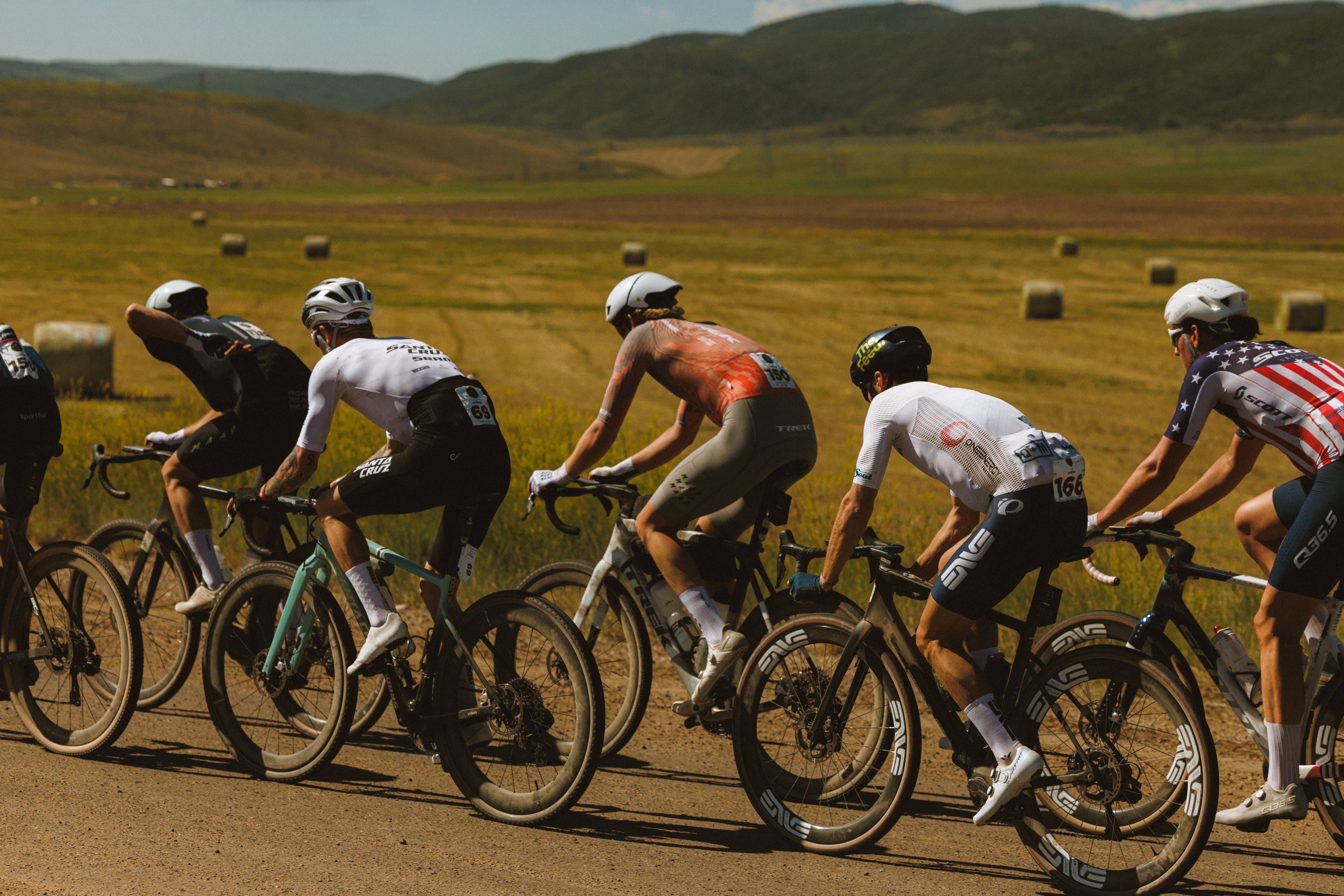
SBT’s biggest asset is its location. Steamboat Springs showcases the best of Colorado, and many participants extend their stay to enjoy the area’s attractions. Beyond the scenery, the city has the infrastructure to support visitors, including restaurants, hotels, condos, and a vibrant community. While large cities have the highest concentration of cyclists, they also come with strict permitting and logistical challenges for organizers. Smaller communities that are also travel destinations free up organizational bandwidth while still attracting riders from other areas of the country.
The more the merrier
SBT’s location also plays a role in making the event inclusive and accessible to all participants. Steamboat Springs contains hundreds of miles of fast, smooth, beginner friendly gravel. This allows course design to be straightforward compared to other events. Organizers can build amazing courses in a variety of distances that will please first timers and pros alike.
Taking advantage of community
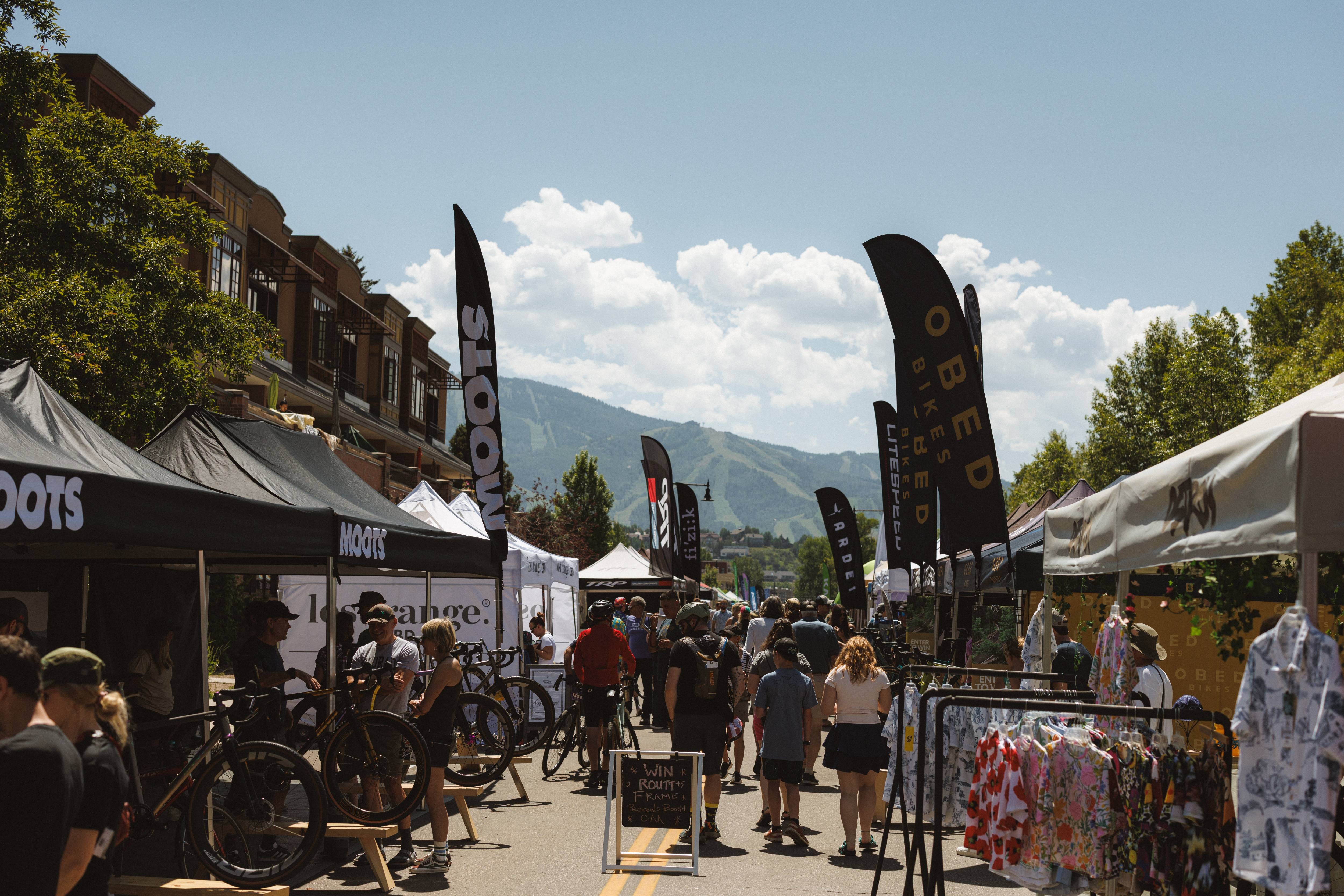
Like many grassroots events, SBT thrives by bringing together a unique community in one place. Many cyclists do not have large groups of like-minded friends who share the quirks of the sport. Gathering 1,500 participants, SBT encourages interaction with strangers through an expo, music, giveaways, group activities, and even an iconic costume-themed hill climb competition. The result is an experience that keeps participants coming back.

All of these intangible benefits require low capital investment while providing strong marketing simply through location and community. If more events can find hidden gem towns to host races, the U.S. could see a proliferation of bucket-list cycling experiences across the country.
It’s going to take all of us
It’s obvious that the U.S. won’t see rigid race ecosystems governed by organizations like USAC or the UCI anytime soon, but that doesn’t mean there isn’t a place for them. USAC provides enough structure with the resources on hand to help juniors develop into stars, even if the numbers are smaller than we like.
Grassroots races have stepped in to fill the gap, offering accessible experiences for new riders and helping expand interest in the sport. Some of these races have become so successful that corporations are acquiring them to elevate race experience, creating even more opportunities for cycling to grow across the country. Their success paves the way for new, connected events to sprout and grow faster than their predecessors.
The U.S. cycling fanbase has become accustomed to gritty organization and unconventional broadcasting, meaning opportunity exists wherever organizers are willing to put in the work. By learning from events that maximize location, community, and experience, domestic cycling has a real chance to grow. The cycling event ecosystem in the U.S. is far from perfect, but after digging into the details, it would seem we are taking the best path forward with the resources available.
Ride and rip,
Kyle Dawes