


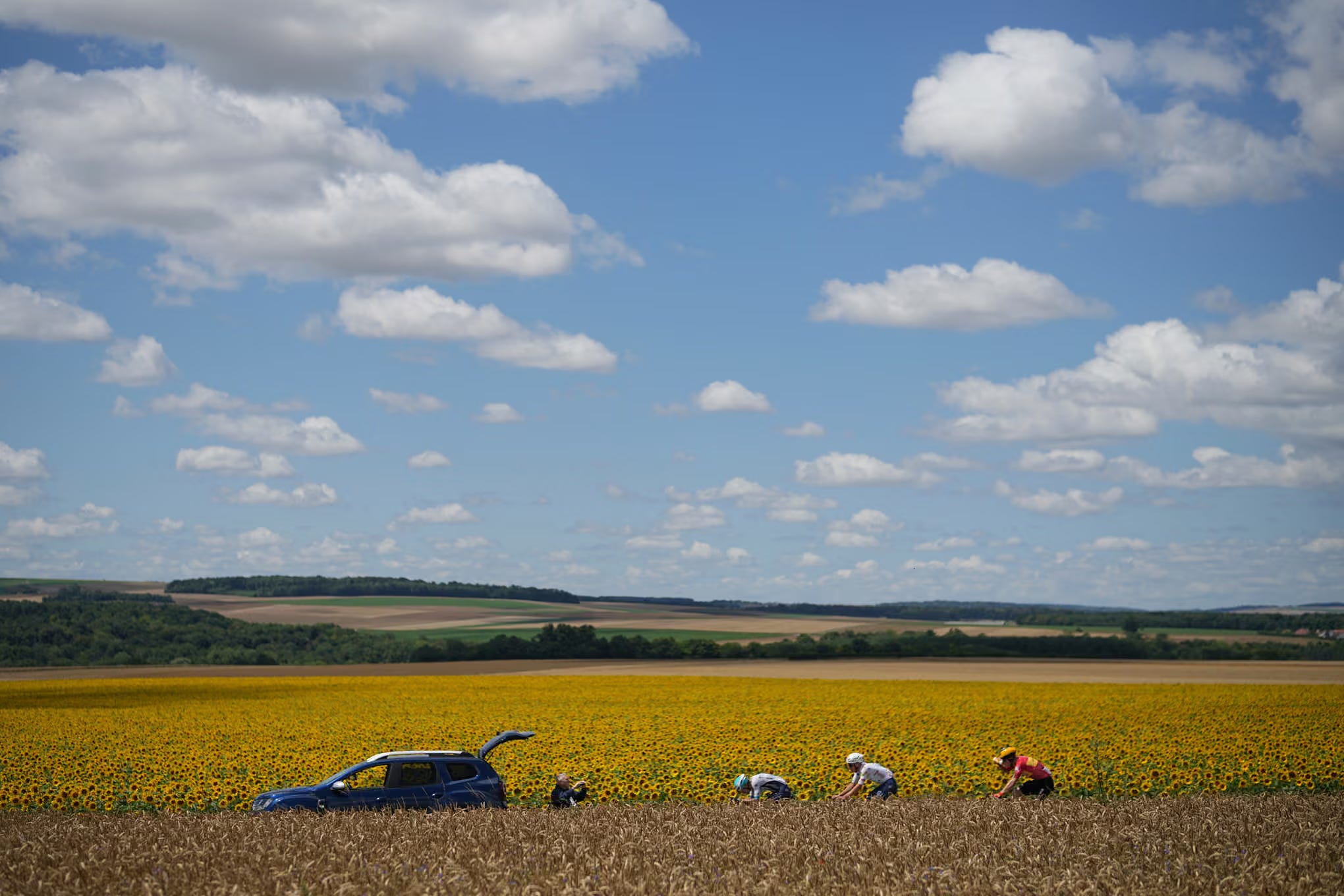
The biggest cycling event in the world, the Tour de France, kicks off tomorrow in Barcelona, Spain. According to Nielsen and Escape Collective, in 2025 the three week grand tour accumulated 1.173 billion total viewers, averaging 55.9 million viewers per stage. The Tour de France Femmes, which runs a week and a half, drew 184 million total viewers with an average of 20.4 million per stage.
Those numbers dwarf every other WorldTour race on the calendar and speak to the brand power of the Tour. Outside of Europe, when a non-cycling fan is asked about the sport, the Tour de France is almost always the reference point. A.S.O, the organization that owns the race, has done a strong job maintaining the Tour’s brand and relevance throughout its history and into the digital age.
Several factors contribute to that success: international broadcasting, annual consistency, advertising value, and more. But while the Tour stands firmly as the most important cycling event in the world, that does not mean its ability to influence and grow the sport is being fully maximized. Success at this scale is built on many factors, and a lot of them extend beyond what any race organizer directly controls.
As someone running an independent publication, media is one of those factors I think about constantly, especially on the eve of an event this large. Whether it is the live broadcast, content from race sponsors, social media, or independent media, every form of media shapes who sees the race and how they perceive the sport. This applies across all of cycling, but the Tour de France and Tour de France Femmes offer an ideal case study to build from.
The goal today is to identify what media is working well to grow the sport and where there is room to do more. The media landscape surrounding the Tour is massive, and this feels like the right moment to think through what an ideal media mix for WorldTour cycling could look like.
Familiar territory
You might remember a piece I wrote related to this subject, specifically about how cycling tells its stories and where it falls short. The central argument was that cycling had its Netflix moment with Tour de France: Unchained and failed to capitalize, largely due to the series’ single-race format. It was an intimate look at the sport and its riders, but limiting it to the Tour de France was a missed opportunity. Media focused on one race is not inherently bad, but for a Drive to Survive-style series, that narrow focus undermined the potential.
That series is still a useful reference point for just how expansive the media ecosystem around a race like the Tour can be. The goal was to meaningfully grow cycling’s global viewership and reach. It fell short of that, but it raises the right questions: what media around a race is actually impactful, why is it impactful, and when does it land?
Breaking down the problem
I like to tackle macro problems on Built on Bikes, but that often makes it hard to organize my thoughts in a way that addresses the topic cleanly. Sometimes the structure comes naturally, but in this case the breakdown feels like it needs some framing upfront to avoid confusion.
Untangling the full media ecosystem around the Tour de France sounds like a problem that starts with the 30,000 foot view and works down into the details. But for what we are actually trying to do, identify the most effective media mix for growing the race and the sport, it makes more sense to start at a granular level and work our way up.
We will go through every media format I can think of, talk through each one’s current effect, what it does well, and where it falls short. As we move through them, the full picture will come into focus, and from there we can identify the ideal mix.
That final step will use my favorite simple and slightly nerdy business framework: the SWOT analysis, covering Strengths, Weaknesses, Opportunities, and Threats.
Classifying media formats
Given how many media formats surround professional cycling, it helps to organize them into distinct groups. These groups will make it easier to recognize patterns of success and failure that matter when we get to the SWOT analysis. As I was mapping out every format I could think of, three categories emerged:
Race organized media: Media directly paid for by a race organizer or licensed by them, considered a core part of live race production.
Partner media: Media not directly paid for by the race or tied to live production, but still requiring licensing or produced in collaboration with the race organizer.
Independent media: Media produced entirely by a third party with no direct connection to the race. Licensing is possible but rare.
I will not be able to identify every piece of media that falls under each category, but I will highlight the most important and most obvious examples in each. I will also do my best to surface formats that are easy to overlook, because those edge cases are often where the most interesting growth opportunities live, and they will get particular attention during the SWOT analysis.
Race organized media
Live production
Live production covers any media crucial to presenting the race to fans in real time. This includes live broadcasts across television and official streaming platforms, pre and post race programming with commentary and highlights, official race photography, and any feeds presenting live race data and statistics.
Some of this is carried out directly by the race organizer, some by broadcast networks holding the licensing rights, and some by both working in tandem. I will also include in-person media under this umbrella, meaning signage, print materials, and press conferences. These have limited reach by nature. With the exception of press conferences, they are only encountered by those physically attending the race.
Digital and social
Digital and social covers any media directly owned and operated by the race, including the official website, mobile apps, social media channels, and written content. By and large this is the most accessible touchpoint for fans who want to engage with media produced directly by the race organizers.
Partner media
Sponsor and brand content
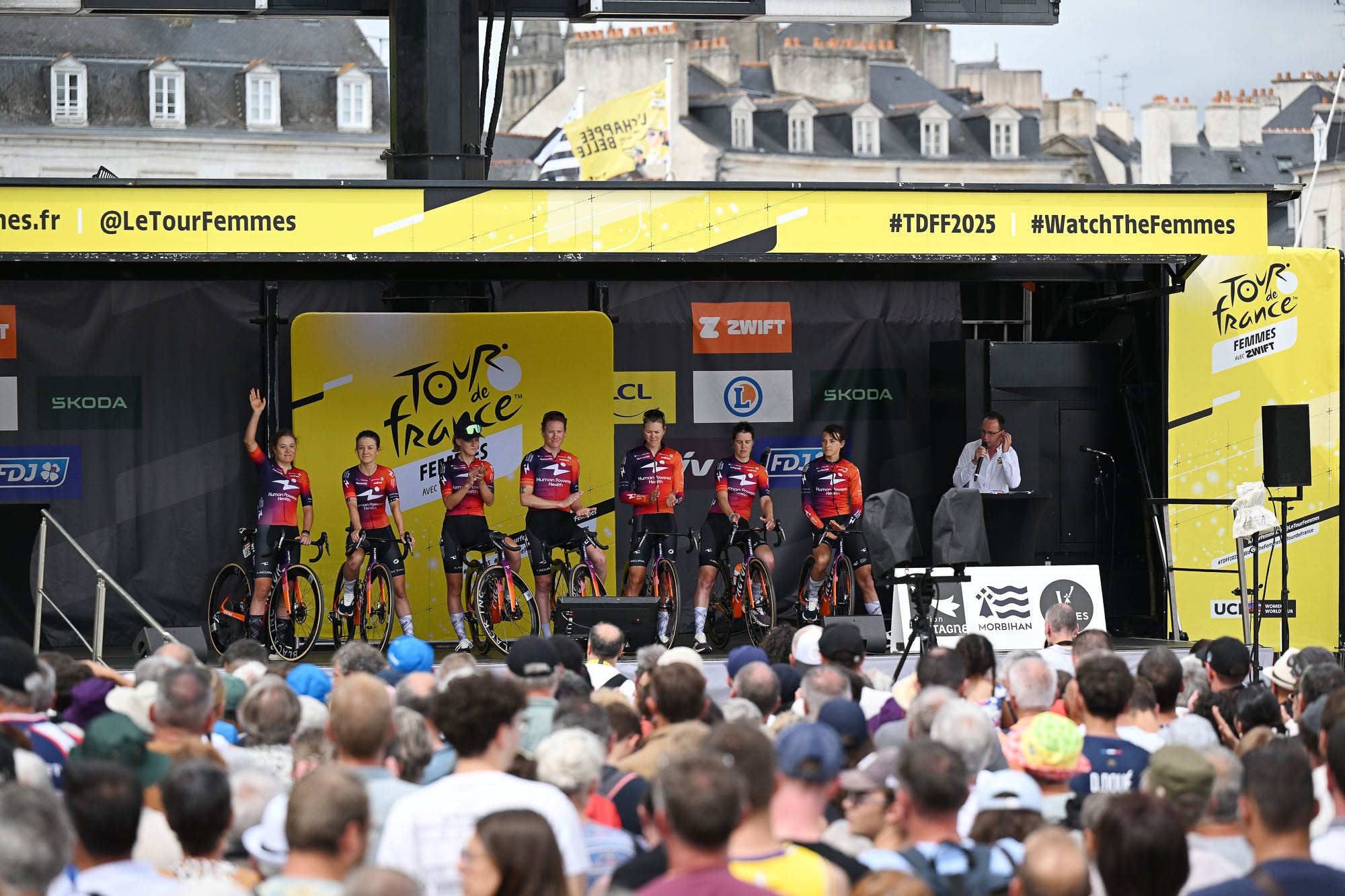
Title sponsorship is perhaps one of the most influential forms of partner media in professional cycling. Zwift is a good example of this, bringing significant brand recognition to the Tour de France Femmes when the race was renewed. The level of influence varies by sponsor and medium. Some brands run commercials during live broadcasts while others produce activations at the event itself. Beyond title sponsors, this category also captures content from travel partners, merchandise sponsors, and other brand collaborators tied to the race.
Team and rider content
Any content created by teams attending the race serves as an important touchpoint for fans, offering an inside look at the experience. This includes team and rider social media channels, press releases, and content produced by a team’s individual sponsors. Collectively this category represents a large and largely untapped volume of organic storytelling around the race.
Long form content
This covers the type of media we have discussed in previous editions of Built on Bikes, documentary series being the most prominent example. More broadly it includes any coordinated production effort created in direct collaboration with race organizers or requiring significant sign off from them.
Independent media
Cycling specific media
This is the most expansive and wide-ranging segment. Content comes from third parties with no direct association to the race but with clear ties to the cycling ecosystem. Professionalism varies widely, from large media corporations to independent creators like myself.
Publications and websites (VeloNews, CyclingNews, Escape Collective)
Podcasts (THEMOVE, GCN Show, Lanterne Rouge, Beyond the Peloton)
YouTube creators (GCN, Lanterne Rouge, independent creators)
Substack and independent newsletter writers
Independent documentary filmmakers and photographers
Influencers, who may be at the race on behalf of a brand but whose content still lives on their personal channels
General and mainstream media
Media that has no direct association with the race but exists within the broader professional sports ecosystem alongside race broadcasters. General sports outlets like ESPN and Sports Illustrated are the most prominent examples, while national and local news stations and lifestyle publications extend the race’s reach to a genuinely general audience.
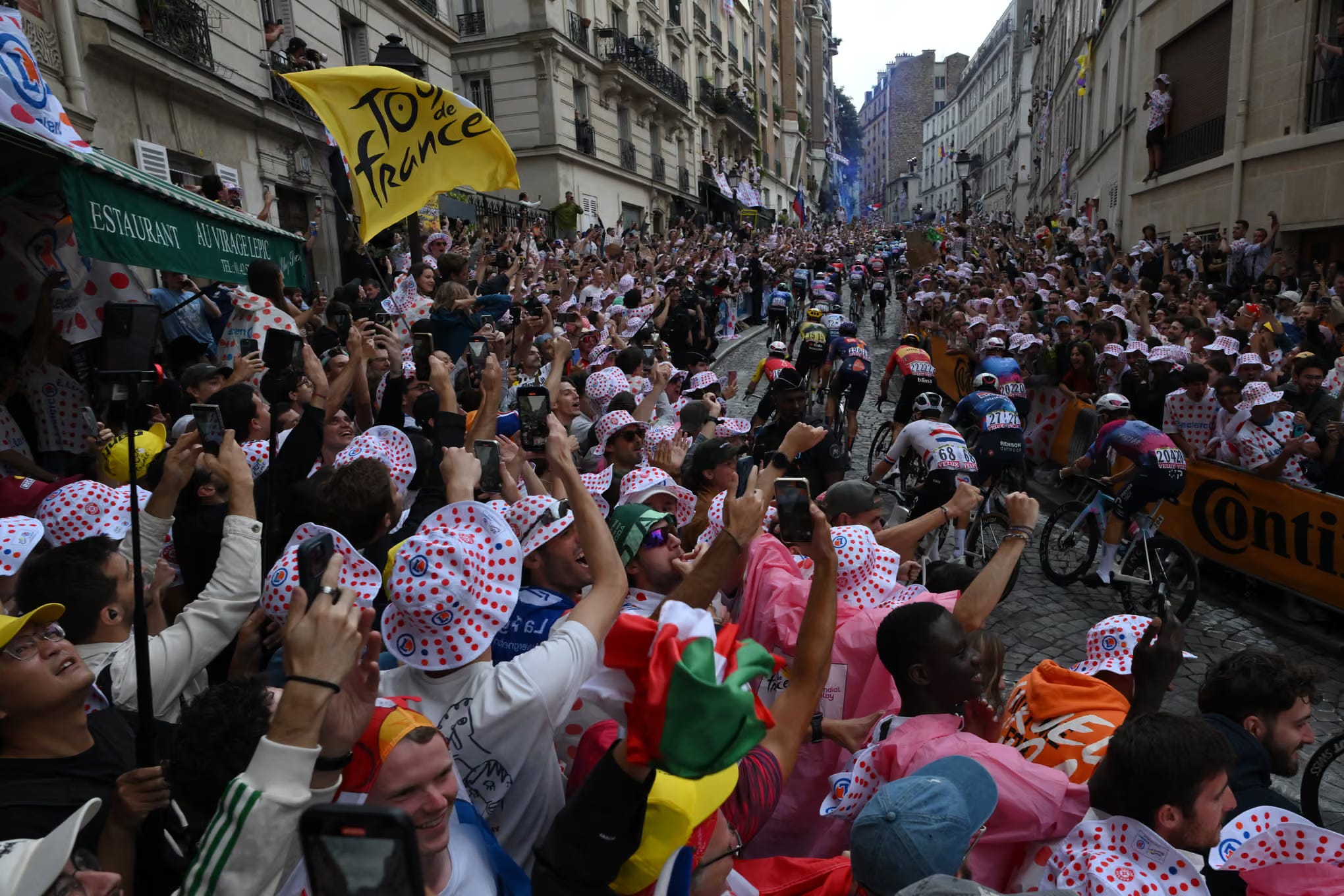
Fan and community media
Any fan-organized content centered around community engagement and discussion. Whether it is fan social media accounts, forums, subreddits, fantasy leagues, or commentary streams, this is content made by die-hard fans for other die-hard fans.
The issue with the current mix
If we look at the Tour de France starting tomorrow, most of the media formats we covered do exist around it in some form. However, the most prominent will be the live race broadcast, news media, and independent cycling specific outlets. That presents a real problem if our goal is to meaningfully grow the total addressable market for WorldTour racing and bring genuinely new fans into the sport.
I was listening to Beyond the Peloton recently when my good friend and resident badass who is fighting cancer, Andrew Vontz, made the point that we may need to accept the Tour de France for what it is in the US: a race for hardcore fans. In its current form, I agree with him. But I also think that can change over time. Andrew was not being pessimistic or giving up on growth. He was pointing out that the race is simply too complicated, requires too much prior rider knowledge, and demands too much time per stage for the average American viewer to get invested.
The current media mix does not do enough to close that knowledge gap or earn quick investment from casual fans. Keep that theme in mind as we get into the SWOT analysis. As we head into our SWOT analysis, we’ll only focus on factors that are directly related to the media. This means factors like the race route, calendar position, etc. won’t be considered.
Strengths
Broadcast production - Following a peloton across France over 21 stages, countless mountain passes, and thousands of miles is no small logistical feat. The Tour de France has the filming of the race down to a science. There are minor areas worth revisiting, like the influence of motos on the race itself and the use of split screen angles to cover multiple rider groups simultaneously, but broadly speaking this is one area that does not need significant change.
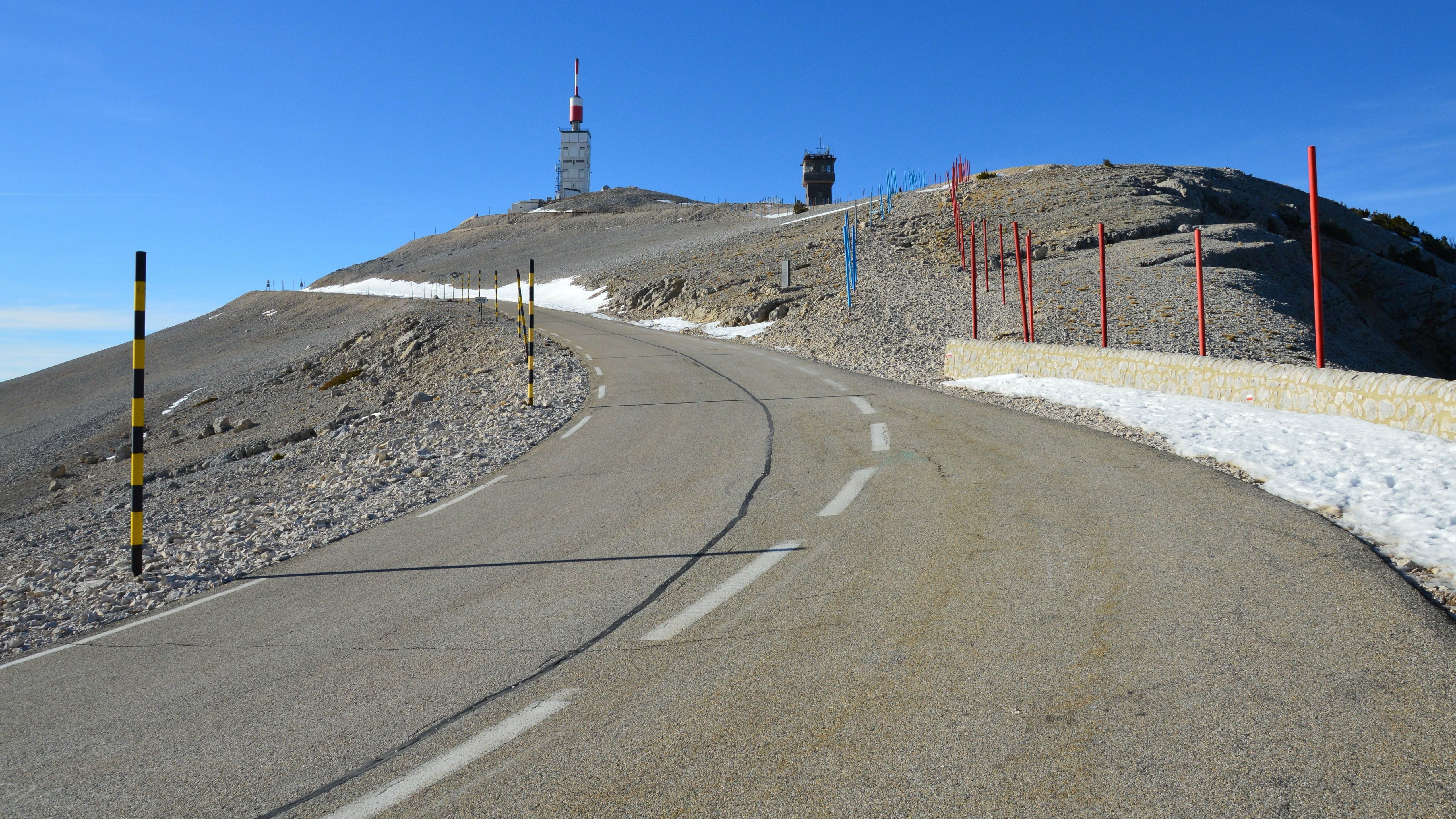
Strong cycling media ecosystem - Over the next month there will be no shortage of content for cycling fans to consume from their favorite independent creators. The depth and quality of cycling specific media surrounding the Tour is genuinely one of the sport’s greatest assets.
Sponsor and brand content - Sponsors get strong value from the Tour de France. While the viewing audience in the United States is not as large as it is in Europe, the race still provides a direct line to American viewers. Association with the Tour also gives brands significant runway to build their own content and campaigns around the event independently of the race organizer.
Branding - The Tour de France is the most iconic bike race in the world. Even if you have never watched a stage, you know the name. That kind of brand recognition is rare and nearly impossible to manufacture, and it is one of the race’s most under-leveraged assets when it comes to reaching new audiences.
Weaknesses
The knowledge gap - The race format contains so many competing storylines that it is genuinely difficult to follow without prior knowledge. Individual stage winners, the general classification, the classification jerseys, and the context required to understand each rider’s role in the race all demand a level of familiarity that new viewers simply do not have.
Timing - Most American viewers, particularly those on the West Coast, have to wake up early to watch stages live. The Tour de France does not get a primetime slot in the United States, and that is unlikely to change given the race’s European schedule.
Politics - In 2021, Bas Tietema, founder of Unibet-Rose Rockets, attended the Tour with a camera and built content around the race. One of his most popular videos involved handing pizza to riders after stages. His team is now one of the most recognizable and well-branded in the sport. I bring this up because after those videos gained traction, A.S.O filed a copyright complaint claiming they violated the use of race images. A.S.O eventually rescinded the claim, but the instinct to suppress that kind of organic storytelling was a direct act against growing the sport.
Independent media - The cycling specific independent media ecosystem is strong, but content from non-cycling outlets is still lacking. The race is not forcing itself into spaces where cycling is rarely discussed, and that limits its ability to reach genuinely new audiences.
The ability to tell stories - Tour de France: Unchained demonstrated that storytelling remains one of the biggest gaps in WorldTour racing. The Netflix series was not the right format to tell the story of the race, even for French audiences. An effective storytelling format built for a mass audience has yet to be found.
Threats
Short form content - Shrinking attention spans driven by social media present one of the most immediate threats to the Tour’s ability to grow its audience. Semi-viral Instagram reels surface every year from the race, but they are not converting casual viewers into invested fans. Multi-hour stages are an increasingly tough sell for younger audiences who are accustomed to content that delivers a payoff in seconds, not hours.
There are certainly more threats worth identifying, but in the media landscape this feels like the most pressing one. Lack of competition is frequently cited as a threat to the sport, but I think that contributes to a different problem, which is maintaining engagement with people who are already cycling fans. For new viewers, Tadej’s dominance actually works in the race’s favor. A clear protagonist is one of the easiest entry points a sport can offer a casual audience.
Opportunities
Presentation to American audiences - I will preface this opportunity by saying there is a significant upfront financial investment required, but it is worth exploring if A.S.O and other WorldTour races genuinely want to engage American audiences with the racing itself.
We know the two major issues with the current broadcast format: stages are too long and they air too early in the morning. For people like me that combination is the dream, but for the average American who does not follow cycling, you might as well not air the race live at all. The Olympics are a useful example of a sporting event that has found a way around this problem. When the Games take place in Europe or Asia, American audiences are not watching live. Instead, broadcasters re-air events in primetime slots across cable and streaming. Even though the content is pre-recorded, those streams still show up under the live TV section on Peacock, which happens to be the same carrier as the Tour de France.
That is part one of this opportunity. With the growth of streaming, there should at minimum be a push to stream stages in the evening as if they were live. But that alone does not solve the length problem. So why not condense the stage into an hour long viewing experience?
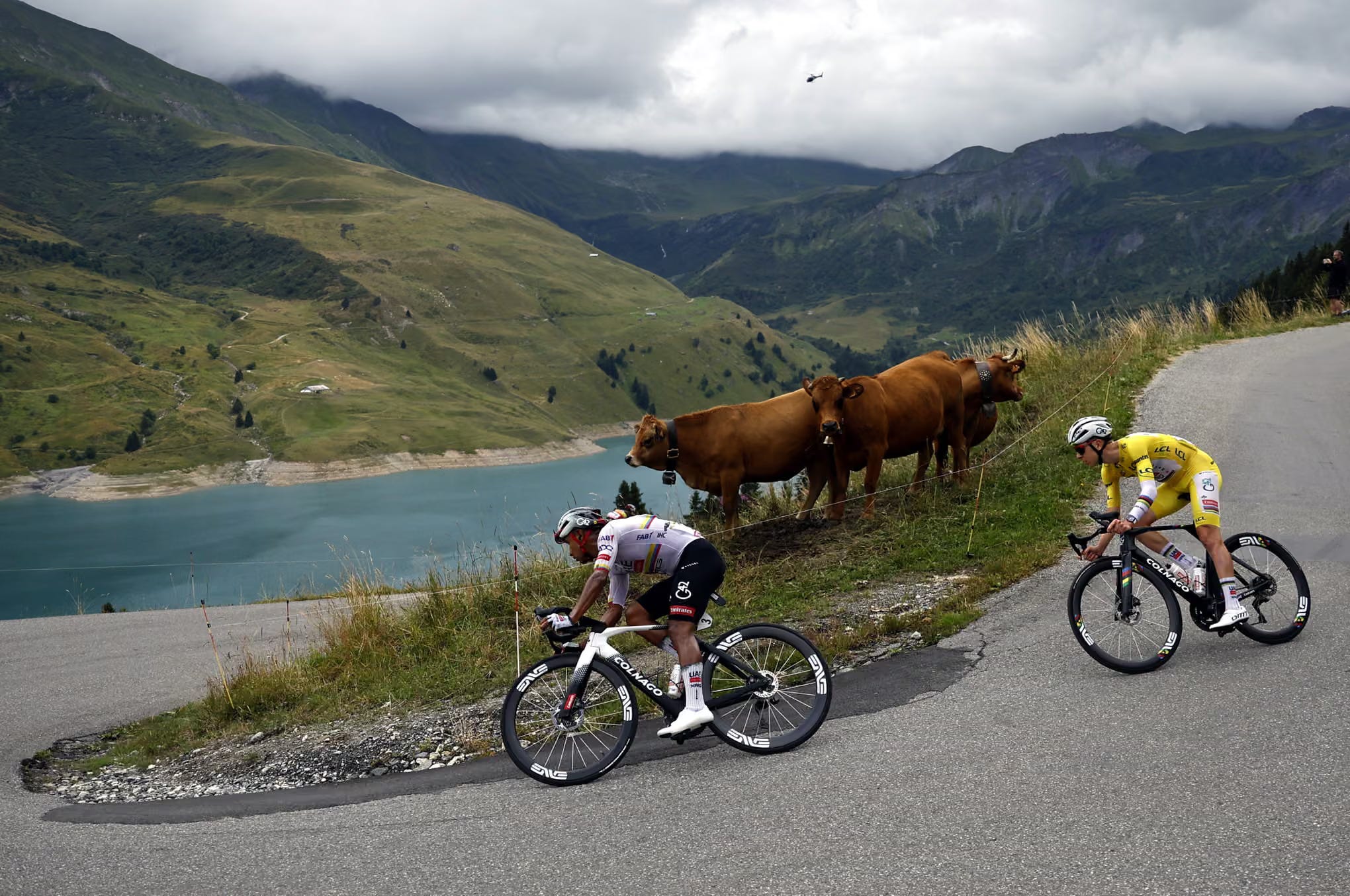
My proposal is this: in the window between the live race and primetime, produce a program that recaps the race storylines so far, offers a more cinematic look at the previous stage, and then moves into live studio commentary that gets viewers up to speed on the current day without revealing the outcome. For sprint stages, spend time in the studio building toward the finale before cutting to the final ten kilometers. For mountain stages, show the final climb closer to full length. Use time trials to go deep on individual riders and tell their stories.
It is loose and unproven, but I genuinely think a format like this could work. I would watch it. And it does not end there. The presenters leading into the live coverage need to be recognizable faces, not just cycling insiders. I know this will frustrate some of you, but put Lance Armstrong in the studio. I would not call myself a fan, but for a younger audience his complicated history does not diminish his brand recognition or the kind of brash, watchable personality that makes good television. His podcast already airs directly after stages. We might as well embrace the reach he clearly has with viewing audiences.
To close out this opportunity, it is worth noting that this is not entirely in A.S.O’s control. They do not own NBC or Peacock and cannot force a programming decision. But they can influence one financially. It would be an investment and a real risk, but if it works the upside for the race would be significant. More viewers means more leverage with sponsors, and sponsorship revenue would follow.
The femmes - By now it is clear that I am bullish on women’s cycling and its potential to grow the sport meaningfully in the United States. Every industry source I speak to suggests the Tour de France Femmes is a runaway train in terms of growth and momentum. The race is still new enough that it presents a genuine opportunity to experiment with new formats, prioritize storytelling, and attract sponsor money from well outside the cycling world.
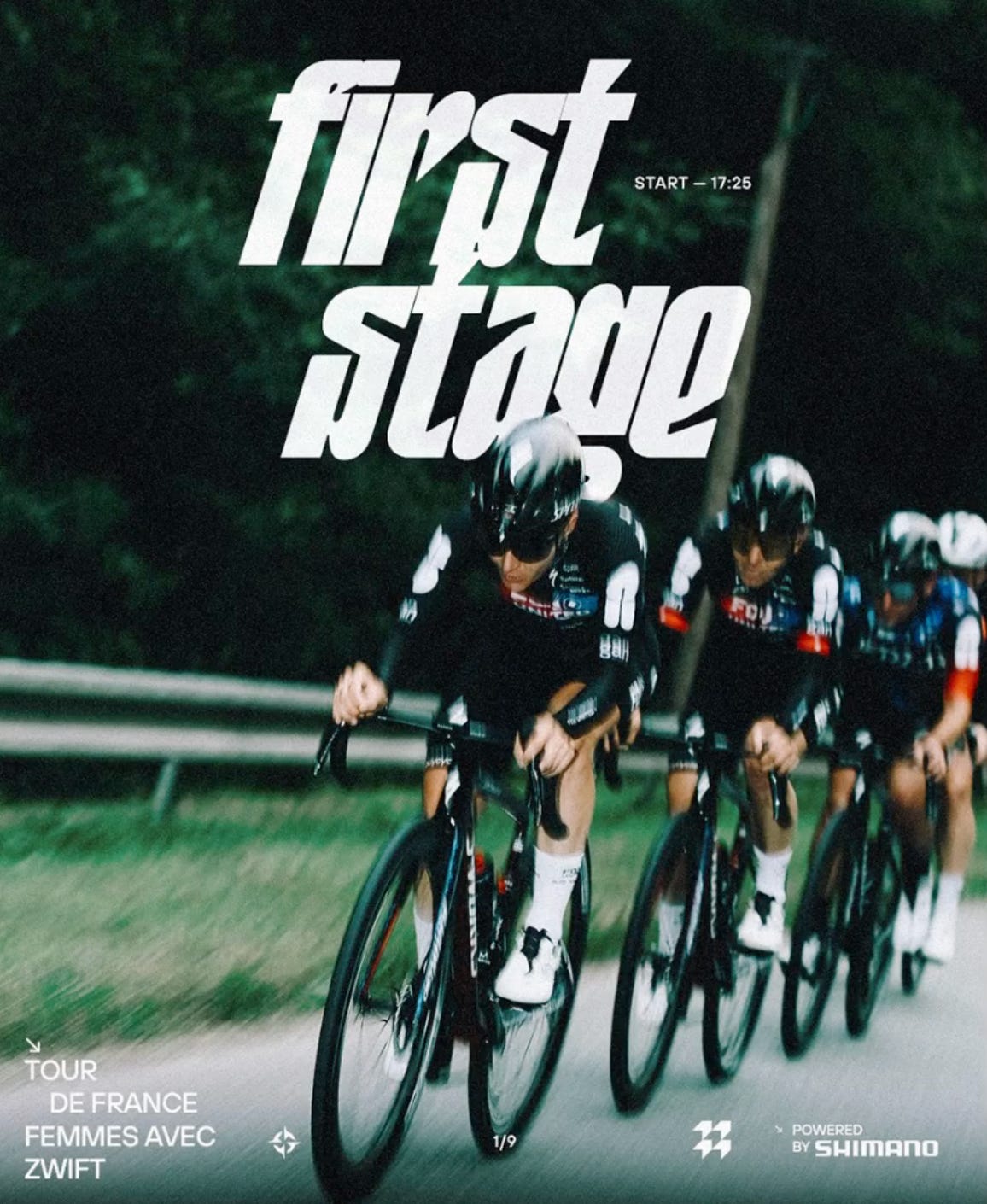
Non-cycling pop culture - I have already written about why we should be putting cycling in places it does not traditionally belong, and that applies even more for the sport’s premiere event. Social media formats present interesting opportunities for a race like the Tour, and reach can quite literally be bought. Whether it is a podcast where celebrities appear to promote their latest project or a content creator with a personality that can make any event compelling, cycling should be infiltrating those spaces.
I am not a fan personally, but watching the World Cup and seeing how FIFA has utilized streaming personality IShowSpeed made me wonder if cycling could benefit from something similar. For those unfamiliar, IShowSpeed is a streaming personality with tens of millions of followers. If FIFA can generate value from him sitting in a press box at World Cup matches, the Tour de France could produce something far more compelling by putting him in a rowdy crowd on a mountaintop or on the back of a moto during a stage.
The Tour de France and beyond
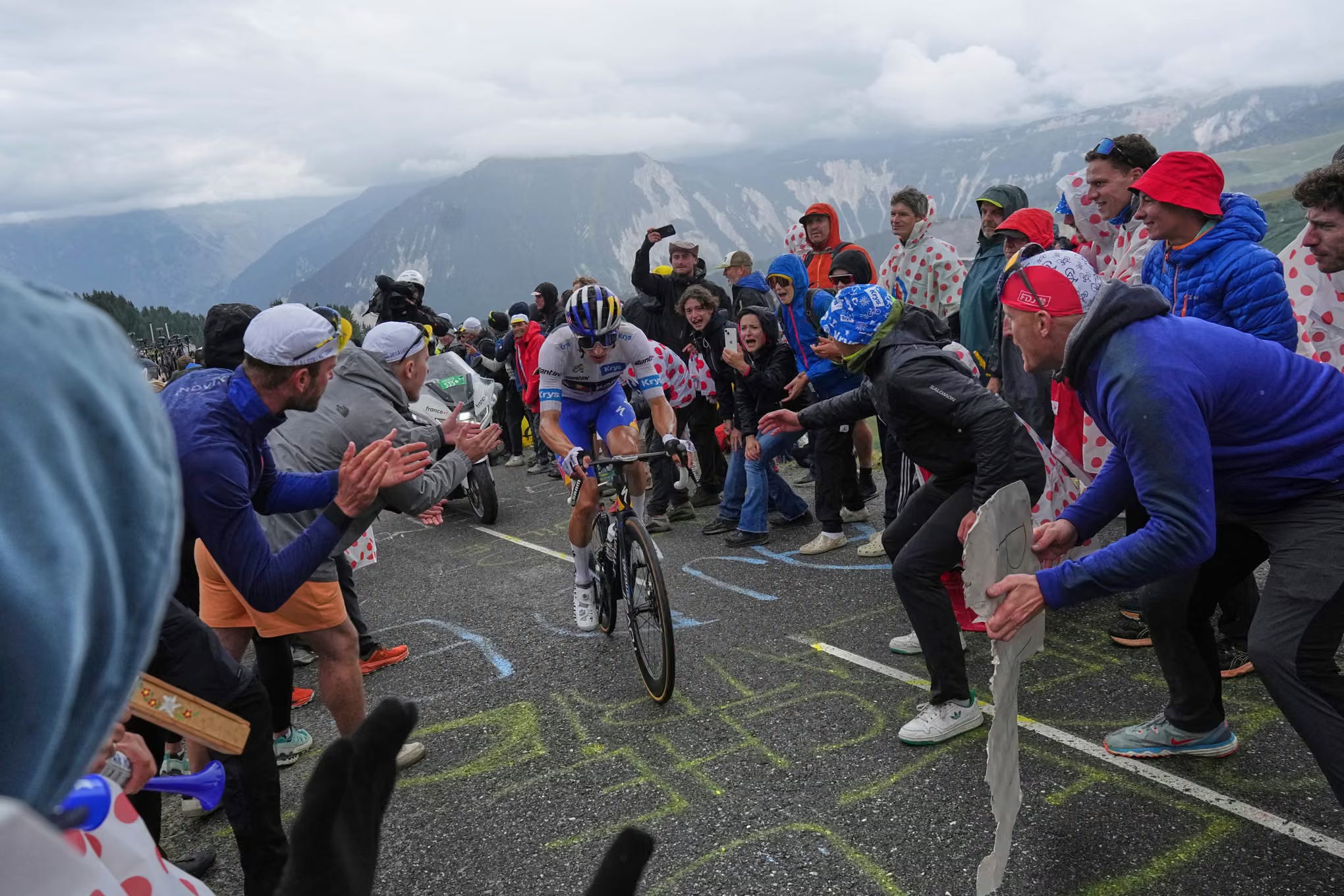
For a race as big as the Tour de France, there is far too much media related context to cover in a single weekly newsletter. From convincing a major American broadcast network to air cycling in primetime to building a media strategy that reaches pop culture audiences, A.S.O would not be able to achieve any of this overnight. It would require incremental change, significant financial investment, and most importantly, a genuine desire to grow cycling in non-European markets.
Just the other day I had a conversation with the former CMO of one of the world’s largest soccer clubs. The organization he worked for has a broader media reach than the Tour de France, and he made the point that sport is built on pure passion. That passion is an incredible strength, but also a liability when it is not paired with strategic business thinking.
The Tour de France and many other WorldTour events carry a rich heritage, but that history can breed comfort and keep the passion for the sport confined to its existing fanbase. The result is slow growth. Success is success, but if we are truly passionate about cycling, why not find out where the ceiling actually is? The Tour de France Femmes has shown what can happen when you take a chance on a new format. If we change the media mix surrounding WorldTour racing, there is real reason to believe we can see meaningful growth in new markets.
In other news
Help a fellow cyclist
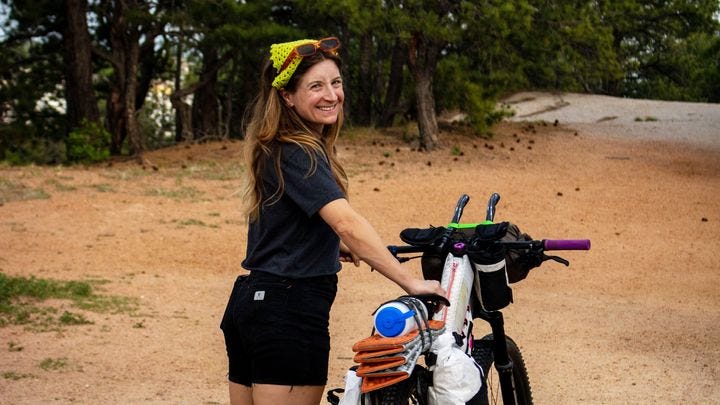
Yesterday, Alyssa Secreto was within 60 miles of finishing the Tour Divide, a famous bikepacking race from Canada to Mexico, when she was hit by a car traveling at nearly 60 miles per hour. Her injuries were extensive, and because this happened in the United States, her medical bills will be significant. Please consider donating to her GoFundMe. If you want to take action to protect cyclists on the road, please follow and donate to The White Line.
More fires
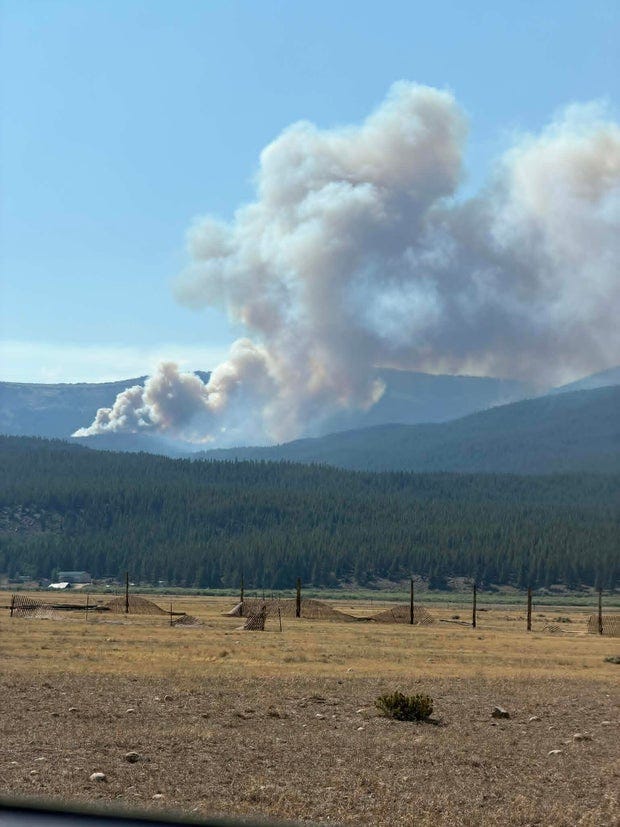
Right on the heels of Crusher in the Tushar being canceled, a wildfire that originated on Mount Massive near Leadville, Colorado has the potential to affect the Life Time Grand Prix and the Leadville MTB 100 in August. At the moment it seems hopeful that the fire will have passed by then, but it is another reminder of how climate change is threatening not just cycling but every outdoor sport. And while it is not fire, France just recorded its hottest day on record, days before the Tour de France kicks off.
If climate action is something you care about, Protect Our Winters is an organization that understands firsthand how climate change affects the sports we love.
Ride and rip,
Kyle Dawes
