


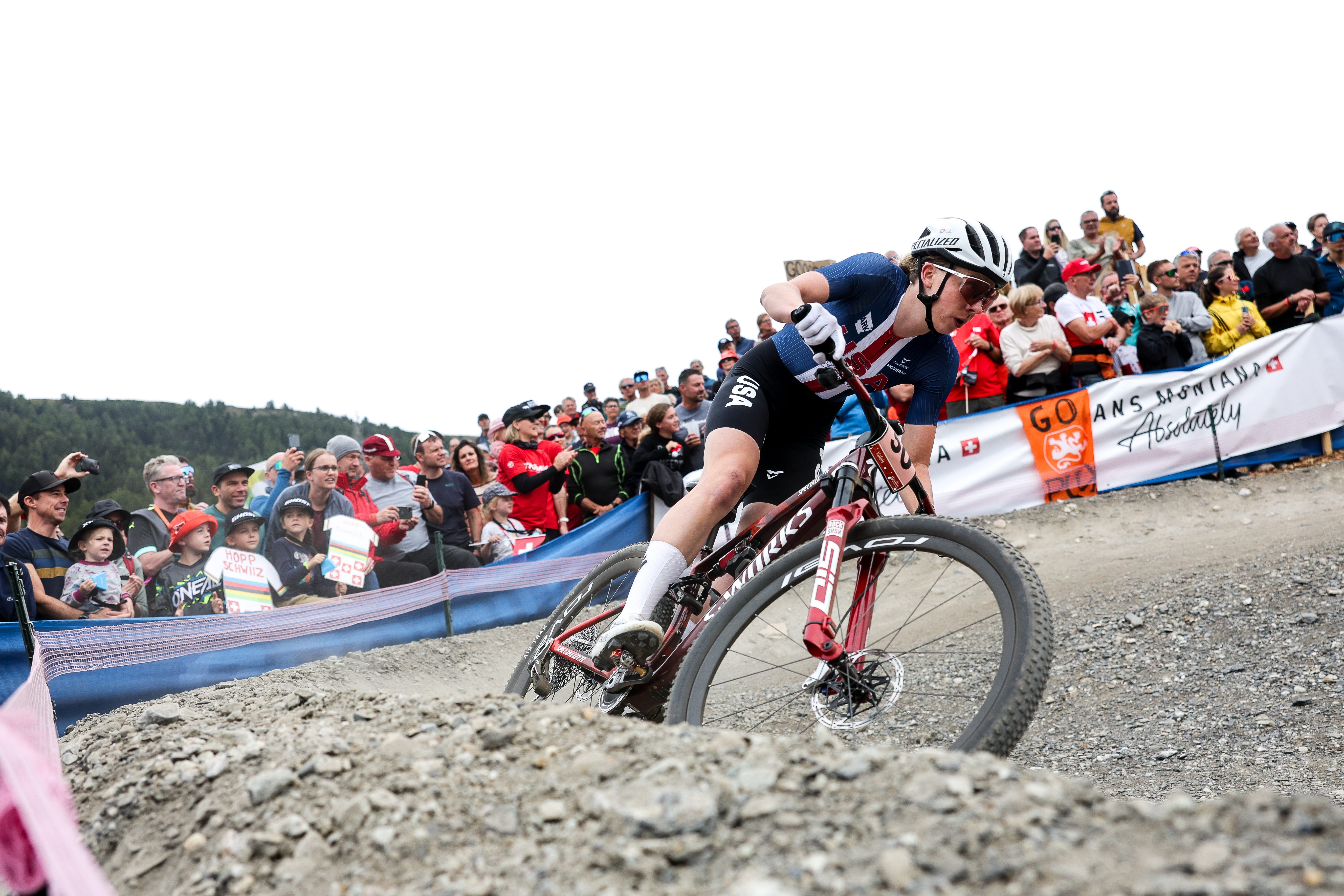
In past editions of Built on Bikes I have covered various topics related to the United States’ national cycling programs and initiatives. These included a look into how USA Cycling thinks about funding collegiate cycling programs at the developmental level, a breakdown of their unique tech and innovation council that engages the private sector for performance gains, and why I believe the United States has a genuine opportunity to become the dominant nation in women’s cycling.
A throughline across all of these stories is how tight a budget USA Cycling operates on, roughly $16 million a year according to their Form 990 in 2024. Even more remarkable is that none of this funding comes from the government. It consists of individual grants and contributions, funding from the US Olympic and Paralympic Committee (USOPC), and revenue generated from USA Cycling member licenses.
Over the last year I have attended various events at the intersection of venture capital and cycling, and USA Cycling has consistently had representatives present, including Chief of Staff, Karl Pelletier. In a competitive environment where other national cycling federations receive direct government funding, this engagement with the private sector reflects a scrappy and entrepreneurial mindset for funding initiatives and growing the sport domestically.
Establishing a network of private donors, technology partners for competitive advancement, and a strategy to deploy those assets is a massive undertaking on its own. Add to that a sprint toward the 2028 Olympics in Los Angeles, the seminal event that many donors and partners use to assess the value of their relationship with USA Cycling, and the scope of the challenge becomes clear.
One of the people leading the charge at USA Cycling is former World Champion and Olympic Silver medalist, Mari Holden, the senior philanthropy officer at USA Cycling. For the last six years she has been executing fundraising efforts by engaging with the broader cycling community across the country. I had the pleasure of interviewing Mari and focusing on two unique relationships that are powering progress in women’s cycling in the lead up to the Los Angeles Olympics.
Who is Mari Holden?
Holden is one of the most accomplished cyclists the United States has ever produced. In 2000, she had a standout year, becoming world champion in the time trial and securing a silver medal in the same discipline at the Olympics. Since then, she has held various positions within USA Cycling including a seat on the board of directors, head coach of the women’s national road team, and her current role as senior philanthropy officer at the USA Cycling Foundation.
In that role, she actively engages funders and partners with the goal of increasing USA Cycling’s capital resources to drive competitive progress. Her efforts and those of her team have enhanced USA Cycling’s funding structure, with particular focus on better supporting and preparing female athletes for international competition.
During our conversation, we dove into two relationships that are directly shaping the future of women’s cycling in the United States. One is a transformational investment that lays the financial groundwork for women’s cycling development initiatives leading into the Olympics and beyond. The other is USA Cycling’s female athlete science committee that includes a strategic partnership with one of the world’s most prestigious research institutions. We also unpack USA Cycling’s funding structure and discuss what it reveals about the American cycling community as we head towards the Los Angeles games.
$2.5 million for women’s cycling
Since moving to San Francisco five years ago, I have spent most of my career indirectly serving venture capital and private equity firms. Time in these industries inevitably teaches one the importance of venture capital for scaling a business and how difficult it is to obtain early stage capital. This reality applies to tech companies with proven business models, which makes any major investment into a not-for-profit cycling federation like USA Cycling even more eye-catching.
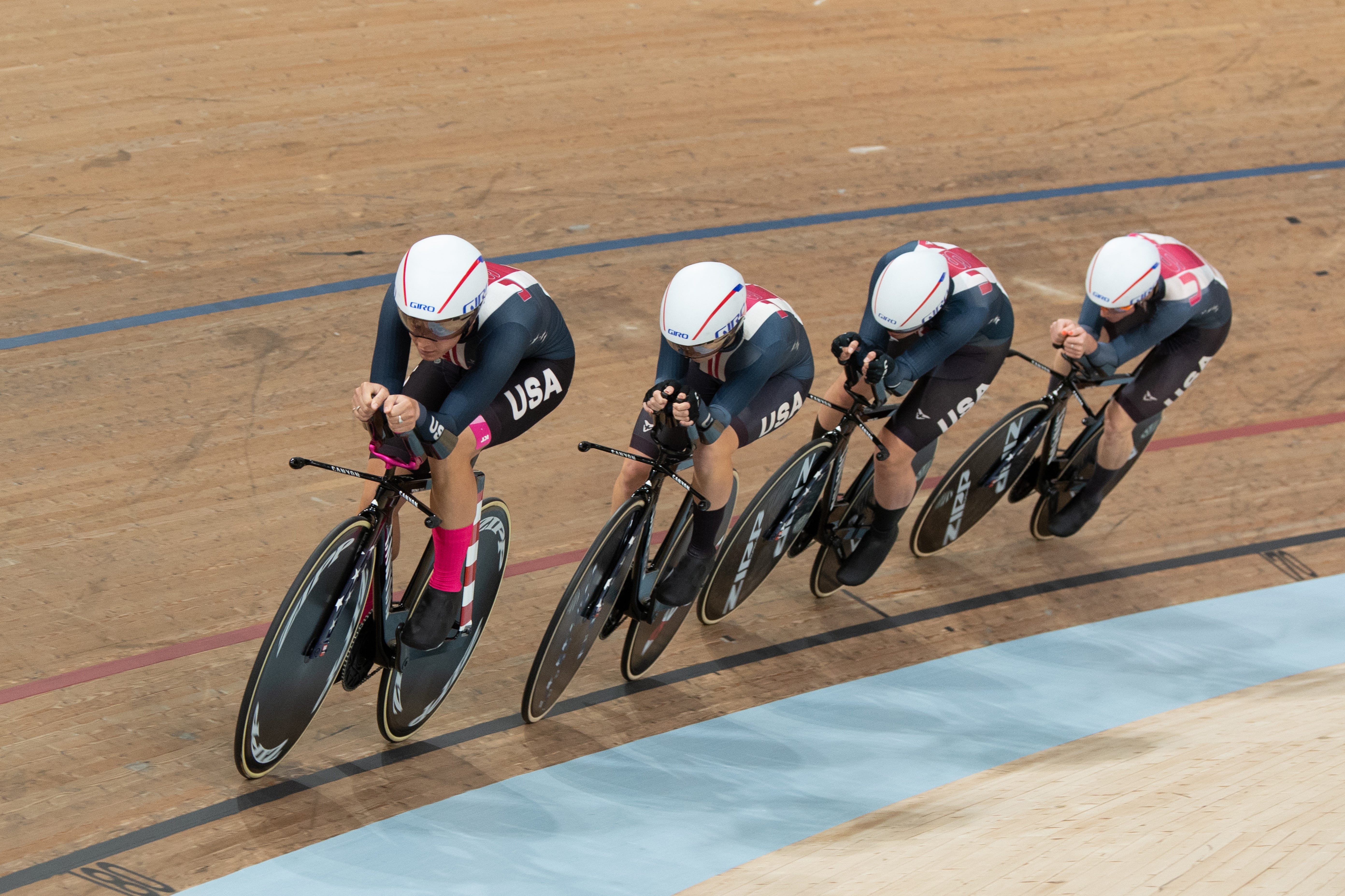
One of the major drivers of women’s cycling development in the United States is a $2.5 million total commitment from the Hellman Foundation, with $1 million allocated for female Olympic athlete development and the remaining $1.5 million structured as a challenge match to grow and develop women’s cycling for the twenty years following the Games.
Even though this gift was reported on in 2024, many of the specifics were not discussed at the time. When you examine the relationship that led to the investment, how the funds will actually be deployed, and the structure of the commitment itself, it becomes an interesting case study for how the United States engage more high-net-worth individuals to fund development initiatives for male and female athletes.
Passion can inspire an investment, a relationship will sustain it
Founded in 2011, the Hellman Foundation is a philanthropic organization built to honor the legacy of Warren and Chris Hellman. Before the foundation was even established, USA Cycling had a long running relationship with Hellman heir Mick Hellman, Founder and Managing Partner at HMI Capital. To understand that relationship, you have to go back to before USA Cycling’s dedicated fundraising arm even existed.
“Mick Hellman has been involved with USA Cycling from before we were even a foundation. He was actually a part of helping get our foundation going. He started in 1997 and has been involved for a very long time.” — Mari Holden

The relationship between Mick and USA Cycling was born out of a shared love for cycling, and over nearly thirty years has directly led to a transformational investment in women’s cycling. Over that period USA Cycling has welcomed Mick and other private equity investors into the professional cycling community, allowing them to see the direct impact of their contributions and making clear that they are part of the team.
As Mick Hellman’s story shows, investing in national cycling initiatives means being treated as a collaborator, someone who can see their contributions translate directly into athlete performance. Mari recounted something she heard Dr. Allen Lim, Founder of Skratch Labs, say at a USA Cycling event with Christian Vande Velde: “The government doesn’t support athletes. Americans support the athletes.”
Mari added: “It’s Americans supporting Americans.” Over time, fostering genuine relationships strengthens that dynamic to the point where investors proactively think about what their money can do for American athletes. On how the $2.5 million investment in women’s cycling came to be, Mari pointed to Mick Hellman as the one who recognized the opportunity.
“After the Paris Olympics, when all of our medals were won by women, he saw this opportunity and understood the need to support these women in their efforts. Because things are still not equal in terms of what women can make and survive. It’s getting much, much better, but we still need help to grow. We have the athletes, we just need to be able to fund them and make it happen.” — Mari Holden
To illustrate how influential a single investor can be in furthering a nation’s competitiveness in cycling, Mari reflected on Mick’s three decades with USA Cycling.
“He’s really forward thinking. He helped start our foundation. Now he’s created this fund for our women. I can’t stress enough how incredible it is what he’s doing for women’s cycling.” — Mari Holden
Because of Mick and countless other donors and supporters, USA Cycling is entering the 2028 Olympics with its most ambitious medal goals to date, with women playing a central role. So how is the $2.5 million being deployed to help achieve them?
Development for LA and beyond
The challenge match
To understand how the Hellman Foundation funds are being put to use, it helps to understand the structure of the investment. The $2.5 million is separated into two parts: a $1 million gift that will go directly toward initiatives helping female athletes prepare and perform at the 2028 Olympics, and a $1.5 million challenge match intended to spur additional funding that will fuel women’s cycling development through 2049.
We will cover what the $1 million actually funds, but the $1.5 million challenge match is worth understanding on its own as a glimpse into how USA Cycling and their donors think about funding the future.
In philanthropic investing, a challenge match is a practice where a donor commits a set amount of capital toward a cause, in this case $1.5 million, that is only paid out if the recipient raises an equivalent amount toward the same cause within a given timeframe.
It may sound like the donor is hedging their commitment, and in a sense they are, but the structure also serves to rally broader community engagement and create new fundraising lines for the organization. If the challenge is matched, the total going toward the cause doubles, new donors are brought into the fold, and a sustainable funding network is created that is not dependent on any single contributor. Mari described this as the seed money to make development happen.
Combined with USA Cycling’s ability to foster a genuine sense of teamwork and camaraderie among their donors, the challenge match can quickly become a flywheel that builds on its own momentum. In the four year span between the Paris and Los Angeles Games, USA Cycling may be in the process of building one of the most powerful investment networks for a national cycling program the sport has seen. Time will tell, but how are the funds being put to work right now in the lead up to LA 2028?
You can’t build a house without a foundation
Before explaining some of the specifics, Mari made a claim that I actually addressed in my first ever edition of Built on Bikes. When we think about generating performance at the highest level of the sport, not enough attention is paid to the lowest levels of development.
“The world tour is growing fast, there’s a lot of attention at the top, but not as much attention at the base where we need to be developing our athletes. It’s not the super sexy side of sponsorships, but without it, we’re not going to be successful.” — Mari Holden
It is the same sentiment that Natascha Knaven-den Ouden, Founder of Team AG Insurance Soudal and NXTG Racing, shared with me in my first article. All the money flows to the pinnacle of the sport and none of the success that it generates trickles down to the developmental level, making sustainable talent pipelines elusive. Professional cycling is trying to build a house starting with the roof and no foundation. To reverse this trend, Mari said the funding goes toward straightforward development initiatives.
“It basically is going to help fund everything in the development pipeline for us, which are things like training camps, racing opportunities over in Europe…We tend to find athletes who have great engines, but no experience, so we want to be able to get them the experience that they need in order to develop and become winners.” — Mari Holden
The $2.5 million from the Hellman Foundation represents a meaningful step forward for women’s cycling in the United States. Using the money to fund development opportunities is one part of the equation. Advancing performance is the other, and that is where USA Cycling’s tech and innovation initiatives come into play.
A committee dedicated to female performance initiatives
The private sector has also helped USA Cycling form a committee dedicated to addressing knowledge gaps that affect the performance of female athletes. When it comes to coaching, training, and general physiological understanding, research tends to skew toward male physiology and does not account for factors like menstrual cycles, the effects of contraceptives on hormones, and pregnancy.
Some may remember that I previously spoke with Veronica Ewers about Relative Energy Deficiency in Sport, or REDs, and how it sidelined her cycling career. While several factors contributed to her diagnosis, a major theme was that she rarely had access to the resources and training knowledge needed to address the problem early. USA Cycling’s committee for female performance science was created to close these gaps and establish a framework that better equips American athletes with health and training resources tailored to female physiology.
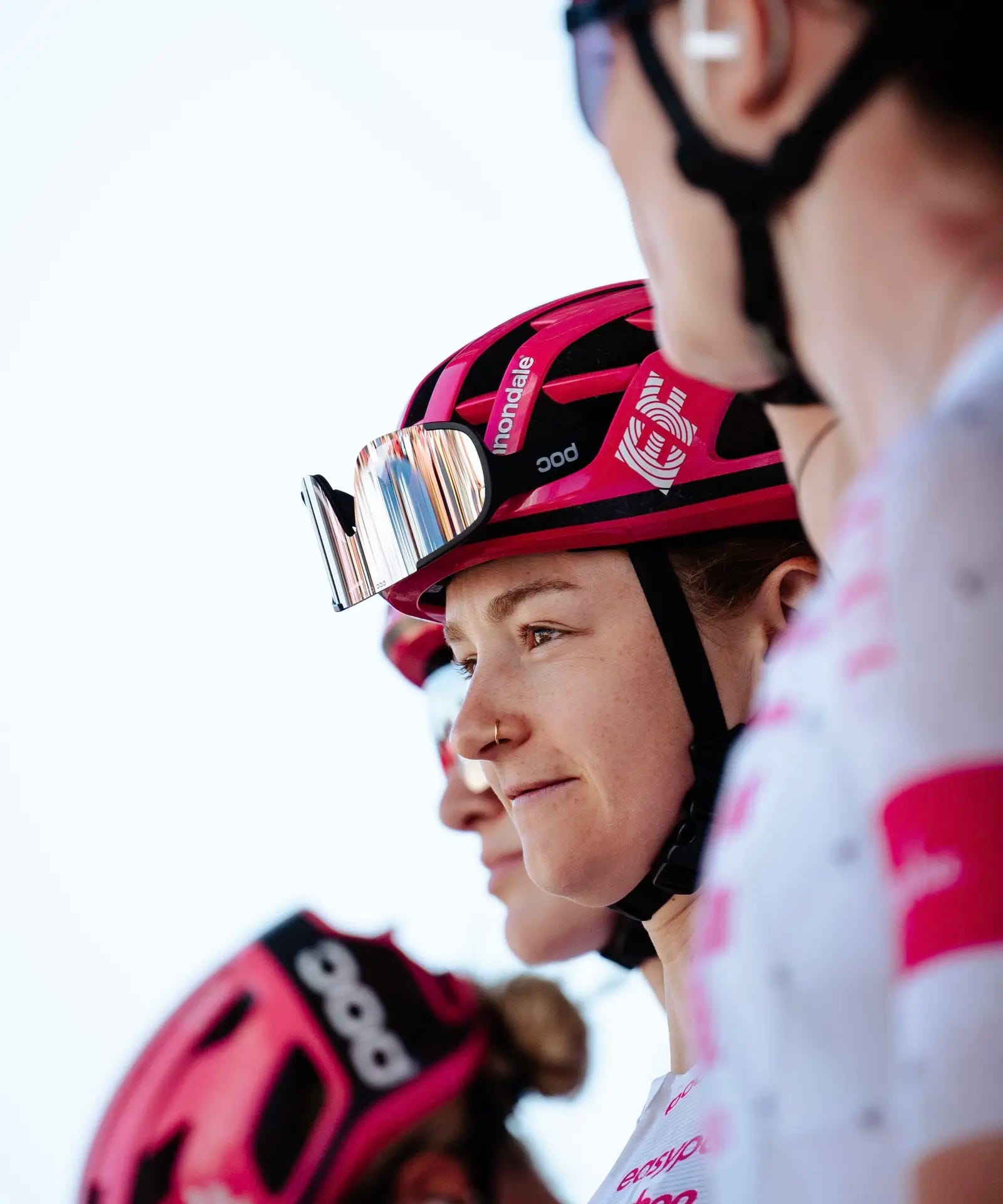
The committee is composed of volunteer advisors representing some of endurance sports’ leading researchers and thought leaders at institutions with dedicated female athlete performance programs. Before diving into the committee’s goals and outcomes, I wanted to understand how it was formed and who is involved.
The partners
After attending a Hill Climbers investor lunch earlier this year and hearing Karl Pelletier share stories about USA Cycling’s expansive tech and innovation council, I was eager to learn how this sub-committee was formed. As it turns out, the idea grew out of a breakout session held during USA Cycling’s annual fundraising event, Bicycles & Bluegrass, which is made possible by the Hellman Foundation.
“We had a breakout session on women’s sports science and we realized there was a real need and a lot of interest in helping support the female athlete. So that became a committee which started in January. It’s very new, but we’ve been moving quickly with it.” — Mari Holden
The committee is composed of leading researchers, physicians, and tech professionals operating at the highest level of their respective fields:
Dr. Kelsey Erickson — Senior Director of Athlete Health, Engagement, and Experience at USA Cycling
Dr. Michael Roshon — Chief Medical Officer at USA Cycling and USA Triathlon
Dr. Emily Kraus — Program Director of FASTR, Stanford University’s Female Athlete Science and Translational Research program, and Clinical Assistant Professor of Orthopedic Surgery
Michelle Chang — Senior Director of Product Management at Strava
FASTR is Stanford University’s Female Athlete Science and Translational Research Program. In its own words, Faster is:
“Committed to closing the gender gap in sports science research, our program conducts original research on female athletes while translating these findings into practical insights for female athletes and their advocates. By delving into the unique needs of women in sports, we’re helping to reshape the sports science landscape and address the unique challenges female athletes face through rigorous research.”
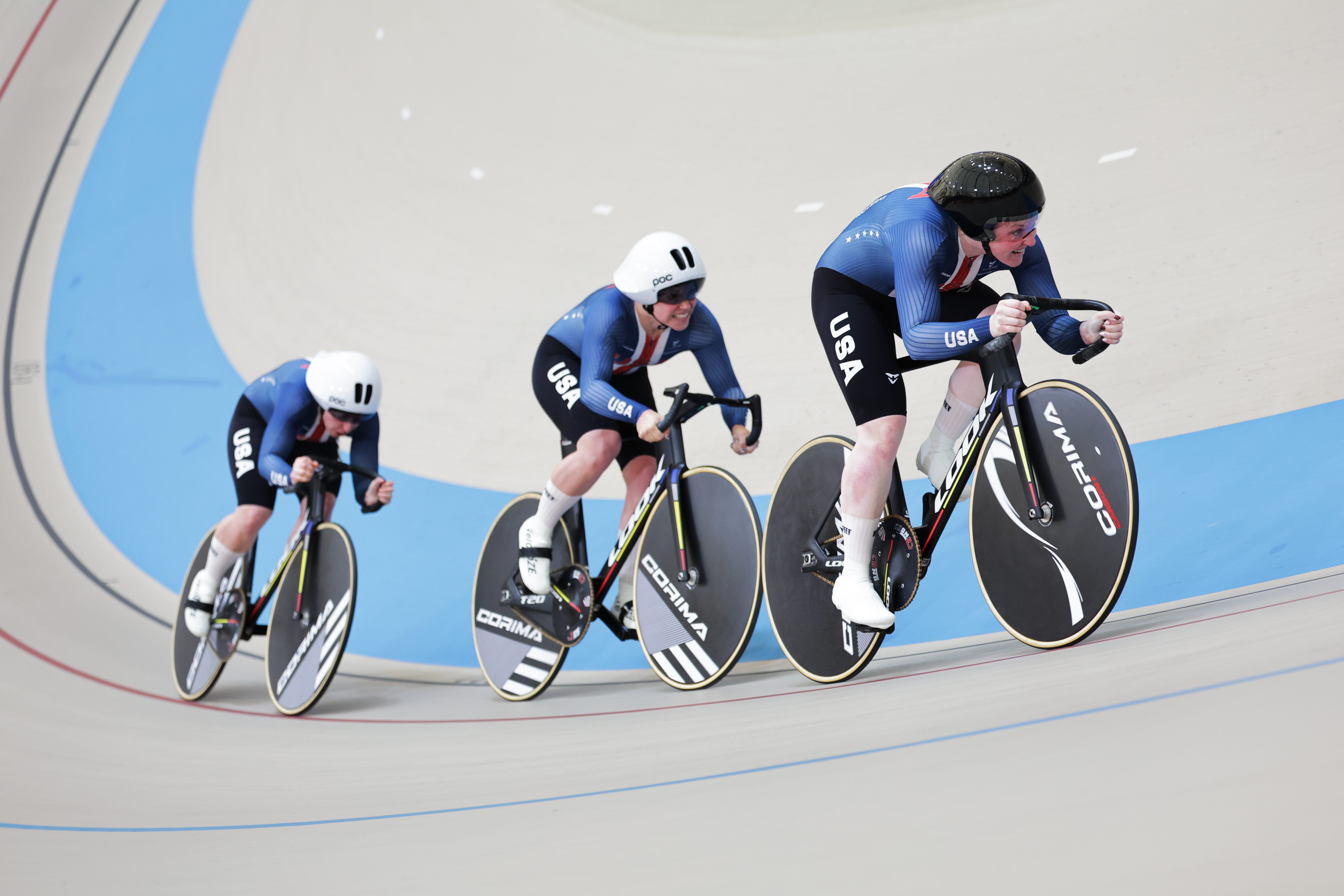
Having direct access to one of the world’s leading research institutions and one of the most recognized brands in endurance sport is a meaningful competitive advantage for USA Cycling. In practice, that relationship takes the form of a three year initiative in which this group will openly collaborate on programs designed to better equip American female athletes ahead of the 2028 Olympics.
The committee’s four pillars
As Mari mentioned, this is a three year initiative built around four pillars that guide the group’s work. The following definitions of each were provided directly by Mari.
Specific education for female athletes
Deliver female specific education to athletes, coaches, and support staff, covering topics that have historically received limited attention and elite sport environments. This includes menstrual cycles, their influence on training and racing, nutritional strategies to minimize performance disruption across hormonal phases, the role of contraception in female athletic performance and REDs.
Monitoring for athletes
A standardized medical monitoring program, including quarterly blood testing and longitudinal health tracking to provide proactive, consistent, oversight of athletes’ health and readiness.
Wearables
Wearable technologies and performance monitoring tools will be integrated into these systems to deepen understanding of recovery, adaptation, and readiness trends at the individual athlete level.
Scale the findings to all athletes
Following an initial pilot program, the initiative will scale this framework across USA cycling’s entire national team.
The action plan
Defining these initiatives has given the committee an action plan for providing tangible outcomes over the next three years. The following areas of tangible action were also provided directly from Mari.

Form a direct wearable partnership
Establish baseline assessments that support female athletes and help advance a comprehensive, wearable partnership that’ll enable USA Cycling enhance performance support.
Education sessions
Prepare a series of education sessions for coaches and staff that will ensure all USA cycling coaches, female athletes, and their programs have shared knowledge, language and understanding of female specific sports science matters. Education sessions will be delivered in a combination of virtual and in person sessions to maximize reach and impact.
Expert network for athletes
In addition to critical education sessions, build a network of expert providers who can support females on an individual basis when they are ready to transition the education, they are receiving into action.
These initiatives are paving a path for Team USA
Over the last decade, USA Cycling has become remarkably resourceful and forward thinking when it comes to maximizing athlete performance. British Cycling became famous for their marginal gains philosophy, which focused on the smallest details that affect performance. What USA Cycling is doing for women’s cycling has the potential to produce something far greater. Mari noted that the work being done is already getting noticed.
“The USOPC is really interested in what we’re doing because it’s not the norm across the USOPC…If our model proves successful, it could eventually become a broader USOPC-led initiative across all sports.” – Mari Holden
The Hellman Foundation gift and the female athlete performance committee are two stories that reflect the scrappy approach the United States takes to growing cycling. I wanted to highlight these two initiatives given my previous coverage of women’s cycling in the United States, but I was equally interested in hearing Mari’s breakdown of USA Cycling’s total funding structure heading into the Olympics.
These two initiatives deserved their own spotlight, but Mari was clear that USA Cycling puts serious effort into the success of both male and female athletes. The overall fundraising picture for USA Cycling speaks to that.
Funding 10 Olympic and 12 Paralympic medals at LA 2028
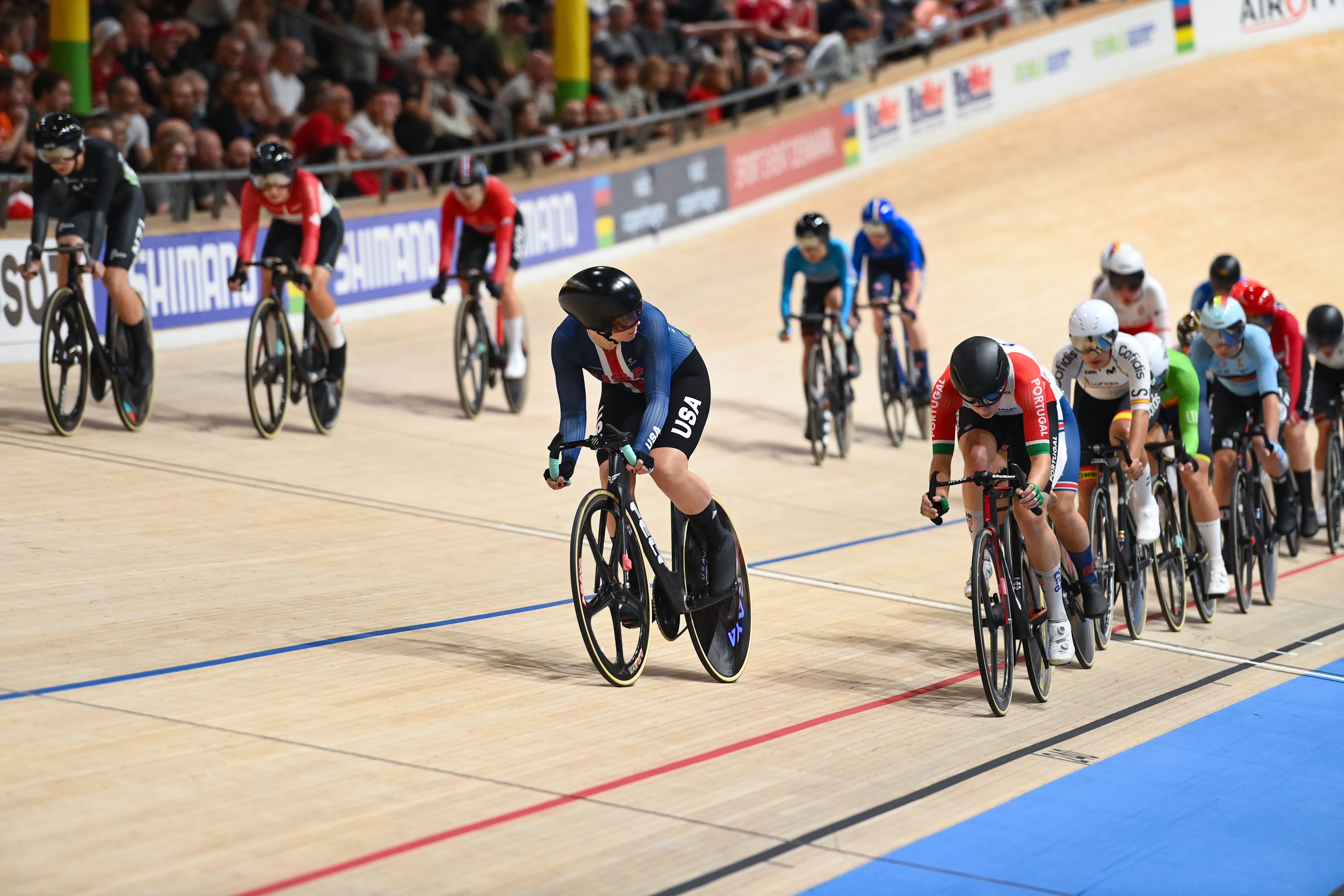
USA Cycling has set an $18 million fundraising goal heading into the 2028 Olympics, with the target of earning 10 Olympic and 12 Paralympic medals. Mari generously broke down the five funds that comprise that total, including the target for each and how much has been raised to date.
Athlete Development Fund - invested directly into high performance disciplines.
Need: $3.9 million
Raised: $565,000
Direct Athlete Grants - Stipends to support training and competition costs.
Need: $2.25 million
Raised: $1.25 million
Integrated Performance Fund - Cross-discipline resources for LA preparation including data analysis, sports performance, home field advantage initiatives, and tech innovation.
Need: $4.2 million
Raised: $1.1 million
Women’s Cycling Fund - Funding USA Cycling’s competitive advantage in women’s cycling.
Need: $5 million
Raised: $3 million
Para Excellence Fund - Supports the rethinking and elevation of para athlete programs including access to sports science, aerodynamics, and performance technology.
Need: $2.6 million
Raised: $460,000
Creativity and community is USA Cycling’s biggest asset
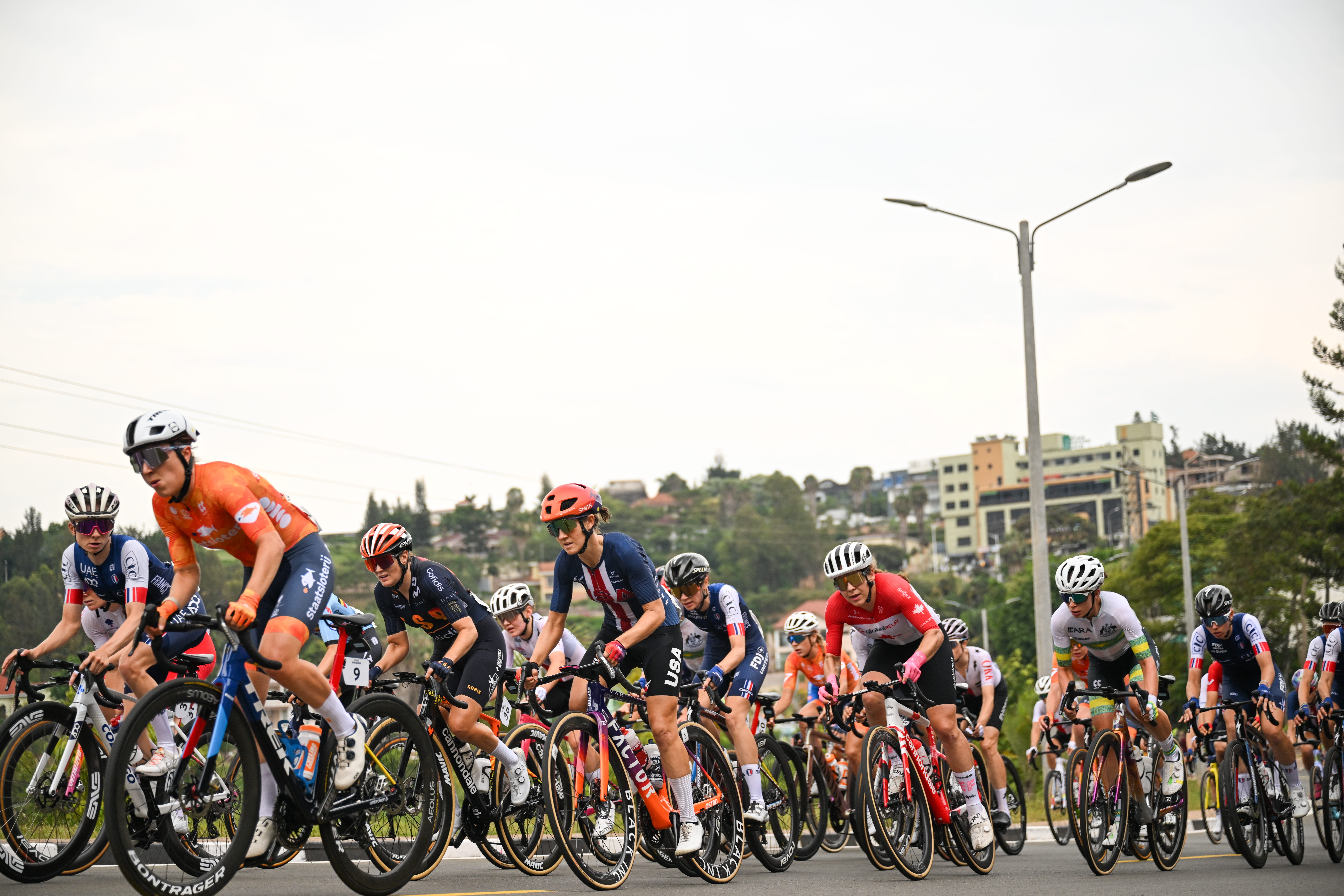
As we enter the final sprint toward the Los Angeles Games, Mari, USA Cycling, and their partners have formed an unlikely coalition. One that historically has not been necessary in other countries to fund national cycling programs, but as the United States continues to crack the code, this unorthodox model of investment and partnership may prove to be its biggest asset.
Cycling is a sport rooted in tradition and, in some respects, notoriously resistant to change. The United States continues to make incremental progress, and in the case of women’s cycling, something closer to a breakthrough. If USA Cycling hits their medal goals at the LA Games, we may be standing at the beginning of an era of accelerated growth for the sport in America.
Ride and rip,
Kyle Dawes
