


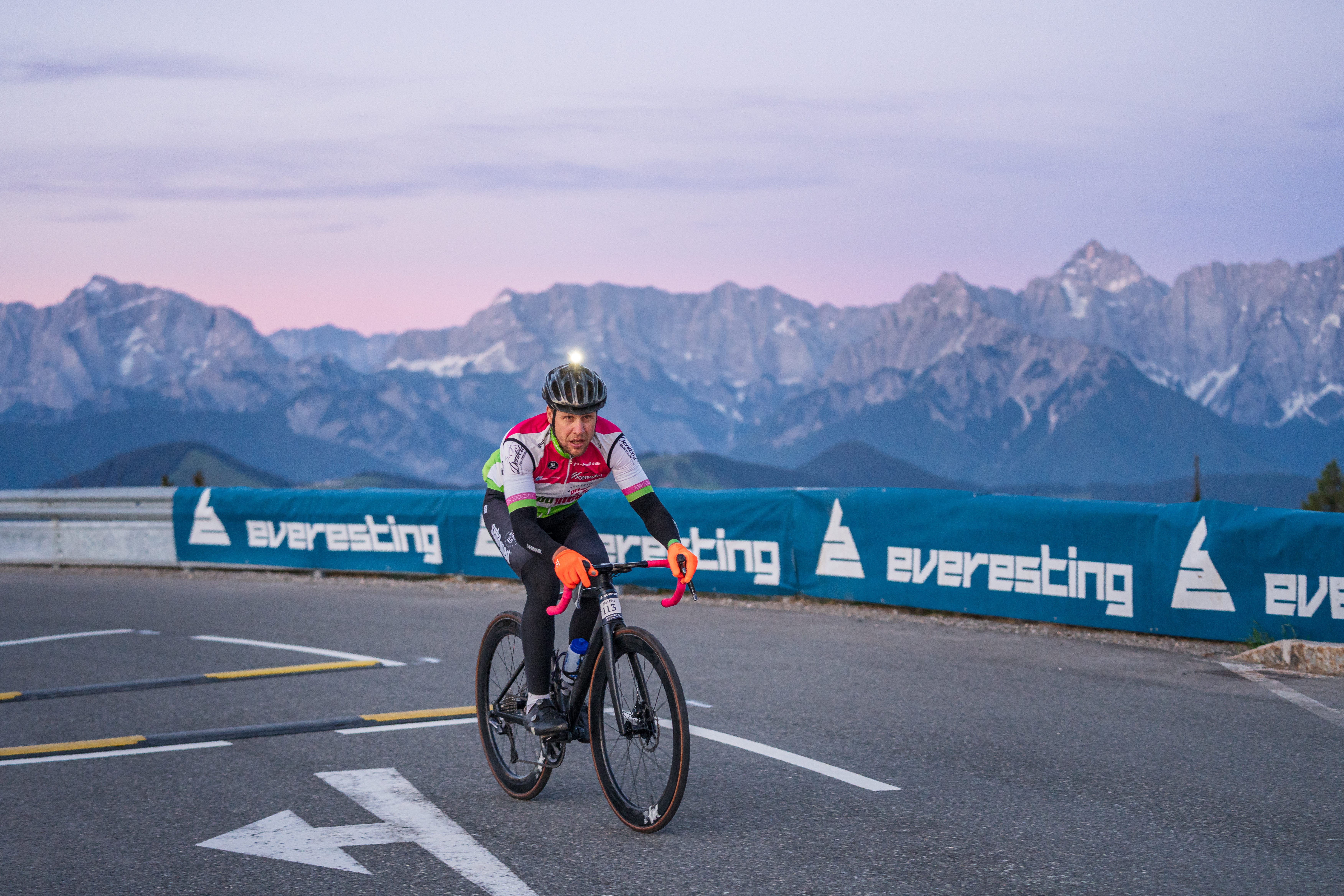
If you are a cyclist, or even a casual rider or follower of the sport, you have probably heard of Everesting. In its simplest form, Everesting is a challenge to gain the full elevation of Mount Everest, 8,848 meters or 29,029 feet, in a single continuous activity. There is no time limit, no course requirements, just climb that elevation in one go.
I only started riding a handful of years ago, but even in the very early stages of my cycling journey I had heard about the concept of Everesting. Before I was a fan of the WorldTour, knew what a gravel bike was, or consumed cycling content regularly, the challenge had already reached me. For a new rider it sounded completely absurd that someone could climb that elevation in one ride. Even now, as a self-proclaimed climber, it sounds crazy. That is the point. The challenge is almost unreasonably simple in concept and hard in execution.
The prevalence of Everesting meant I never really questioned its origins. I assumed it was just an iconic challenge that had always existed, nothing more. That changed recently when I connected with one of the first people to complete one and put Everesting on the map. It was during a routine networking call with someone from another cycling publication. As we talked, I learned that Everesting is not just a challenge people do. It is a real business with revenue, a product suite, and one of the strongest grassroots communities in endurance sport.
After nearly five years of knowing the concept, I was suddenly learning about a brand I had never noticed, and I was talking to the founder. The more I thought about it, the more remarkable it became. How does a challenge get monetized and build genuine brand presence without most people even realizing there is a brand behind it? It was time to find out.
From the origins of Everesting to why a former senior executive at FC Barcelona decided to join the team, this piece is a deep dive into how a simple concept has quietly built one of endurance sport’s most compelling emerging businesses and is staking a claim to an entirely new vertical, literally.
Meet Andy and Guillem
We will dive into Everesting the brand and business shortly, but it felt right to first explain how this story came together, because the people behind it are a big part of what makes it worth telling.
It started with my favorite tool, the LinkedIn connection. I came across Andy van Bergen, saw he was Head of Membership at Escape Collective, and thought he was probably a good person to know. Andy accepted my request and immediately messaged back inviting me to reach out if I ever wanted to connect. We coordinated a time between our timezones in Melbourne and San Francisco, no agenda, just a chat. By the end of that call I had learned that Andy founded Everesting and I was already set on writing a piece about it. Andy then put me in touch with his colleague Guillem Graell to talk through Everesting’s marketing and business strategy.
Andy and Guillem bring different backgrounds to the table, and that contrast goes a long way toward explaining the balance of passion and strategy behind the company. Andy is based in Australia and brings over a decade of cycling media experience, including roles at CyclingTips and Escape Collective. Guillem is based in Barcelona and brings a wide-ranging marketing background spanning major CPG brands and nearly five years as CMO at FC Barcelona.
Andy’s deep knowledge of cycling culture combined with Guillem’s experience building revenue streams across major sports properties creates a foundation that is hard to replicate. Along with the rest of the Everesting team, the two are working to turn a grassroots challenge into the next iconic format in endurance sport, with community at the center of everything they build.
The origins of Everesting
Well it all started about 50 to 55 million years ago when the Indian tectonic plate collided… just kidding. Mount Everest plays a part in Everesting, but not like that.
About 14 years ago, Andy was progressing through his career while also continuing to be an avid cyclist. Like any true cyclist he is a bit of a masochist and loved dreaming up the hardest rides he could think of and train for. One of his original challenges was a 300 km ride with 5,000 meters of climbing. Andy recalled it as one of the most grueling things he had ever done, but his coworkers had a different reaction.
“I went into the office the next Monday and people were asking, well, what’d you get up to over the weekend? I said, oh look, I did this ride, it was 5,000 vertical meters, 300 kilometers. In my mind I’m thinking this is the hardest thing I’ve ever done in my life. And they’re like, oh that’s nice. And what else did you get up to? Because 5,000 meters of elevation means nothing to someone who doesn’t know about cycling.” — Andy
It is a common experience among cyclists to push themselves to the absolute limit and have that effort get completely lost in translation with non-cyclists. Andy knew how transformative cycling had been in his own life and how much he loved challenging himself alongside fellow riders. But he also knew that any challenge worth spreading had to be immediately relatable to someone who had never clipped in. Tell someone you climbed 5,000 meters and you get blank stares. Tell someone you climbed the equivalent of the cruising altitude of a commercial jet and suddenly everyone understands how insane that is.
“If I wanted to create something that was recognizable, that would inspire people, and that would give anyone who completed it the kudos they deserve, I knew there had to be a reference there that was immediately understandable.” — Andy
Mount Everest was that reference. Andy quietly assembled a group of cycling friends to make the first mass attempt at Everesting, knowing that if enough people did it at once, it would be impossible to ignore.
“I told them about it and I was like, this is completely secret. We picked a weekend in February 2014 and if you want to participate, you can’t tell anyone about it. You train in secret. Because at the time I knew that if one person did an Everesting, everyone would be talking about it. So I also knew if a whole bunch of us did it, it would just explode really quickly.
In the end I think there were about 65 people who agreed to have a crack at doing an Everesting under the veil of secrecy. We had locations all around the world and of the 64, I think there were about 30 or so that actually completed it, myself included. And it truly did explode into the scene, just like that. There was newspaper coverage and radio interviews, and obviously all the cycling media was covering this crazy thing.” — Andy
Over the next ten years Andy hustled to transform Everesting from a fun idea into a side project, from a side project into a cycling phenomenon, and from a cycling phenomenon into a business. We will get into how that happened, but following the COVID pandemic cycling boom, Andy knew it was time to build out a proper team.
Enter Guillem
If you are like me, one of your first questions was probably how the former CMO of FC Barcelona even found out about Everesting, and what made him want to join the team. For those unfamiliar, large football clubs like FC Barcelona are run by their members, which brings a political dimension to the business. After nearly five years at the club, a shift in leadership changed the strategic direction, and Guillem along with several colleagues decided to leave. Together they launched a sports focused consulting firm called D2F. In addition to Guillem, D2F also brought the skills and expertise of Paco Latorre (PR & Comms at FC Barcelona, America’s cup, and MotoGP) and Enric Llopart (Digital experience at Disney and FC Barcelona) to Everesting. It was at D2F that the group came across Andy’s project.
“In a random way, we discovered Everesting as a concept. We searched who the owner was and got in contact with Andy. Eventually we were like, oh my gosh, this is something. I was in love with it for two things, one because Andy is a great guy, and second with the concept. I was amazed at how interesting and relevant Everesting was to the people that had known about it.” — Guillem
Guillem and his team made their case to Andy, making clear what they could bring to the business while committing to preserve the soul and ethos of what he had built.
“We said, look, we’re not endurance riders, we don’t have your vision, but we know how to build businesses and brands, and we can help you. So we partnered. At some point Andy was telling us, look, you could even do it yourself, and I said, no way, you are the father. You need to be central to the project.” — Guillem
From there, Everesting became a fully resourced organization with brand expertise and deep cycling knowledge at the helm. The most remarkable thing was that they were already working with a concept that had enormous brand recognition among people who did not even know Everesting was a company.
In a league of their own
There is a key dynamic surrounding Everesting that makes it such an interesting story to tell. That dynamic is the knowledge gap between knowing of Everesting the challenge and knowing about Everesting the brand and organization. Tens of thousands, if not hundreds of thousands, of people know about the physical challenge, but a smaller number associate it with a company.
On top of that, who are Everesting’s competitors? As we will find out, Everesting can generate revenue without relying solely on dedicated events for brand exposure. And with trademark registration covering any challenge related to vertical ascent, it becomes very difficult for other brands like IRONMAN or Hyrox to encroach on their space.
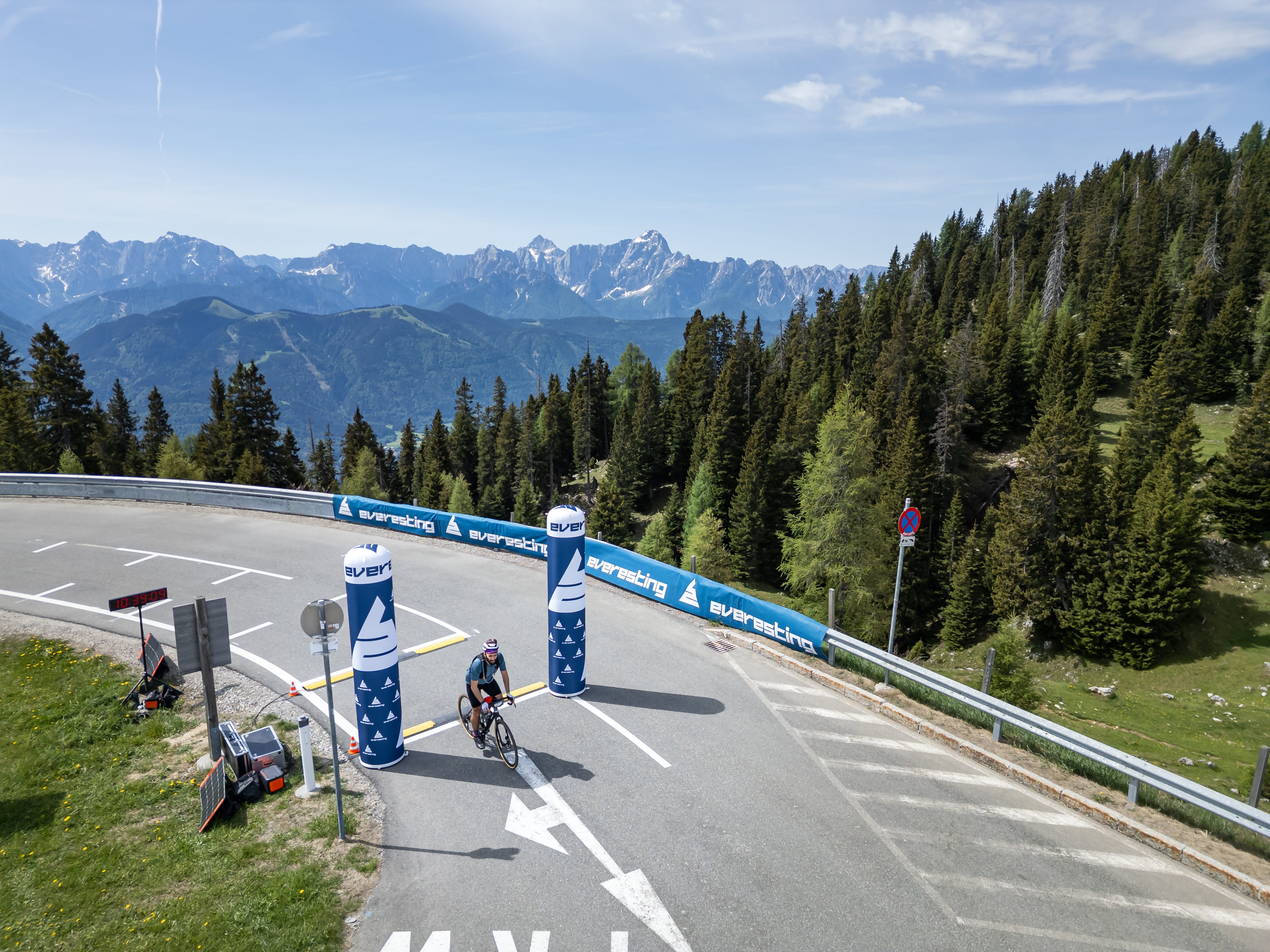
The following factors make this story worth telling in two parts:
The simple but brilliant branding that made Everesting a cultural staple, and how the team is working to close the gap between people who complete a challenge and people who become active members of the Everesting community.
How Andy and Guillem are leveraging that brand recognition to build a revenue generating business in a market landscape that has no real precedent.
Building identity and recognition

As Andy mentioned, there was no shortage of media buzz following the first organized Everesting, but media coverage was only one part of the equation during its rise. I was curious to learn more about how Everesting became part of the cultural vernacular of cycling. What events, branding, and strategies made it happen? After speaking with Andy and Guillem, my conclusion was that there were several key drivers that helped establish Everesting as a brand before it was really a business.
Early athlete legitimization
Nothing legitimizes a new race format or challenge quite like professional athletes choosing to participate in it. Everesting caught the attention of top level pro cyclists remarkably quickly.
“Jens Voigt was probably the first pro athlete to do one. He’d just retired. He did one in the snow… then Richie Porte and Cameron Wurf had been talking about it during the Tour de France. I knew it had entered the popular cycling vernacular when Thomas De Gendt was writing about Richie and Cameron… He didn’t even explain it. To me, that really cemented in my mind that, okay, the fact that he doesn’t have to explain what the concept is means that enough people know about what this concept is.” – Andy
Accessibility
This point will come up again later, but from a financial and logistical standpoint, Everesting is uniquely accessible. There is no race entry fee, no travel, no lodging required. Athletes train as they would for any other goal and simply decide when and where they want their attempt to be. For the average Everester, competition is almost beside the point. This is not a race that happens to be hard. It is a physical feat that eclipses almost any amateur race on the calendar.
The psychological challenge
Actually climbing Mount Everest is a globally recognized feat of human strength and resilience. The vast majority of people will never go and learn mountaineering to climb it, no matter how much they love a physical challenge. But the sense of perseverance, strength, and accomplishment associated with the summit does not have to be exclusive to mountaineering. While Everesting is an entirely different physical challenge, the association with something universally understood means that anyone who attempts it has their own version of that mental journey to aspire toward.
“When we talked with the community the theme was, this is not a physical challenge, this is a mental challenge, this is transformational for me.” – Guillem
“It sounds a bit cliche, but Everesting has changed people’s lives. It either helps people to become more resilient or it gives them a big training goal, and it teaches them something about themselves. It really strips you raw and gives you something kind of unique. I just want as many people as possible to experience that.” – Andy
Timing
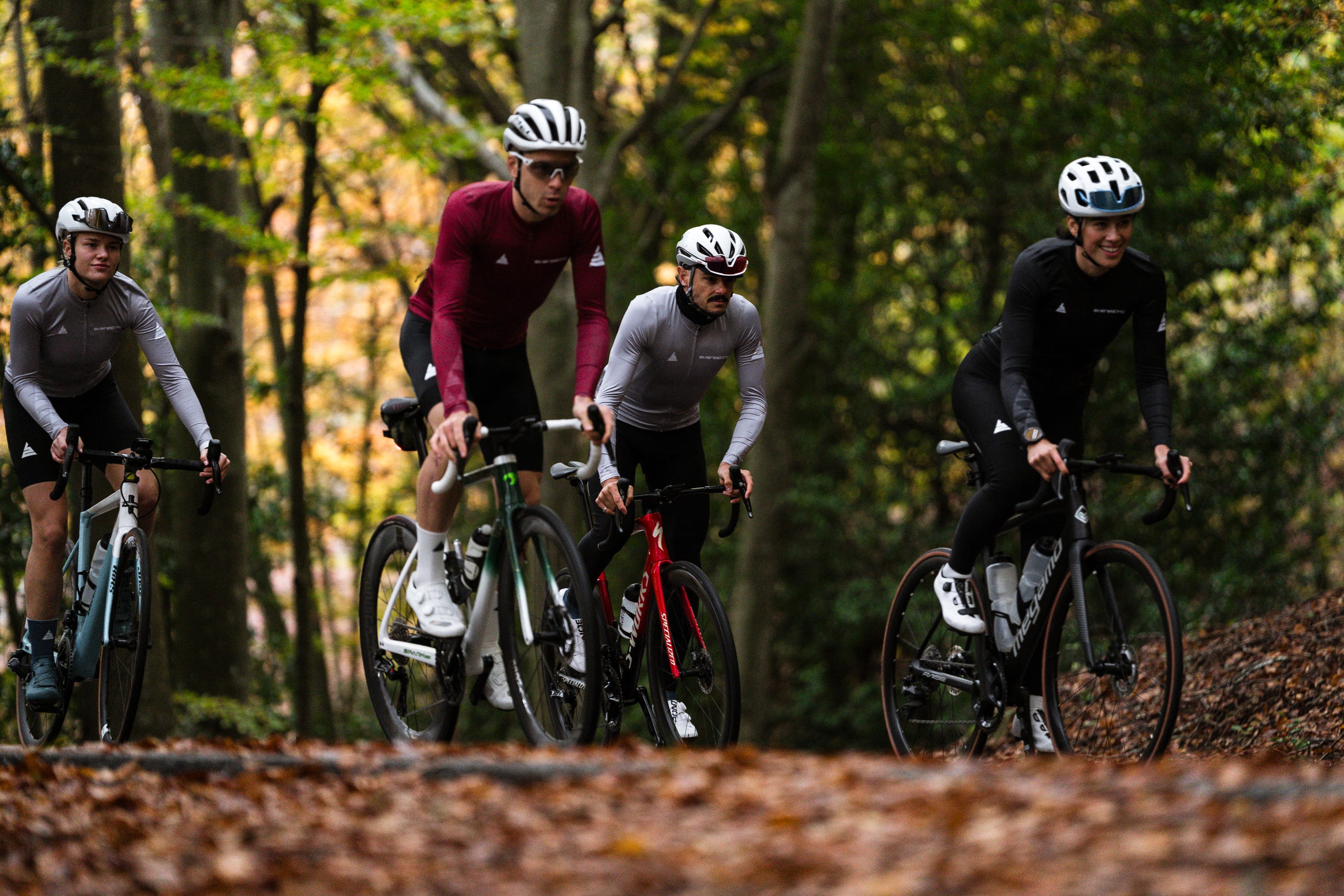
With any great business, there is a certain amount of luck involved. This particular piece of luck was a dark one, but the COVID pandemic drove rapid growth in the Everesting community. At a time when events were canceled and amateur and professional cyclists alike were stuck inside, Everesting gave them a lifeline. It offered a challenge and a sense of friendly competition during a period when community was hard to come by.
“The reason why it took off in the pandemic was because it was already a known brand, it was a known concept. We had pro riders talking about it and doing it prior. The spark was already there. When the pandemic hit, there were a whole bunch of riders that had previously been told by their coaches and training staff, there’s no way in hell we’re going to allow you to do an Everesting in season. All of a sudden there was this competition that existed where pro athletes were racing to try and do something that was kind of unusual.” – Andy
Closing the knowledge gap
It was interesting to get Guillem’s strategic take on converting people who know Everesting the challenge into people who know Everesting the brand and community. FC Barcelona is one of the most recognized organizations in the world, so brand awareness was never really a problem in his previous role. How would he approach it with Everesting? He identified two main areas of focus.
Expanding accessibility
Consolidating IP ownership
Revisiting accessibility
While the original Everesting format is financially and logistically accessible, it is not universally accessible across skill levels or personal motivation. This created a real problem for community growth, and honestly it is a big part of why I was not more aware of the brand myself. I like to think I could complete an Everesting if I put my mind to it, but as things stand today I have other goals driving my riding, so I have never given it serious thought. Multiply that mindset across the broader cycling community and you begin to see how many brand recognition opportunities are being lost.
Guillem and Andy recognized that Everesting needed to mean something different to everyone who engaged with it. Their response was to introduce quarter and half Everesting as official challenges. Breaking the concept into more manageable formats invited more people to seriously consider making an attempt, which means more people researching, more people discovering the brand, and more people entering the community.
“We have a little catchphrase internally that we use, which is, what is your Everesting? Because really, the concept of Everesting is about pushing yourself and finding your own limits. Whether that’s a quarter Everesting for me and a full Everesting for you, or if it’s completing an Everesting over the space of 30 days and that makes you feel amazing, that’s what we want.” – Andy
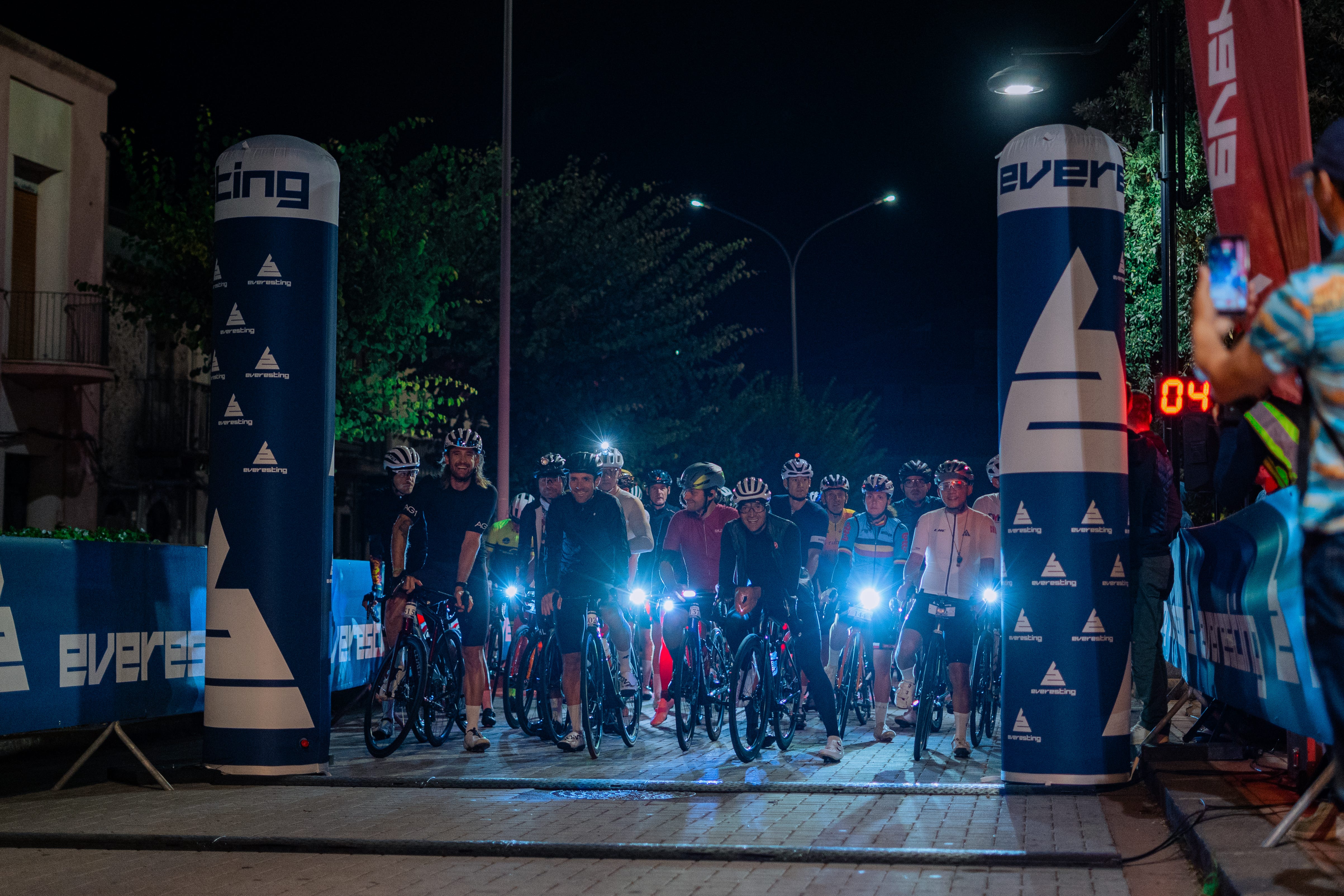
Increasing the number of entry points for athletes suddenly opened the door to a whole world of Everesting possibilities.
“We did a test with Strava, and we said, what if we give a full month to do an Everesting? Instead of doing it in one push, you accumulate over as many days as you want, and you have a month to do the Everesting. We tried it a year ago, and we suddenly got 30,000 people in more than 80 countries to participate.” – Guillem
While Everesting is rooted in cycling, the final push toward accessibility is making the challenge sport agnostic. You can do a running Everesting, a skiing Everesting, or apparently even one while pushing a wheelbarrow. Yes, that is a real thing and it has been done.
Securing brand assets
Andy knew from the beginning that Everesting could become a widely known community challenge and carve out a new vertical in endurance sport. As an early mover in this space, the potential for any business built around it would live and die with owning the name.
“When I came up with the concept, the first thing I did, as you would, is Google it. Does it exist? Has no one ever thought of this before? I was kind of blown away. So of course I registered it all straight away.” – Andy
That early move was crucial, but Guillem outlined how much work remained to fully secure those rights. During his first year at Everesting, Guillem described trademarking as a major obsession. From spending significant capital to secure a US trademark to navigating varying processes across Europe and Australia, protecting the name was a top priority.
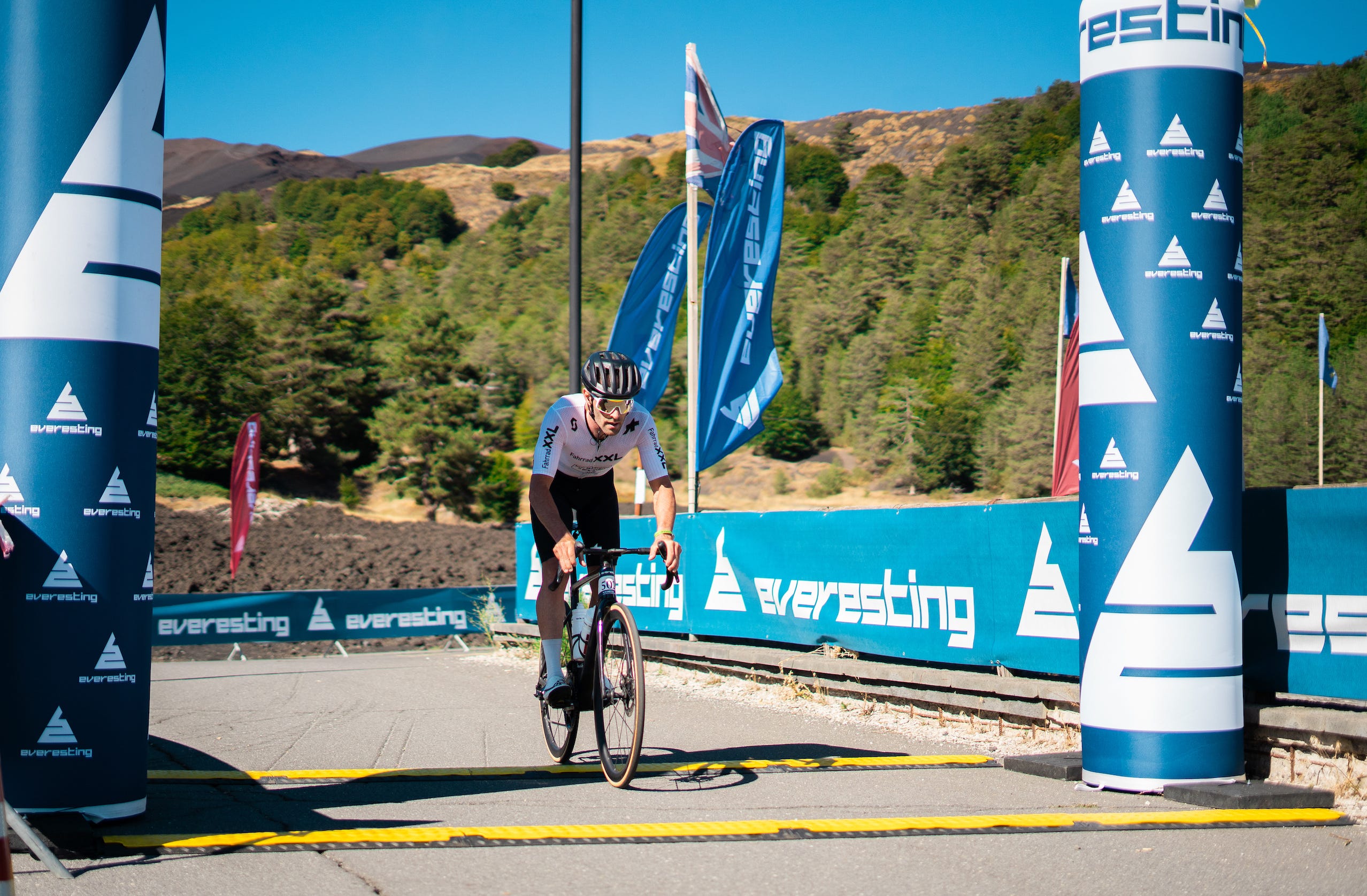
The revenue implications are straightforward. Licensing, merchandising, and events all represent major revenue streams, and only Everesting should be able to profit from the specific challenge format and branding. Beyond revenue, trademarks matter enormously when it comes to advertising and search engine optimization. If people researching the challenge cannot easily find and connect with the brand, the knowledge gap never closes.
“We fully branded the company early. We worked with really nice designers to ensure that what we are communicating is attractive, is engaging, and is something that you want to have printed on a t-shirt. So we did this fundamental work: trademark, branding, plus the first layer of tech.” – Guillem
With the foundation built, it was time to turn to key revenue streams.
Building a business with diversified revenue streams
The brand strategy and philosophy behind Everesting’s rise to this point is genuinely impressive. Andy and Guillem are modest about it, but they both recognize that all of this work could be undone if they stray from their core community when building out revenue generating products and initiatives.
“Everesting will always be community led. There’s no doubt about that. It’s a challenge that was built from the community and always responded to by the community. When we’re talking about revenue streams for that community, they will be based on what our community wants to see, wants to buy, wants to participate in.” – Andy
“We don’t want to become just another business. We want to keep the community centered approach. When we develop revenue streams they all need to be seen as being central to what the community is asking for or what the community will accept, not just for the sake of making a nice business.” — Guillem
With the goal of keeping the soul of Everesting intact, Guillem laid out four revenue pillars.
Merchandise
Events
Mobile app and digital revenue
Sponsorship
All four are relatively straightforward on paper, but if executed poorly, any one of them could turn Everesting from a revered physical challenge into something that feels like a gimmick.
Merchandise
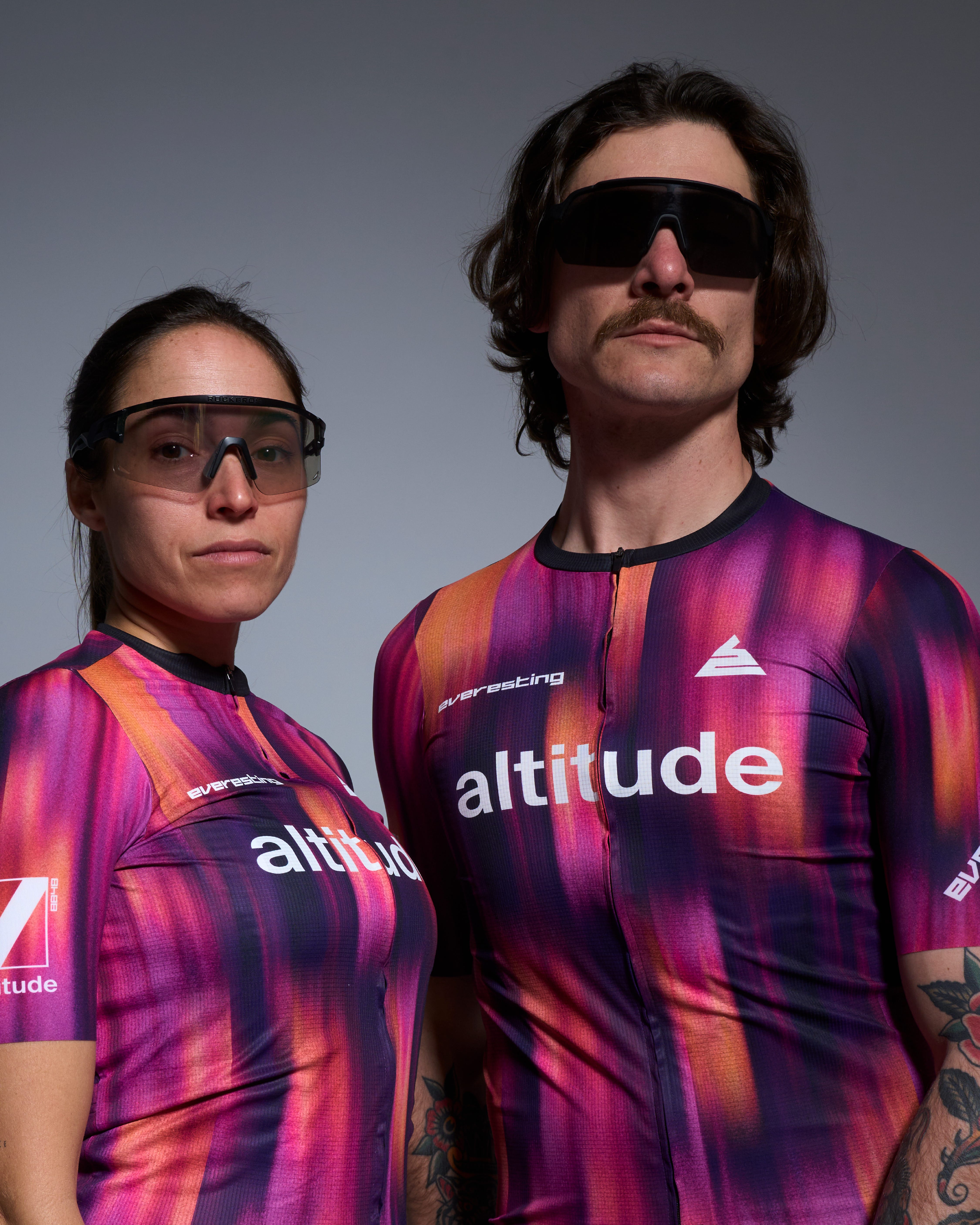
Everesting has partnered with cycling clothing manufacturer Cuore to produce a line of kits and merchandise carrying the Everesting brand. The idea is simple: complete a challenge or engage with the community and you can rep the brand and show the world you are part of something. The obvious parallel is the IRONMAN merchandise model. It is a proven and reliable revenue stream that scales naturally as the community grows.
Events
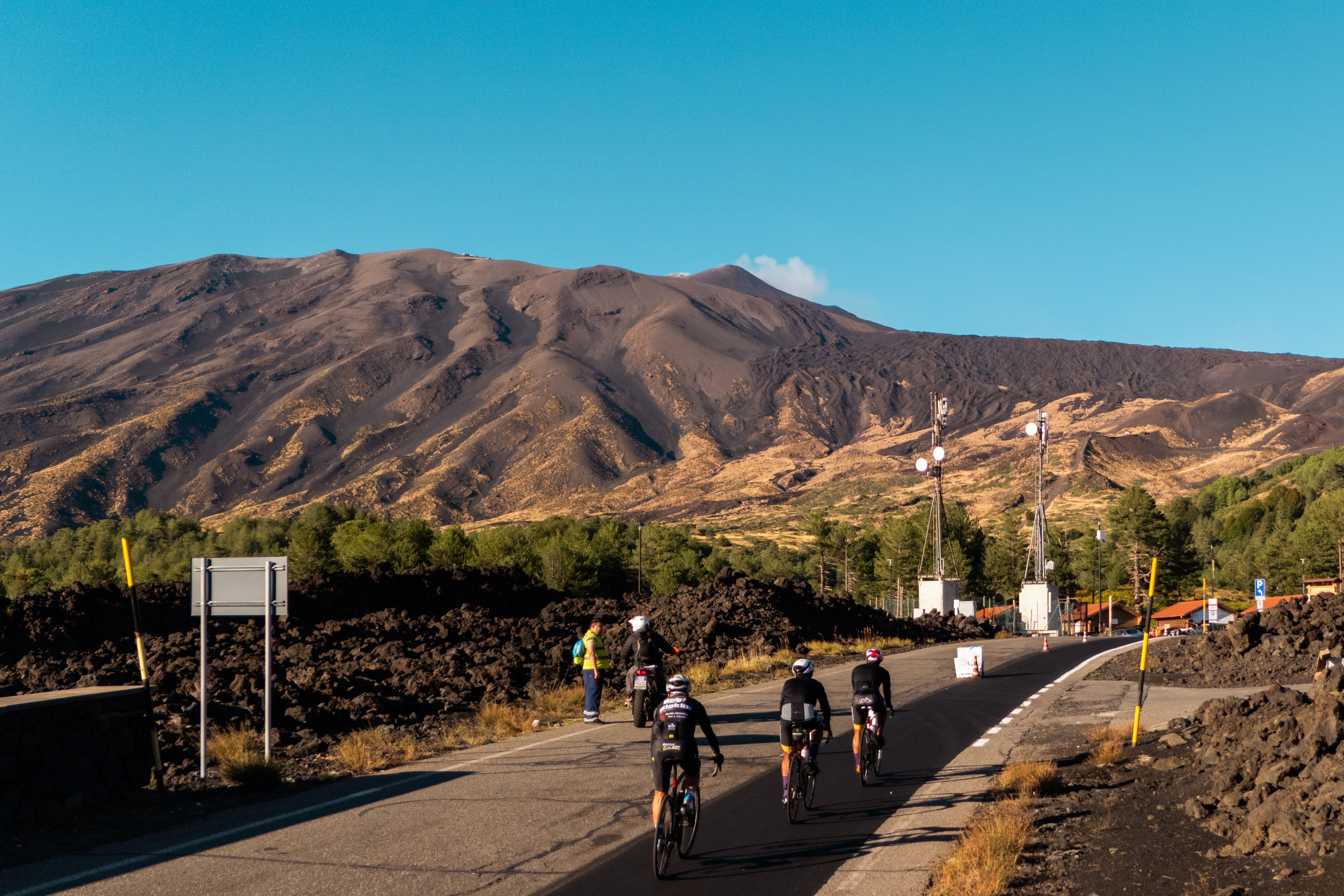
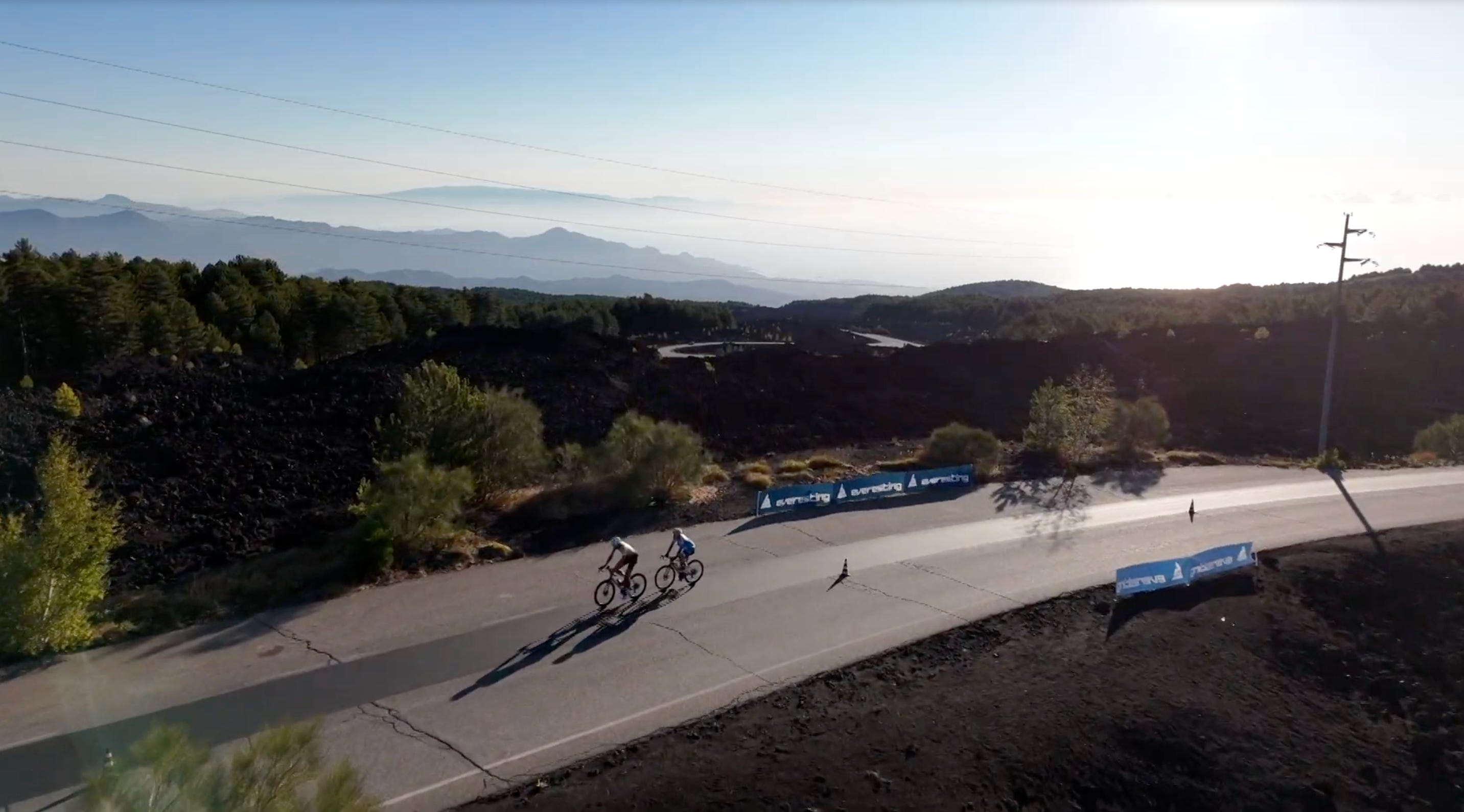
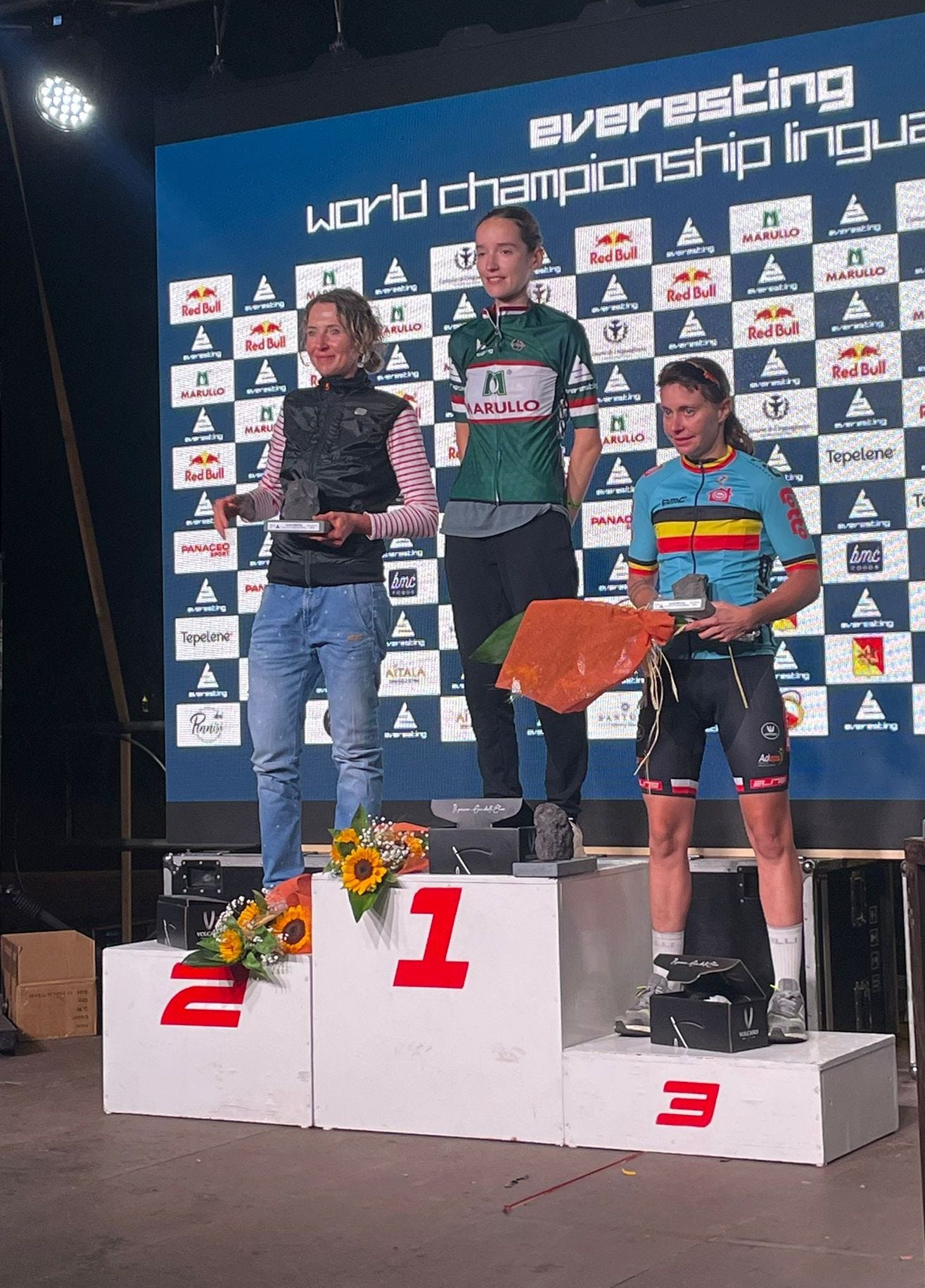
With enough professional athletes interested in Everesting, organized events have become possible, bringing the best in the world together to compete. Beyond direct revenue from entry fees, the events serve as a significant brand building opportunity.
“Last year we did the first World Championship in Sicily. This year we have done an event in Austria, and will do a second edition of the World Championship in Sicily. Next year we’ll do six or seven different events. A calendar of events is important for us, especially for content production, gathering PR noise.” – Guillem
App and digital revenue
This is Everesting’s newest revenue stream, unveiled earlier this month. Everesting is not reinventing the wheel here. The app will follow a freemium model, generating revenue from the most engaged users. But Guillem was clear that the commercial side is only part of the reason for building it.
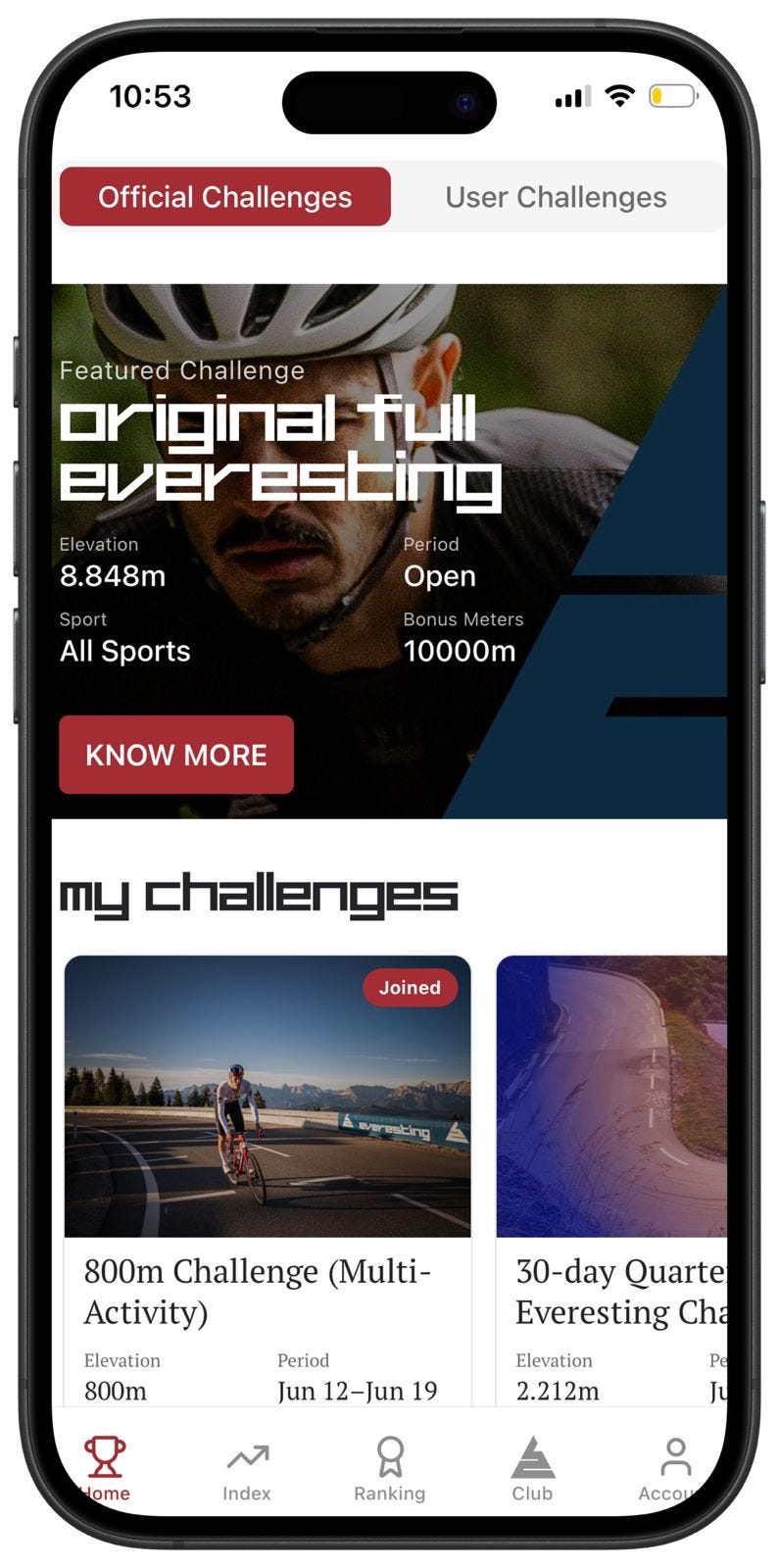
“It’s the central tool to make two things happen: enable the community to gather in one place and to be able to know what you’re doing, your elevation, your medium, etc. This is how we can surface insights for customers, what we can offer them, whether it’s training, whether it’s nutrition, whether it’s sponsorship, and so on.” – Guillem
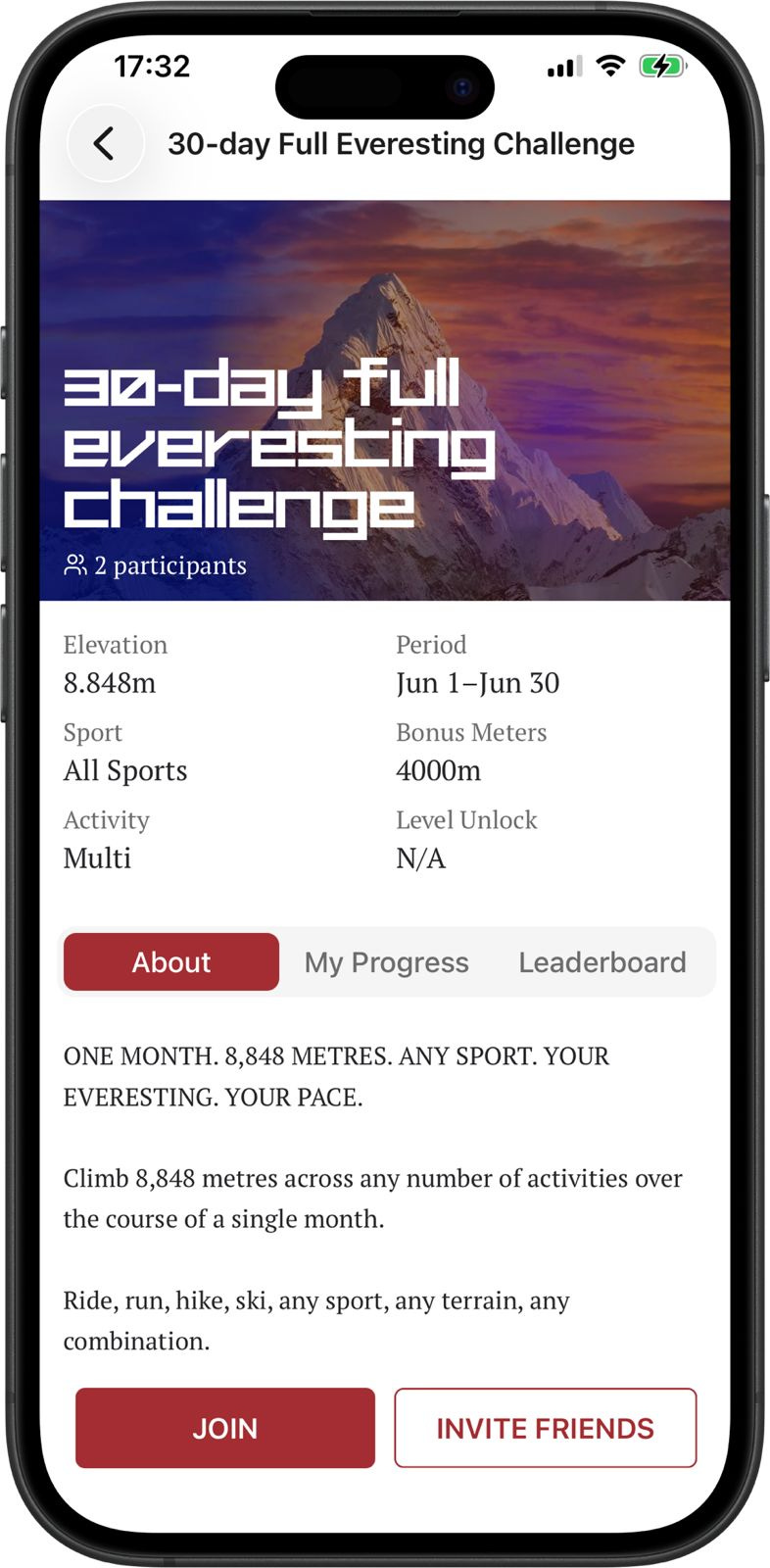
I asked Guillem whether there was any concern about athletes being reluctant to download yet another fitness app on top of Strava and everything else. He said Strava is actually an essential part of their ecosystem, serving as the tool athletes use to track their training and log their activities. The Everesting trademark is the moat that draws users into the Everesting universe to track their progress and connect with the community, rather than having that experience live on Strava.
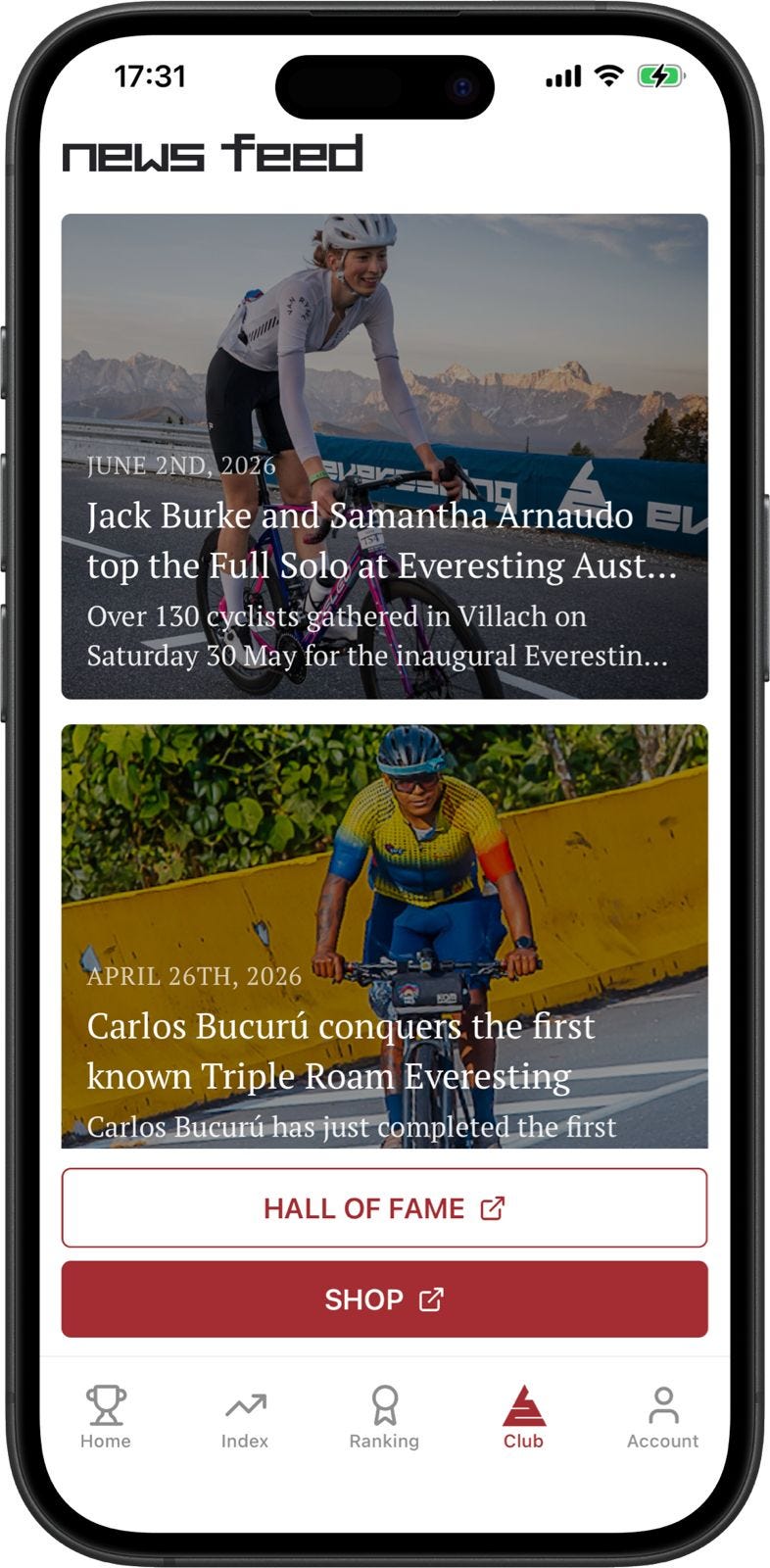
Sponsorship
As the brand grows, sponsors will pay to be official partners of Everesting events and to reach the users of the Everesting app directly.
What is Everesting’s summit?
After covering Everesting’s origins, brand journey, and business model, one question remained: what is the ultimate goal? The answer, as I have alluded to throughout, is to own the elevation vertical in endurance sport and do it through community.
“If I say ultra running, you’ll tell me Hardrock or Barkley. If I say triathlon, you’d say IRONMAN. But if I say elevation, you’re like, hmm, there is no one owning this space. So our objective is, if a challenge involves elevation, it should be part of Everesting.” – Guillem
When Andy and I first talked about doing a piece on Everesting, I was not sure what the angle was going to be. I came in with skeptical questions and left with a genuine respect for the brand they have built and the business they are building. There is a significant white space around elevation within endurance sport and Everesting is positioned to take the lion’s share of it.
In other news
Enervit and UAE Team Emirates XRG unveil new fueling at the Tour de France
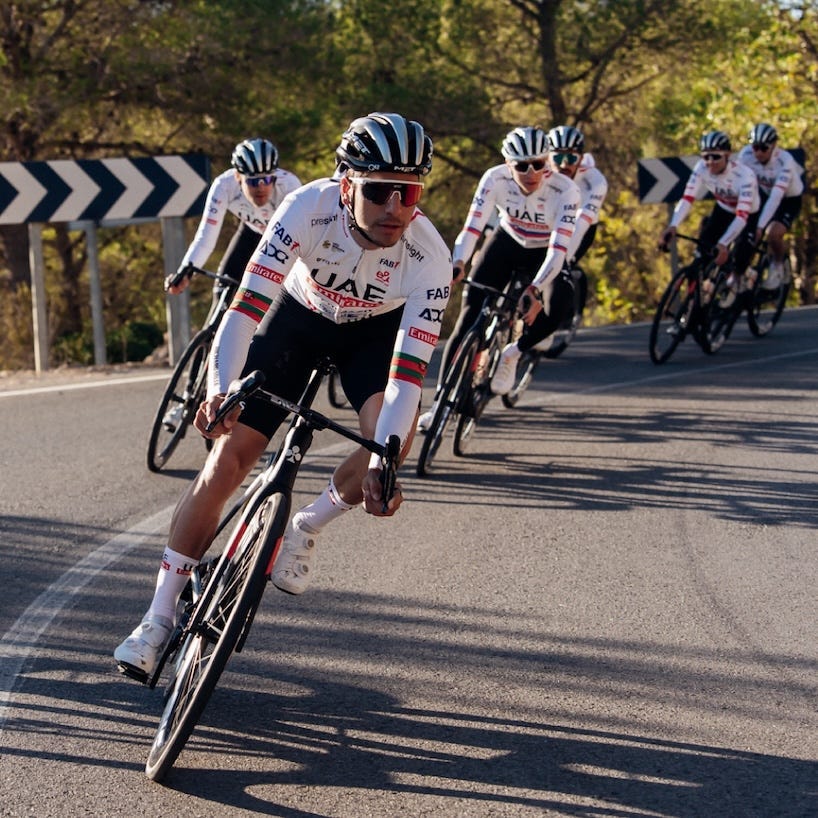
If you have been following the Tour de France over the last two weeks, you will know that Tadej Pogačar and UAE Team Emirates XRG are flying, with Tadej holding a commanding lead in the general classification. You will have also noticed that the conditions have been brutal, with temperatures exceeding 100°F on multiple stages.
In collaboration with Professor George A. Brooks of the University of California, Berkeley, and Dr. Iñigo San Millan, Enervit and UAE have unveiled what could prove to be the next frontier in endurance nutrition. Combining sodium lactate, vitamin B1, and their existing carbohydrate formula, Enervit has released their newest product, the C2:1PRO Lactate Gel Mix. The addition of sodium lactate is designed to give athletes a fast-acting energy source specifically for the final stretch of an event, when efforts become the most grueling. If you are curious about Enervit’s history and brand strategy, you can read about it here.
Ride and rip,
Kyle Dawes
